
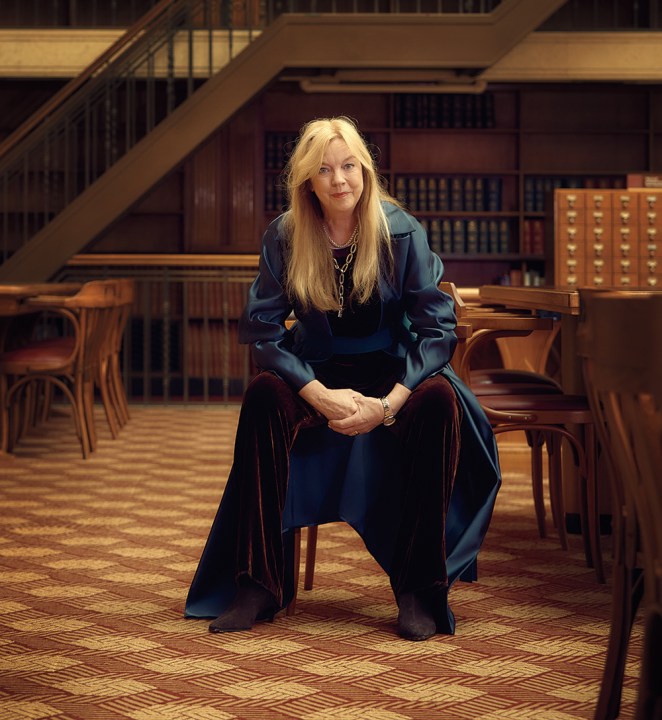
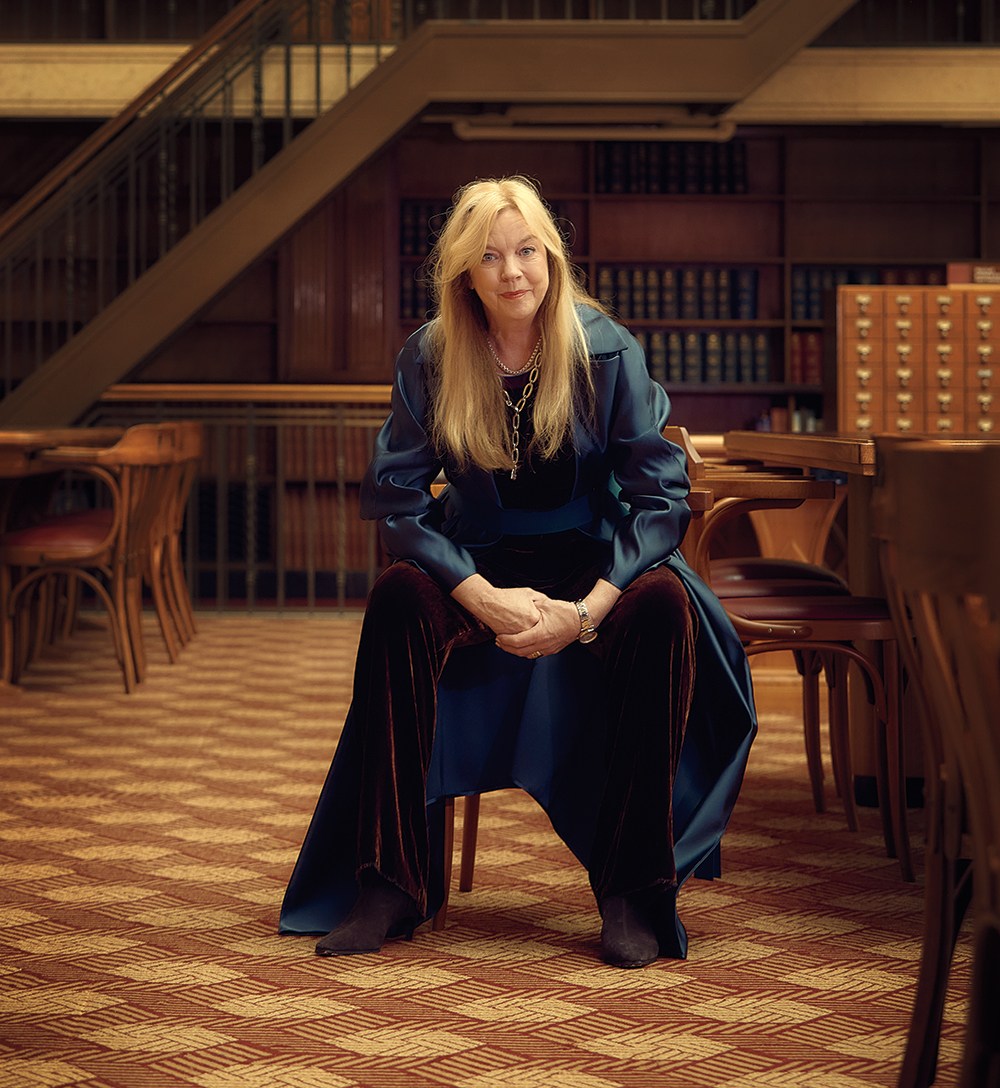
Suzie Miller works hard. She always has, tackling her first job, age 11, zooming around the suburbs of Melbourne delivering newspapers after school. Her early years attending a local Catholic school taught Miller discipline but also compassion – shaping her strong commitment to social justice.
At 17 Miller moved to Sydney to study. Hers is an origin story of grit and resilience: working-class girl with something to prove, first in her family to attend university. Today, she is educated to the hilt, having earned a Bachelor of Science in immunology and microbiology from Monash University, a Bachelor of Laws from the University of New South Wales, and a Master of Arts in theater and film from the National Institute of Dramatic Art, all before completing a PhD.
For 15 years Miller slogged across just about every facet of the law – corporate, human rights, children’s rights – earning a reputation as a dogged litigator willing to put in long hours to untangle complicated cases. “I worked with a lot of young women who would disclose their sexual assault to me,” she says. “I’d come back from court, I would interview, I would do meetings with people, and they would tell me that they needed to apply for victim’s compensation.” The stories reverberated. “It occurred to me that people always say women are making it up, but I was hearing the same story over and over and over again.”
‘It’s about the power structures in the world that we all live in, and recognizing how they actually sit outside our experience’
At this point, Miller was already treading an unusual tightrope of high-powered law and creative expression. “I was working as a lawyer and working as a playwright. And my first play went on at the Sydney Opera House, and it was a really big success.”
As a lawyer, Miller looked after the people Legal Aid didn’t have time to manage, but as a writer, suddenly she “could effect change.” Her solution? “I started working three days as a lawyer and three days as a writer.”
It was at this point that Miller penned Prima Facie, a brilliant, frenetic, electric, one-woman show about a lawyer who specializes in defending men accused of sexual assault, until she becomes a victim herself. “I thought, I’ll just write this because I really want to,” says Miller. “I wanted to show how gendered the law was around those ideas. So I just wrote the play. And then I put it out there and it won this big award,” she continues. “And then it got put on by a female director.”
From here, Miller transitioned to writing full-time. “When I was going to pitch Prima Facie I remember asking, how do I pitch a play that’s about rape? I thought, no one will probably put it on, but I really wanted to write it because I was a lawyer and I had all these stories, and I wanted to find a way to explain what everyone was saying.”
The resulting production transferred from Australia to London’s West End, this time starring Jodie Comer of Killing Eve fame. Comer won the Olivier Award for best actress, followed by the Tony when the play landed on Broadway. The production has been licensed in over 40 countries and translated into more than 30 languages.
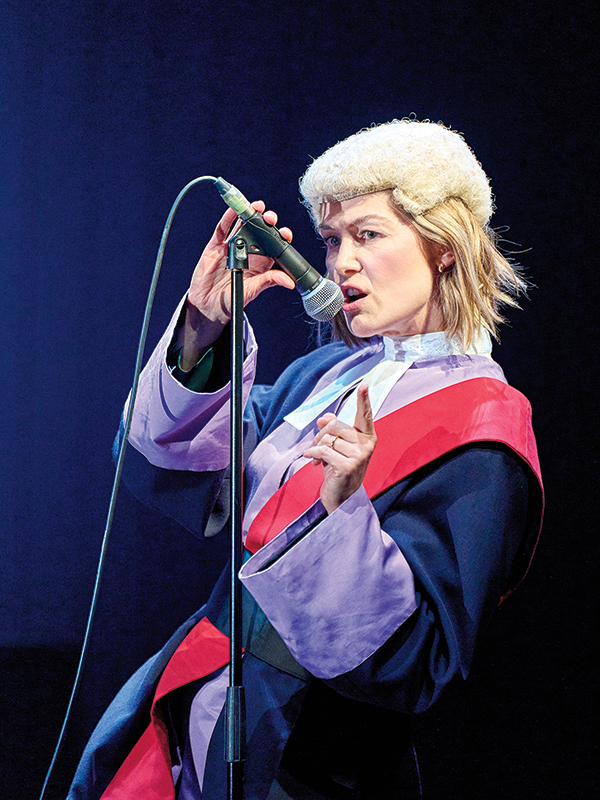
Miller had more to say. She wrote Inter Alia, revisiting these questions about a broken justice system from the perspective of a judge whose 18-year-old son is accused of sexual assault. It starred Rosamund Pike and opened at the National Theatre in London last year.
To date, Miller has written over 40 plays, a novel, and a screenplay of Prima Facie, which premiered at the Toronto International Film Festival (TIFF) in September. “It was an amazing experience,” she says of her move into cinema, penning her first script with Wicked’s Cynthia Erivo in the lead. “I was working with a fabulous director [Susanna White].”
Despite being released nearly a decade after Miller first wrote the play, the issues surrounding it are more relevant than ever. “It’s a really interesting moment, with the Cornell 7,” Miller says, referring to the recent high-profile American lawsuit filed by a former college student, alleging she was drugged and gang-raped over several hours by seven men from Cornell’s Chi Phi fraternity.
On that, there is a key point some reviewers of Prima Facie miss: “It’s not about rape,” says Miller. “It’s actually about the power structures in the world that we all live in, and recognizing how they actually sit outside our experience. There’s one scene where there’s a rape, but really what you see is a woman’s agony – what a woman is going through in terms of the fear.”
The film adaptation of Prima Facie is released in the US in 2027





Comments