
The Hard Rock chain’s “80,000 pieces of rare music memorabilia” (kicked off, apparently, by a gift from Eric Clapton) has wildly skewed perceptions of modern instrument collecting as just another boomer fetish, with scarred Fenders tokenizing a mythical youth, decades gone.
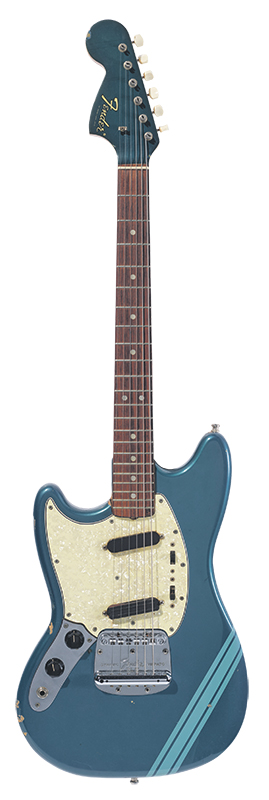
Obviously enough, pop culture sells and to a certain extent, the instruments here are relics whose provenance and iconography matter more than intrinsic value. This is where a smashed Kurt Cobain Fender is worth as much as (if not more than) a still-playable example, and while it’s natural that the Les Paul that Mark Knopfler played is worth more than a regular example, the celebrity element of the value is pure bubble.
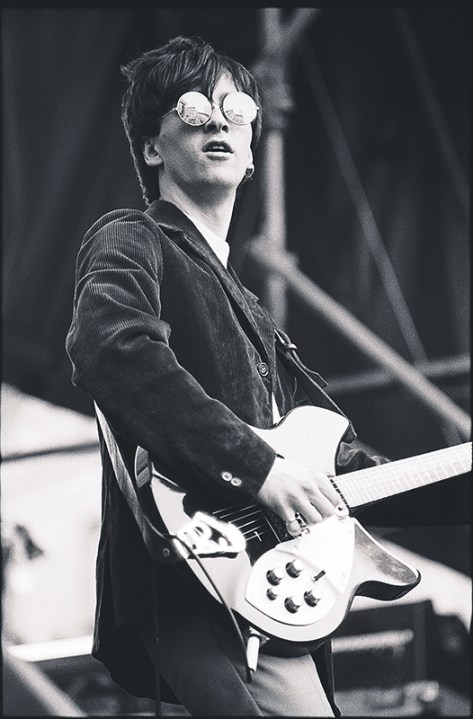
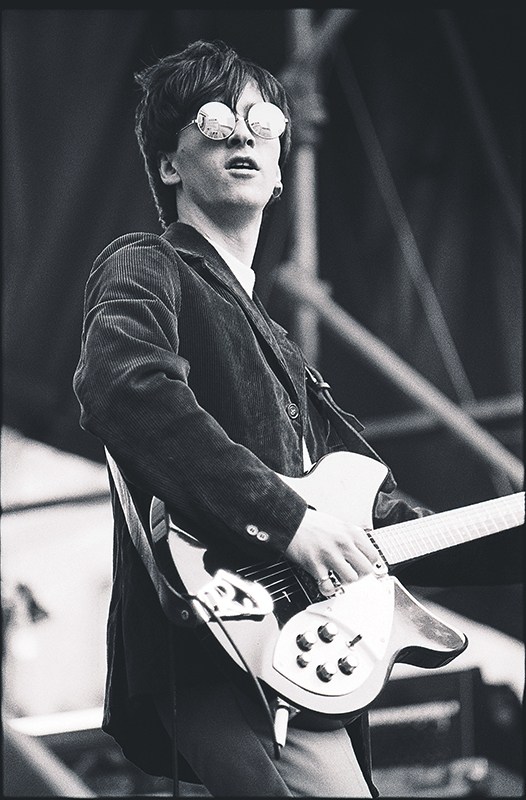
The recent Christie’s sale of Johnny Marr’s guitar collection offers a more nuanced picture, however. The former Smiths guitarist is hardly lacking in pop-culture stature but never wanted to be the front man and the guitars featured in the sale document his musical development, the styles he wanted to master, and the sounds he wanted to use. It is interesting that the sale only happened after Marr had written about his collection in 2023 and came to the realization that he would gain nothing more from storing them away. Notably, the sale was not motivated by financial need as the proceeds went to charity.
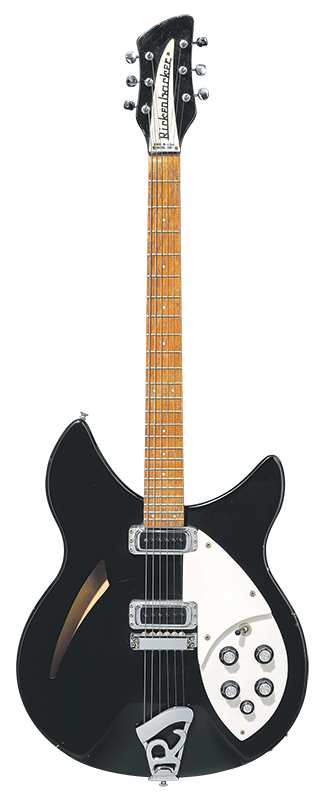
The book, Marr’s Guitars, is less conventional memoir or collectors’ catalogue than it is an autobiography told through instruments. It presents more than 50 significant guitars from his life, photographed in detail and with Marr explaining where they came from, what he played on them, and, more importantly, what each instrument prompted him to do differently. It’s in those details that the collector value of the instruments is defined.
The guitars are working objects, accumulated because particular instruments suggested different sounds, techniques, and songs. As he puts it, “Always, I hoped that my latest guitar would make me do something new.” His first professional instrument, a 1980 Gibson Les Paul, was partly inspired by his admiration for Marc Bolan, then there’s a 1977 Gretsch Super Axe which was used to write the earliest Smiths material, and a 1963 Epiphone Casino that was used to produce the tremolo sound on “How Soon Is Now?”
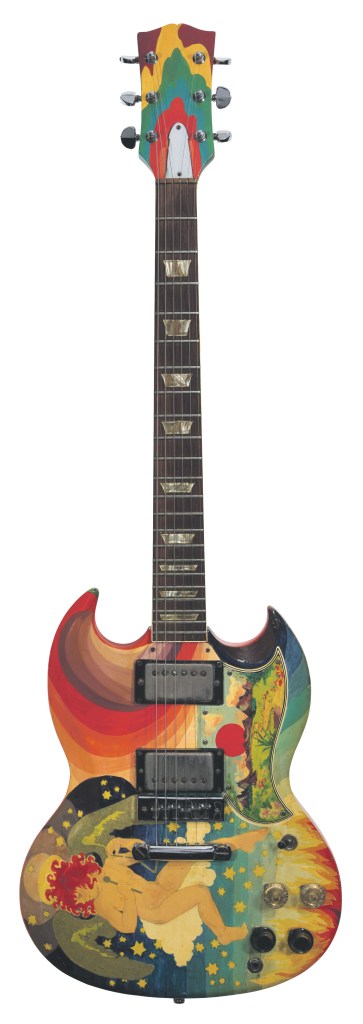
In the book but not included in the sale were several instruments that Marr acquired from other musicians that carry layers of meaning. Among these is the Hagström guitar given to Marr by Bryan Ferry, which can be seen in the gatefold photograph of Roxy Music’s 1973 album For Your Pleasure, as well as a Nile Rodgers signature Stratocaster and a Yamaha from Bert Jansch, who Marr cites as a formative influence.
Intriguingly, the exchange goes both ways: the Stratocaster Marr gave Noel Gallagher became the guitar used on “Wonderwall,” and a Les Paul Goldtop that went to Ed O’Brien was used on Radiohead’s 2007 record In Rainbows.
This cross-donation documents musical relationships and lineages and, surprisingly, echoes the collecting of classical instruments.
In the classical category, the economics have produced an extraordinary inversion of normal collecting patterns. Stradivarius and Guarneri instruments are now so valuable (generally from $2million and up) that it’s inconceivable that the musicians capable of getting the most from them could possibly afford them. So, collectors effectively become custodians, buying instruments and lending them to performers (and not incidentally acquiring great kudos and influence as a result). The Frans Brüggen Project’s collection of 17th- and 18th-century recorders is extensive and exquisite, but the instruments are both incredibly valuable and very fragile so of little interest to a musician to own, but with the Project setting the parameters, they can still be used to create music.
Nigel Brown’s Stradivarius Trust was one of the first and most innovative actors, beginning with the 1985 acquisition of the “La Cathédrale” Stradivarius that was played by Nigel Kennedy. Cleverly, Brown set up the scheme so that Kennedy (and subsequent performers) would be able to acquire the instruments over time. With the Trust, and similar organizations such as the Stretton Society, taking on the risks associated with condition and provenance etc. while the instruments are played as they should be, the model has to be a far more satisfying way to collect than stashing Monets in a Swiss vault.
Escape clause
If collecting celebrity comes with a built-in shelf-life, there are always exceptions. A century after Harry Houdini’s demise (the great escapologist was taken down by a bathetically minor injury), Potter & Potter has a sale of “Houdiniana” at Hollywood’s Magic Castle.
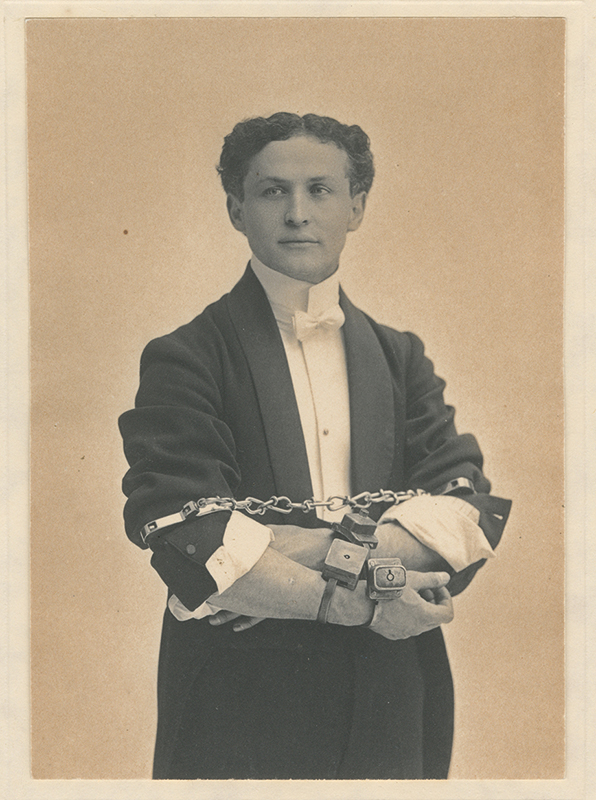
Houdini collecting is a wonderfully broad church. Photographs, posters, and books sit alongside more talismanic objects actually owned or used by the magician. Among the latter is a plain but very nice French pocket watch, a gift from his wife Beatrice containing a secret code in its inscription, estimated at $20,000-40,000. An annotated photograph showing Houdini and Beatrice with the Welsh Brothers Circus early in his career carries a $10,000-20,000 estimate, while a signed photograph of Houdini manacled in chains is expected to make $3,000-6,000.
Other curiosities include an invitation to the “Final Houdini Séance,” signed by Beatrice and estimated at $1,000-2,000. At the same estimate, though, I’m after a brilliantly fraudulent “spirit photograph,” apparently showing Houdini’s ghost rising from his body. That Houdini’s name still resonates 100 years later perhaps shows the photo is more real than it appears!





Comments