
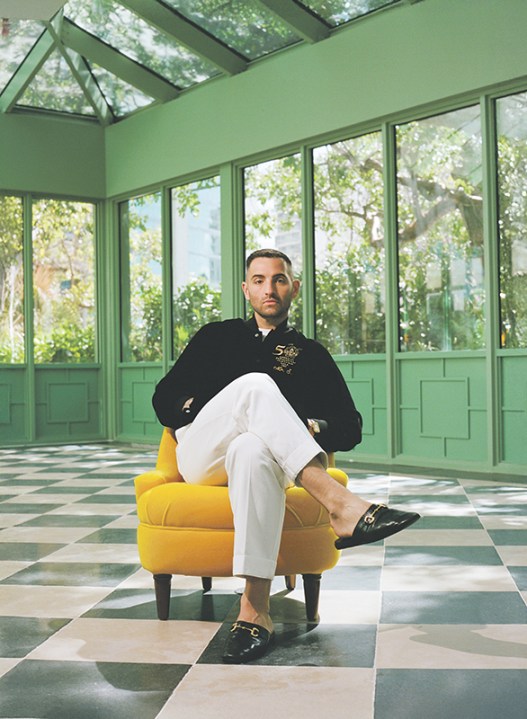
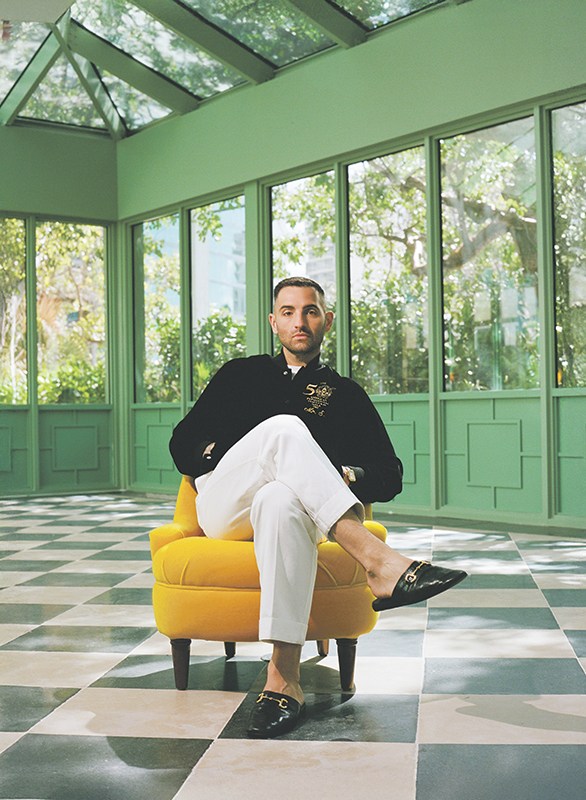
You might expect the chef and co-owner of one of the world’s most recognizable restaurants to be relatively removed from decisions like which plates should be on the tables. But Mario Carbone has given his name to Carbone, the red-sauce restaurant empire that started in New York, now also in Miami, Dallas, and Las Vegas, and has since spread to the Middle East, Hong Kong, and, most recently, London. It turns out, the plates matter.
“I have this collection of mismatched Ginori patterns,” he says. “Many of them are now out of stock. Everyone uses Ginori – I’ve spent years buying it for the [Major Food Group, the company he founded] restaurants, but also in Italian restaurants that I worked at when I was younger.”
We are in Carbone London, the glitzy, high- energy restaurant in the former US embassy in Mayfair where the waiters are called “captains” and the oversized menus have been photographed more times than many of the celebrity diners. Details are key here, like the plates, which are, of course, by Italian brand Ginori 1735 and chosen by Mario himself– though he does not see his Ginori shopping habit as collecting: “I never think of it as a collection,” he says. “I just look at the stacks of plates, and I think it’s totally normal.”
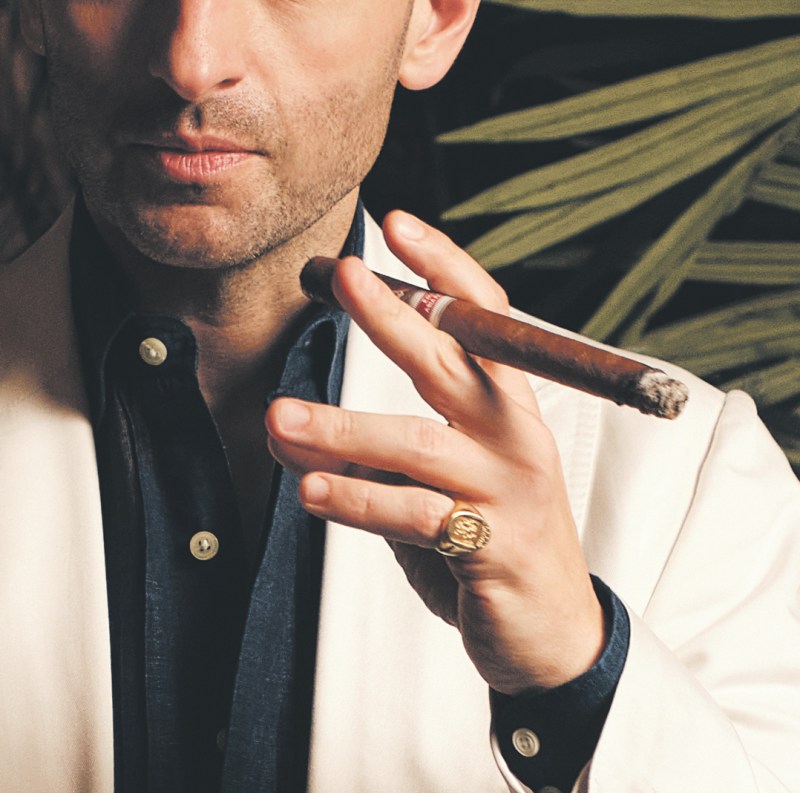
But Ginori plates are not the only things he finds himself drawn to. Over the years he has become the owner of several significant Frank Sinatra items, sourced piecemeal from private sales and auctions. When we meet, he is wearing Sinatra’s signet ring, of which only 12 copies were made and gifted to Sinatra’s close friends and family members. The one Mario is wearing used to belong to singer Tony Bennett, which he bought at auction after Bennett’s death.
“I wear the ring almost every day,” he says, “it’s my prized possession.” Mario has one of the singer’s jackets, too, which he also wears, and Sinatra’s personal program from JFK’s inauguration, kept safely in a glass case at home: “that piece I treat very museum-like.”
I ask whether there is a wish list behind any of this; a set he’s trying to complete. He shakes his head. “It’s very opportunistic,” Mario says. “Sometimes [each piece] feels like it was meant to come along. I’m not out there being like, oh, I’ve got number 17 of 1,988, or whatever.”
It’s a different temperament from that of most serious collectors, for whom value is usually key (a 2018 Sotheby’s sale of Sinatra’s possessions took over $9 million). For Mario, buying Sinatra memorabilia is about feeling connected to Ol’ Blue Eyes – a man that, he tells me, is Italian-American culture.
“He’s the patron saint of Italian-Americans,” Mario explains. “In [our] culture, he’s omnipresent. You have the Pope and Frank on the walls of every house.”
Wearing Sinatra’s jacket, alongside his ring, helps Mario to “feel his presence,” in a way that goes beyond admiration. “Between the restaurants and my lifestyle, [being Italian-American] is really a cornerstone of who I am, and [Frank] is the defining figure of what that is,” he says. “With the restaurants around the world, my personal brand, this restaurant’s brand, where I’m from; I feel like it’s almost my duty to be an ambassador of [Italian-American] culture.”
And when you put it like that, his penchant for Ginori porcelain and Frank Sinatra pieces starts to make sense. This is a chef who feels an almost moral obligation to amass these objects; to preserve and advocate for the culture he has grown up with – and, in the case of Carbone restaurants, to share it with the world.




Comments