
The British customs officer was stumped. The label on the crate said “Sculpture for the Blind” by Constantin Brâncuși, but in his view, it was a lump of stone. It was part of a shipment of sculptures that Peggy Guggenheim, the American heiress, had asked the artist Marcel Duchamp to send from Paris for an exhibition at her gallery, Guggenheim Jeune. But the Brâncuși was proving a problem. Was it liable for a 10 or 20 percent tariff, brought in to protect British stone carvers? Or could it possibly be exempt from all duty as a “work of art?” There was nothing for it but to call upon James Manson, the director of the Tate Gallery, to decide whether the piece was art, craft, or, as suspected, “raw building material.” His answer left no room for doubt. According to Manson, the work – and all the others in the crates by artists such as Jean Arp, Raymond Duchamp-Villon, and Alexander Calder – were “idiotic.” Certainly “not art.” Full tariffs applied.
However, Manson – and indeed customs – had not reckoned with Peggy Guggenheim, nor with her stalwart assistant, Wyn Henderson. When the pair discovered the works were stuck in customs, they began a letter-writing campaign that really stirred things up. Questions were raised in the House of Commons. Manson, a self-described archenemy of Modernism, was forced to back down (and then retired, due to “health reasons”). This episode illustrates two things: the woeful parochialism of British art institutions in the 1930s. And that it was unwise to stand in the way of Peggy Guggenheim.
She couldn’t bear the idea that the artists would feel downcast at the lack of interest from the British public
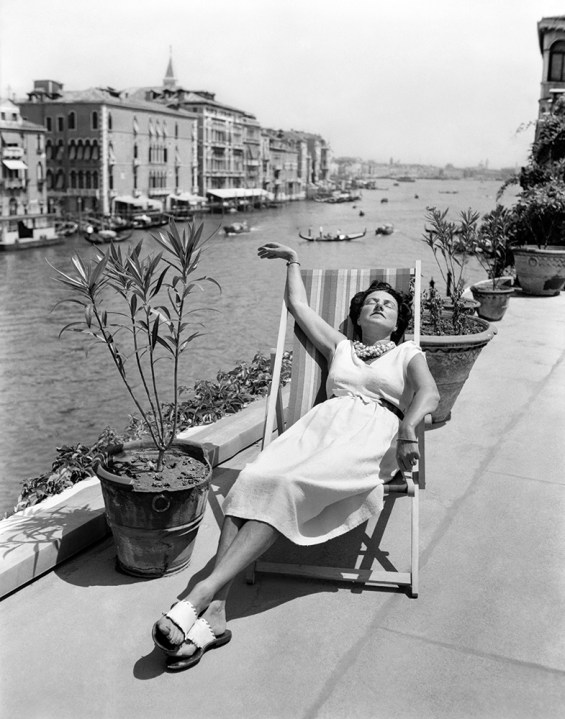
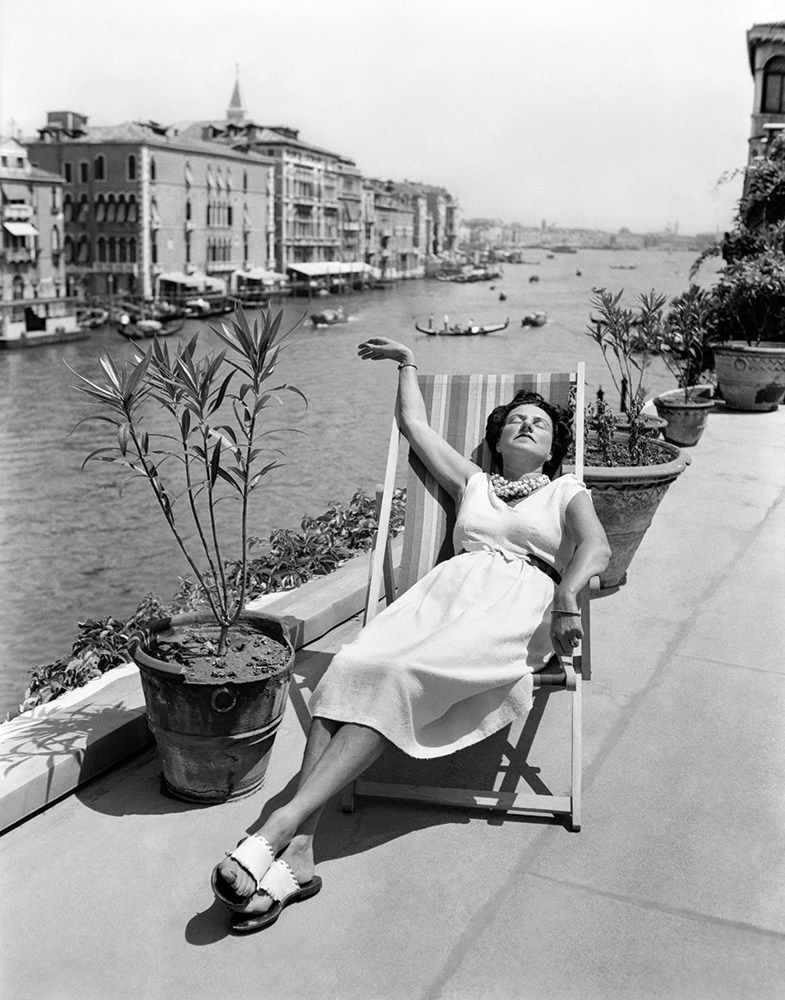
Peggy was the daughter of Benjamin Guggenheim, the mining magnate who drowned on the Titanic, dressed for dinner and with a rose in his buttonhole. Having traveled throughout her childhood, Guggenheim came to England in the 1930s and described the English countryside as her spiritual home. By 1938, the heiress was emerging from a bruising affair with Douglas Garman, a writer and a Marxist. According to her breathless memoir, Out of This Century, Guggenheim was at a loss as to where to channel her prodigious energy. A friend suggested she open an art gallery. Inevitably, a surprising number of artists were on hand to help, including Duchamp, who Guggenheim said had crucially explained to her the difference between abstract art and Surrealism. He then introduced Peggy to the artists who mattered most, a roster that included Kandinsky, Cocteau, Magritte: all the great names of mid-20th-century art.
Peggy Guggenheim in London: The Making of a Collector traces what happened next. The exhibition, which began at Guggenheim’s former home, Palazzo Venier dei Leoni in Venice, now travels to London’s Royal Academy of Arts before heading to the Guggenheim in New York next year. It shows the extraordinary impact Guggenheim made on the British art world in a startlingly short space of time.
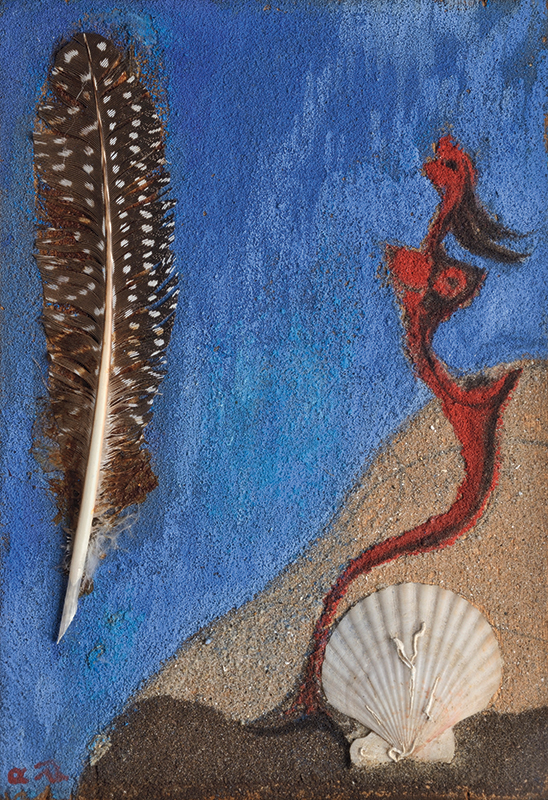
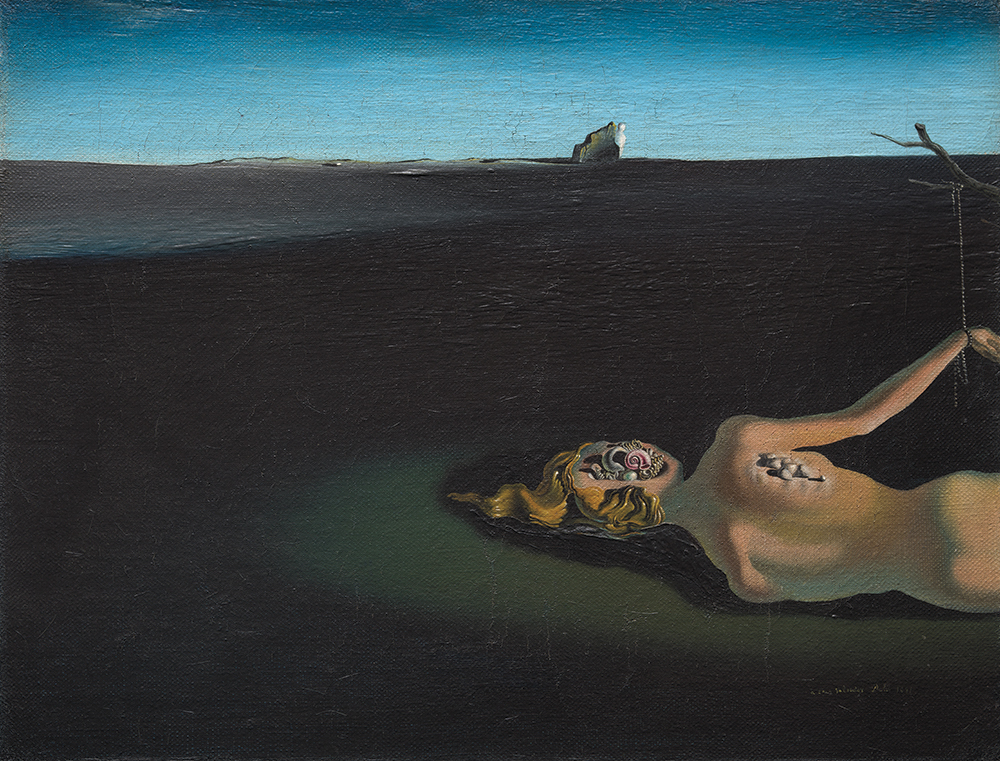
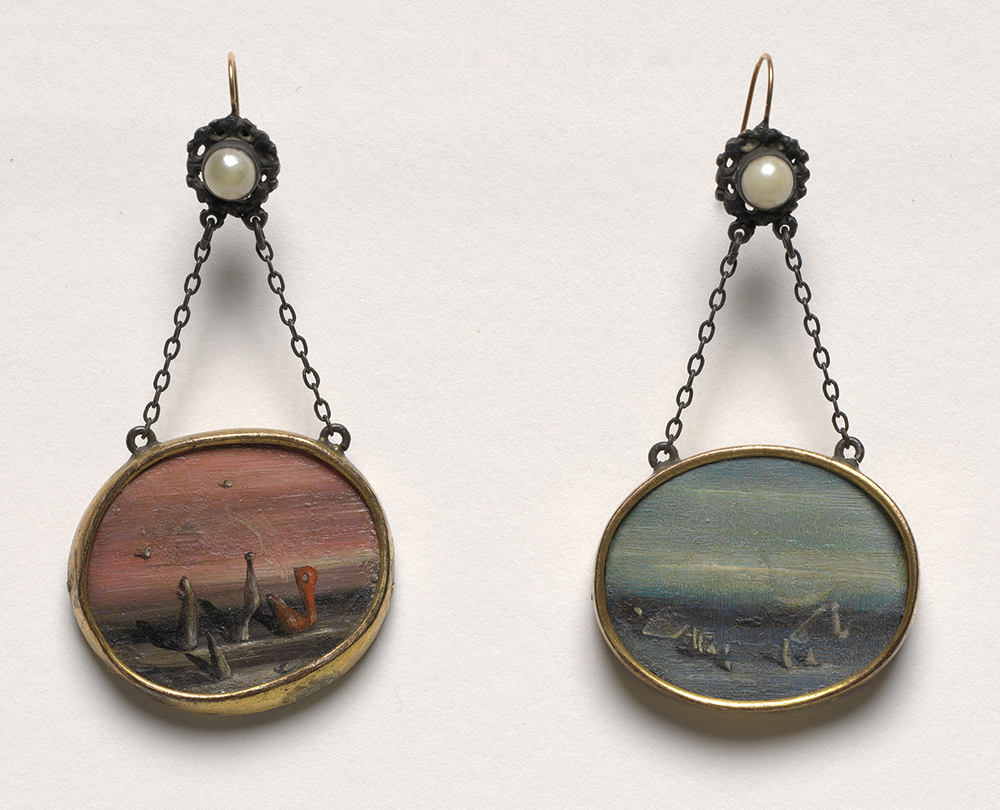
Peggy’s gallery, Guggenheim Jeune, opened in January 1938, on Cork Street, Mayfair, in the former premises of a pawnbroker, and closed in June 1939. Between those dates, there were 20 exhibitions, beginning with the first show in London for Jean Cocteau. This was followed in February with another first: a London solo show for Kandinsky. There were other landmarks such as the first group show of collage in the UK; an exhibition for Yves Tanguy (the only show at Guggenheim Jeune that could be called a commercial success) – and, of course, the contemporary sculpture exhibition that got waylaid in customs.
One of Guggenheim’s greatest talents was surrounding herself with extraordinary advisors, many of the them women. Mary Reynolds, Duchamp’s partner, is one of the unsung figures of the story, says Simon Grant, the show’s co-curator, as was Wyn Henderson, who found the premises, decorated it, chose the gallery’s name – and the sans-serif typeface. Because of her, the first show opened in 24 days after the signing of the lease.
Why did Guggenheim do it? The picture she presents in her memoir is one of whimsical haplessness – a girl who can’t say no. The British Surrealist John Tunnard was given a solo show because he strolled into the gallery and Guggenheim liked him. Cedric Morris, a very close friend who Peggy described as “a painter of flowers who had an iris farm in Suffolk,” wanted a show, but perversely decided to exhibit only portraits of celebrities which Guggenheim said were “nearly all on the unpleasant side.” As she ruefully pointed out, “there was no reason for showing them in any Surrealist and Abstract [sic] gallery, but Wyn and I loved Cedric so much we could not refuse.”
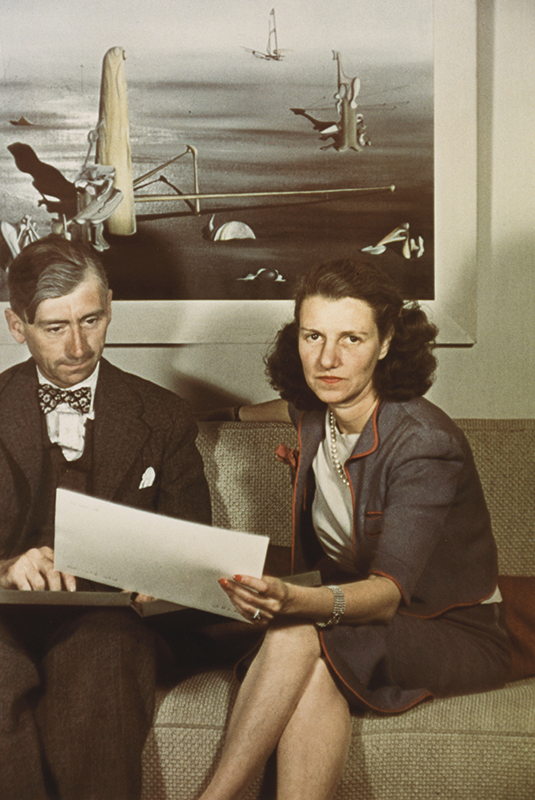
Indeed, her version of the creation of Guggenheim Jeune is more focused on her lovers than descriptions of art. What does come across is that Peggy had an instinctive attraction to the most interesting of everything. Her lovers from 1938-9 included Humphrey Jennings the filmmaker; the painter Yves Tanguy; Belgian Surrealist E.L.T. Mesens, described by Peggy as a “gay little Flamand;” and Roland Penrose, who, according to Guggenheim, had one eccentricity: “when he slept with women, he tied their wrists up with anything that was handy. It was extremely uncomfortable.” Then there was Samuel Beckett. Beckett had an enormous influence on Peggy. When she told him that she preferred Old Masters, Beckett said “one had to accept the art of our day as it was a living thing.” Peggy took this to heart.
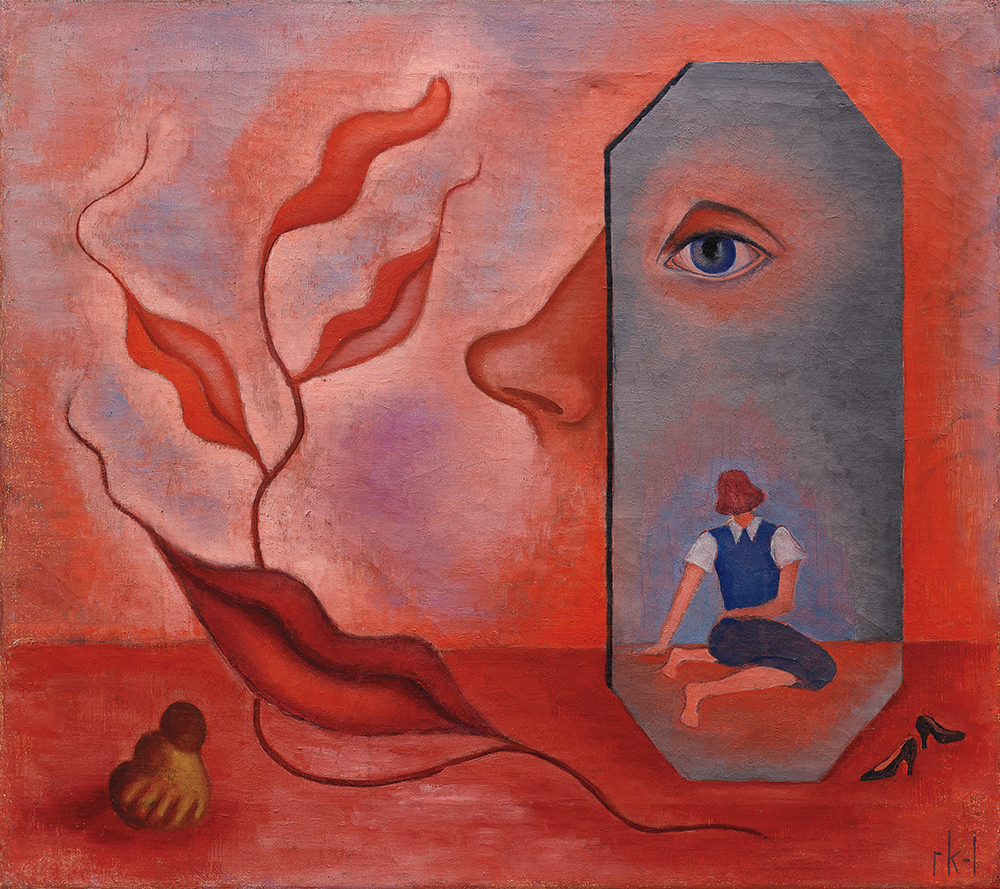
The reception of many of the exhibitions ranged from tepid to hostile. At Cedric Morris’s private view, the architect Ernő Goldfinger was so incensed by Morris’s paintings, he burned a pile of catalogs. Morris then hit him. There was blood. An exhibition of Surrealist works by Grace Pailthorpe and Reuben Mednikoff attracted particularly mixed reviews. The Daily Telegraph wrote: “These lurid monsters and freak landscapes have the effect of a nightmare shaken with spasms of laughter,” while the reviewer for The Sunday Times noted that “it would be a waste of time for the critic to say what he thinks of it as art.” But many of the artists that Guggenheim showed have stood the test of time – and her pioneering promotion of women artists such the Surrealist Rita Kernn-Larsen, Sophie Taeuber-Arp, and Marie Vassilieff show she was far advanced of almost all art institutions.
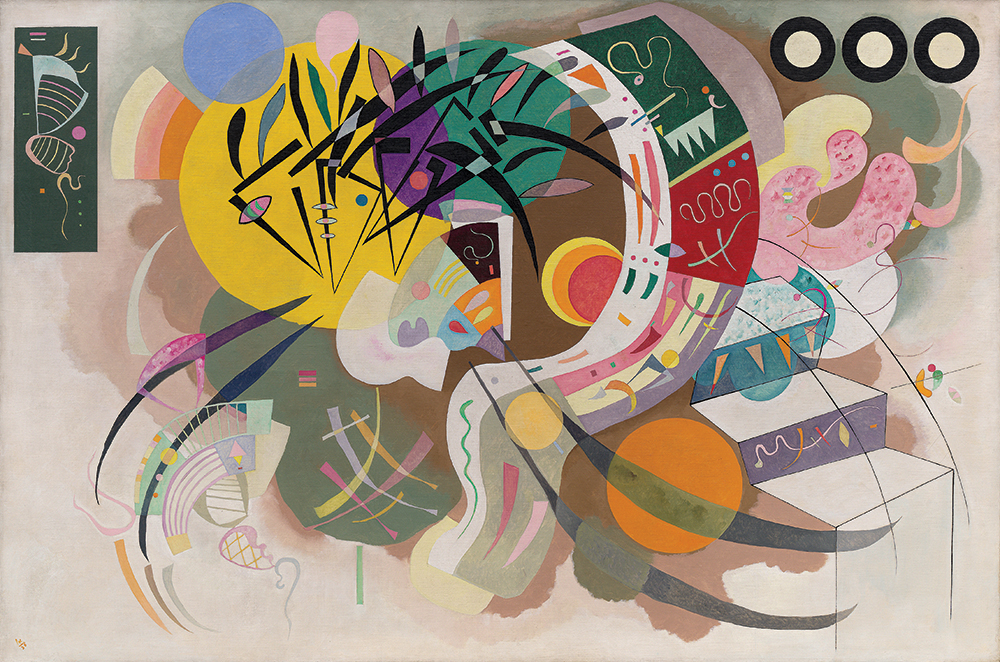
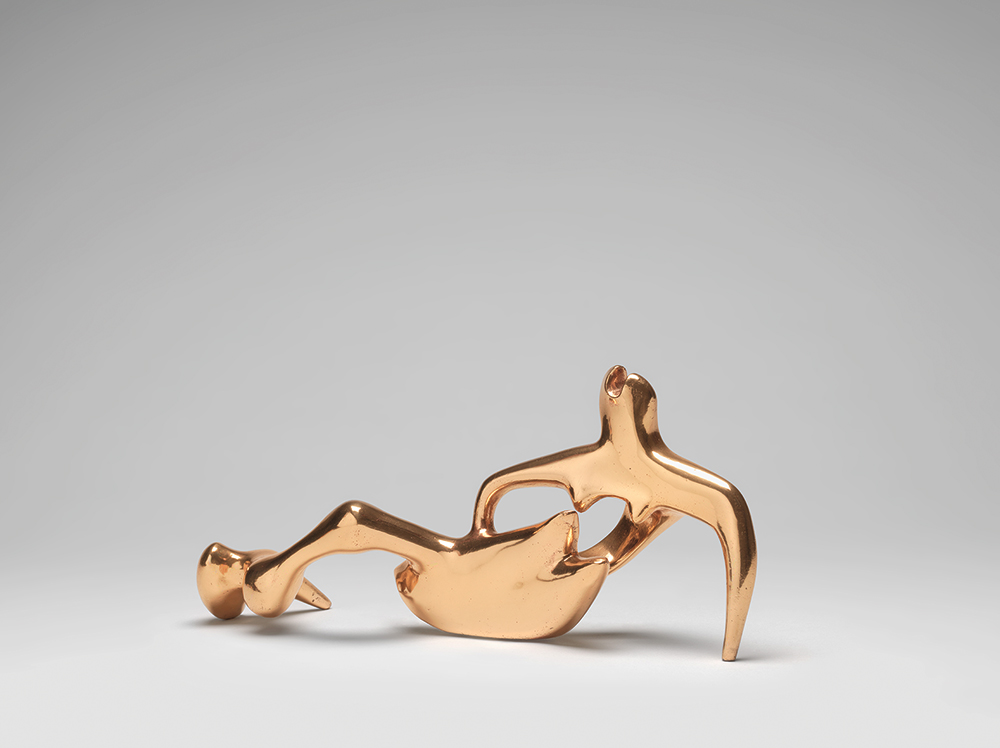
One reason Guggenheim created such a magnificent art collection – now permanently on display at her home in Venice – was not just her instinctive eye, but also because she felt morally obliged to buy something from every show. She couldn’t bear the idea that the artists would feel downcast at the lack of interest from the British public. In some cases, such as Kandinsky’s exhibition, the only sales she made were to herself. One of the works in the exhibition, “Dominant Curve,” is on loan from her uncle Solomon’s collection. Having acquired it, Guggenheim later passed it to a dealer who sold it on. From the London shows she also acquired “Le Soleil dans son écrin” by Tanguy, a reclining figure by Henry Moore, and Jean Arp’s “Head and Shell (Tête et coquille).”
‘She recognized that she could make an impact through contemporary art… supporting the artists of her own time’
And it wasn’t just artists she supported. New research by Abi Shapiro, curator at The Hepworth Wakefield, shows that Peggy and her sister Hazel donated more than 57 works to regional galleries such as the Wakefield Art Gallery (now The Hepworth), Leeds, and Stoke. The extent of this four-year burst of philanthropy is only now being understood.
For all the airy fecklessness of Peggy’s memoirs, she had, in fact, a sharp mind and a firm belief that culture was a necessity of life. As co-curator Gražina Subelytė, of the Guggenheim Foundation in Venice, says, “There was moral dimension to Peggy’s character. One of her teachers at the Jacobi School, Lucille Cole, encouraged her to devote herself to other people. What she did in London was a continuation of that idea. She recognized that she could make an impact through contemporary art, and by supporting the artists of her own time.” And Guggenheim had a clear idea of who was going to benefit. “When a list was drawn up for the museum of modern art she hoped to establish in London, she crossed out Cézanne, Rousseau, and Matisse (who was actually alive) because, for her, they represented the past. She had a clear sense of what interested her and where she wanted to go.” The key thing about Peggy Guggenheim, says Simon Grant, is that “she wasn’t just a talker. She did it.”
Peggy Guggenheim in London: The Making of a Collector is at the Royal Academy of Arts from November 21, 2026 to March 14, 2027 and Guggenheim New York, April 16 to September 12, 2027




Comments