
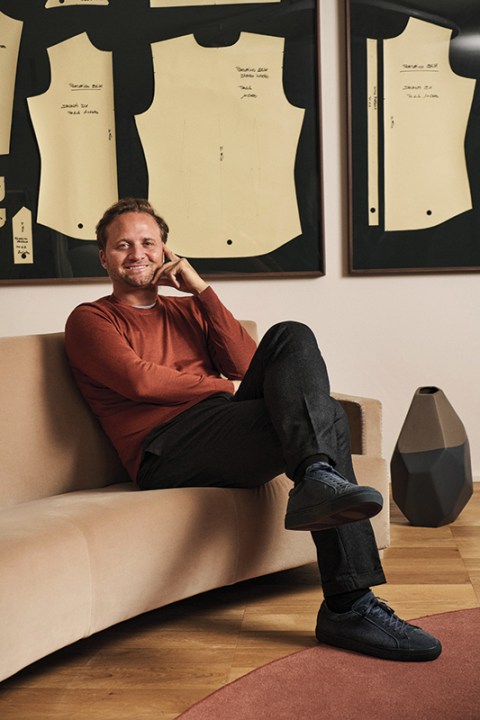
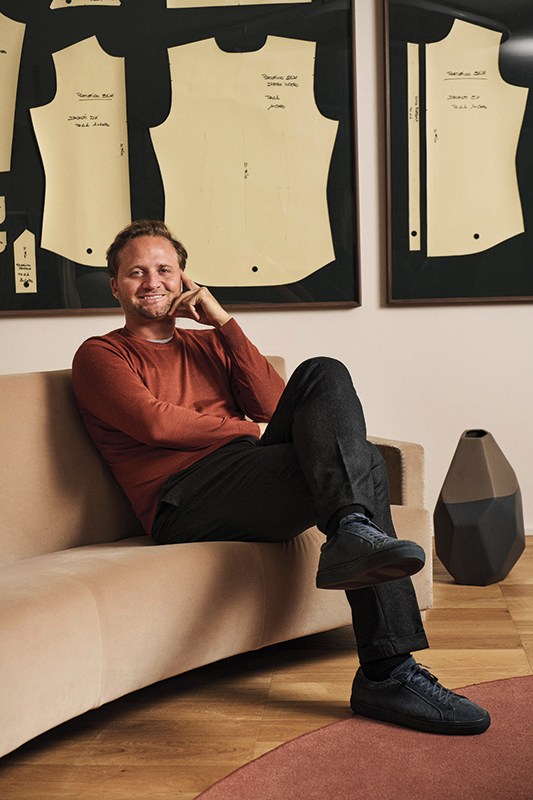
Luca Faloni is a former management consultant. There, we said it. But in menswear, that may – as a management consultant might say – represent a strategic advantage over the moody mercurial creative genius of popular imagination.
His eponymous brand is also, lately, a growth strategy. Last year it opened a second Manhattan address, a 3,500-square-foot boutique in the Meatpacking District with Canaletto walnut fittings and Carrara marble – and, last fall, its first Toronto store, on Bloor Street in Yorkville, its third North American market after New York and Miami. For a label founded online to bypass the traditional wholesale markup, opening its own stores has become Luca Faloni’s next stage of growth.
‘You need to be focused on giving men what they want. They want things that are classic’
“For years I only bought clothes when I went back to Turin, because I knew where to go,” says Faloni. “Internationally, the Italian style I liked was much more expensive and difficult to find.” By then, he had spent several years at Bain, working on consumer goods and fashion projects. Based in San Francisco in the early 2010s, Faloni watched the direct-to-consumer model take shape. “Those were the years when direct-to-consumer brands started,” he says. “There was Everlane, Warby Parker – brands cutting out the middleman, starting online and giving better value for money to customers.”
Faloni realized the same model could be applied to the sort of well-made, understated Italian menswear he had grown up with: dolce vita-style shirts, knitwear, and casualwear from local specialists in Turin, Florence, and Milan that rarely traveled beyond Italy unless accompanied by a substantial luxury-house markup.
You may have caught a glimpse of this very wardrobe on the streets of Milan during a trip – immaculate but relaxed; a soft shirt, jacket, and beautiful knitwear – and wondered where it all came from.
“In any Italian city, you know the places that give you good-quality products, in the designs you like, at the price you like,” Faloni says. “Most of those local stores have never expanded globally.”
Italy has a thriving stable of middle-tier menswear businesses, too established to be called artisanal, too small or cautious to become international luxury houses. Faloni’s idea was to make that ecosystem accessible to the world – and now to bring the shop with it, one city at a time.
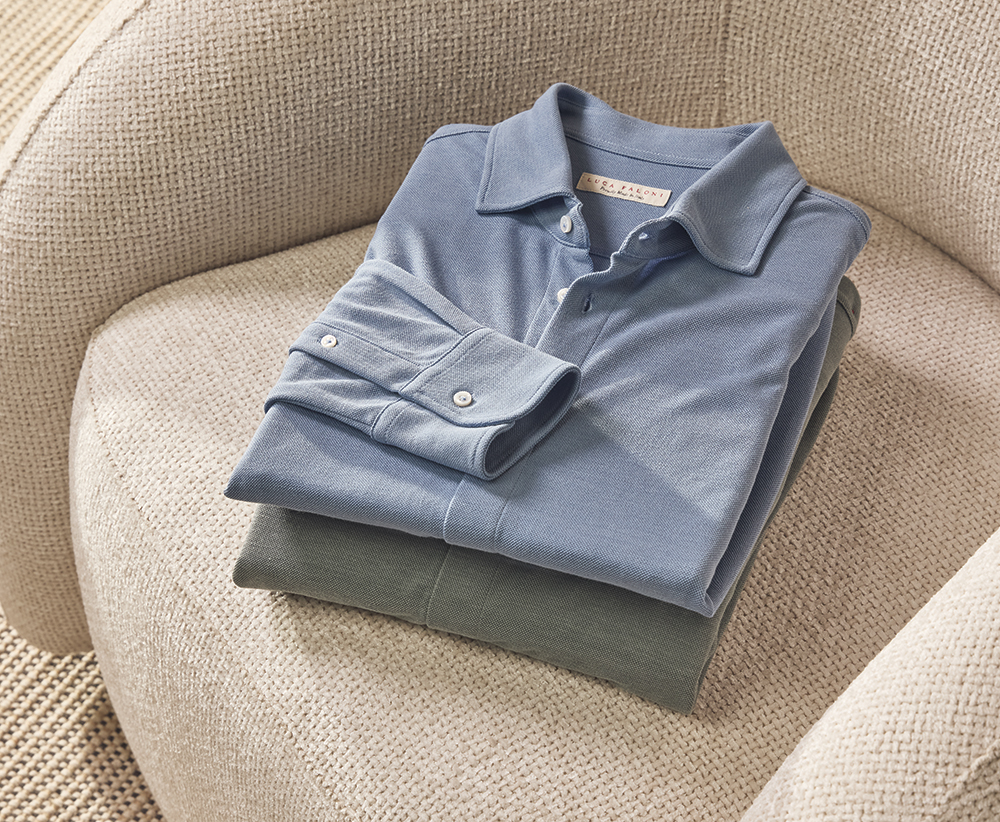
On our video call, Faloni is wearing a soft-blue cotton piqué shirt, with a generously proportioned collar, lustrous mother-of-pearl buttons, and fabric that falls gracefully across the body. “It stretches, but it’s still elegant,” the founder says. “It doesn’t wrinkle, it’s easy to pack, and it’s very comfortable. I wear it a lot.”
The shirt is garment-dyed – meaning it’s constructed first and colored afterwards – so that, with washing, it develops what Faloni calls “a little bit of a vintage effect.” It works with shorts at the beach and in the office, too. That versatility is the Faloni sweet spot – and evidently one enough well-heeled professional men want in their own city worldwide.
But a management consultant? Would you wear clothes offered by a man trained in spreadsheets and strategic frameworks? Faloni argues that menswear is one corner of fashion where this is an advantage. “You don’t need to be a designer,” he says. “You need to be focused on giving men what they want. They want things that are classic.”
The mythology of the temperamental creative genius at the helm of a brand, he suggests, obscures the less-glamorous disciplines (cash flow, production, and go-to-market strategy) required to build one.
All buttoned up
The one-piece-collar shirt
The label’s signature shirt uses a collar cut from a single piece of fabric, allowing it to stay upright when worn open. Cleaner and more structured than a conventional collar, it works particularly well beneath a blazer – or with an extra button undone, lunching by the sea. It has also found a notable admirer: “Prince William is a big, big supporter of that shirt,” says Faloni.
The piqué shirt
With its classic cutaway collar and elegantly relaxed fit, the piqué shirt is designed to be effortlessly at home in both a business and a more casual wardrobe. Its sartorial versatility lies not only in its silhouette, but in the ultra-light, fine-knit fabric from which the shirt is constructed – its natural stretch and breathability making the piqué shirt an ideal option for travel.
The overshirt
Sitting somewhere between a shirt and outerwear, the overshirt reflects the continuing erosion of the line between formal and casual dress. Luca Faloni makes versions in linen, cashmere, and suede, with cotton joining the collection. “You can wear it over a T-shirt, over a shirt, or on its own,” says the founder. “It is trendy at the moment, but we believe it is here to stay.”



Comments