
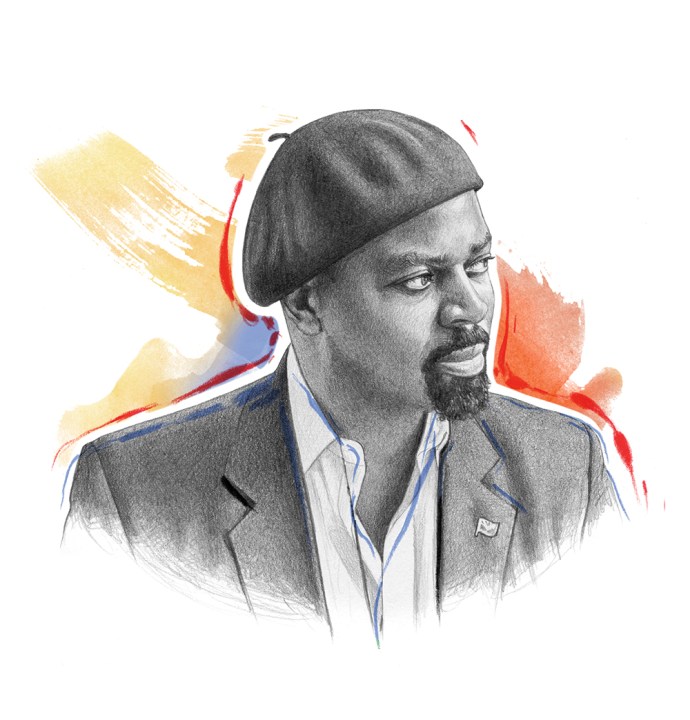
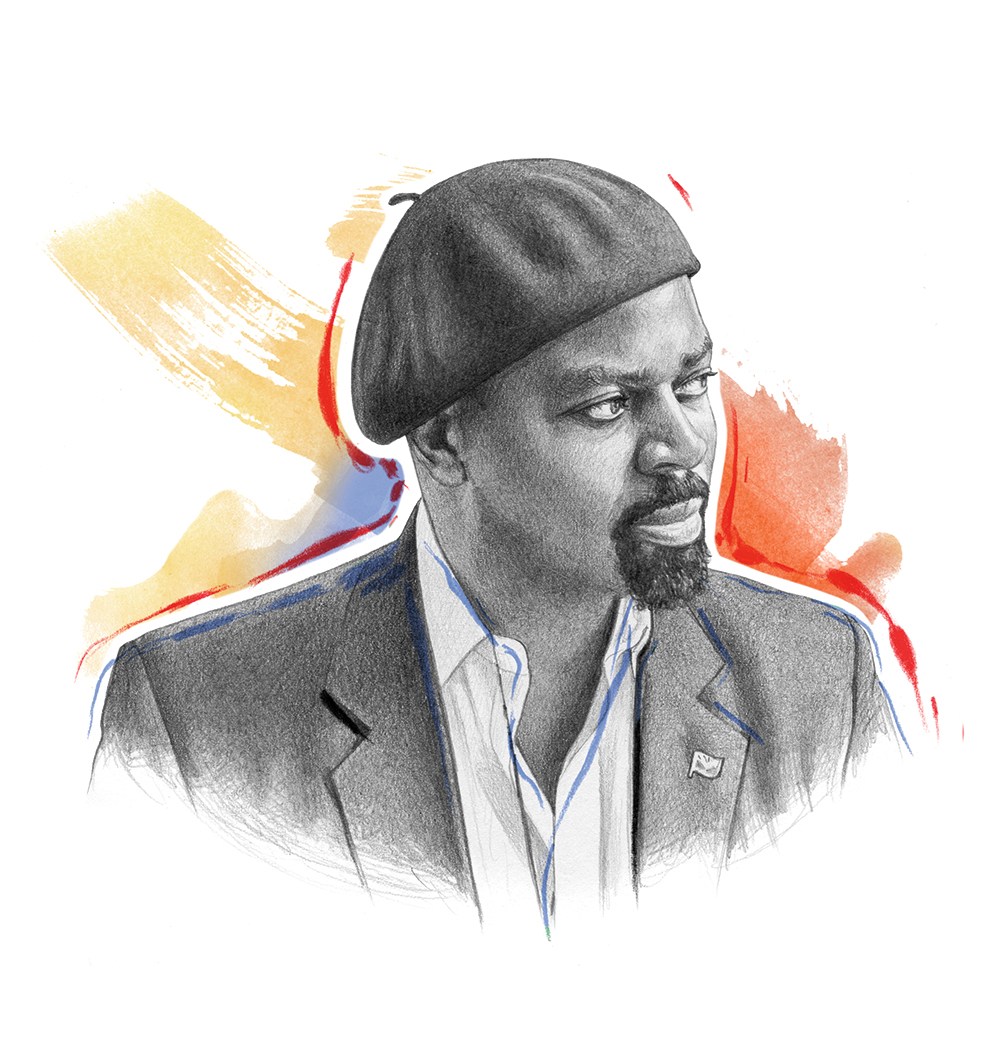
Ben Okri is an award-winning poet, novelist, short-story writer, essayist, and playwright, knighted for services to literature in 2023. Born in Nigeria, he went to school in London and returned to Nigeria on the eve of the civil war. After reading most of the books in his father’s library, Okri has since written a dozen novels including 1991’s Booker Prize-winning The Famished Road. Recent novels include Madame Sosostris & the Festival for the Brokenhearted, a modern fable that pays homage to T.S. Eliot’s The Waste Land, and Waking the Warriors. Here, he discusses four short novels, representative of different cultures, that he thinks people should read.
Short novels are tricky to write and require a totally different discipline to a long novel. A great short novel beats a good long novel because of the challenge of compressing so much into so few pages while still telling a good story. I’m spoiled for choice with short novels because there are so many, but my first recommendation is The Princesse de Clèves by Madame de Lafayette, originally published anonymously in 1678. It’s about love, rumor, and gossip, about artificiality, appearance, reality, and indirectness. And at its heart is the very French theme of the lawlessness of the passions. Albert Camus considered it one of the greatest French novels, and I agree with him. The French have a thing about short novels and it’s largely because of The Princesse de Clèves – you can see its influence not only on Camus’ L’Étranger, but also on Gide and Flaubert.
“A great short novel beats a good long novel because of the challenge of compressing so much into so few pages”
My second book is Chinua Achebe’s debut novel Things Fall Apart. It’s a wonderful short novel with a devastating punch. Put simply, it’s about a young farmer in colonial Africa, but of course it’s about much more than that. Achebe said he wrote it to give a lie to the colonial perception that Africans have no civilization. Everyone was proud of the way it gave voice to the African spirit, and it opened a whole dimension of modern African writing when it was published in 1958. Achebe was a great champion of my work, and I met him several times. He was wise and reserved and had one of those lined faces, like Beckett’s or Auden’s, that’s like a map of the human condition.
I’m going to move from Africa to Ernest Hemingway’s 1952 novella The Old Man and the Sea. It often appears on lists of great short novels, because it really is tremendous. Again, the story is very simple. An old, poor fisherman called Santiago goes out to sea in his skiff and hooks a giant marlin. He fights this fish for three days and three nights. He has no food and must eat raw fish. Sometimes the marlin is calm, at other times it thrashes around. As Santiago brings his trophy fish back to shore, other fish attack it and so he returns with only the marlin’s skeleton.
It’s an incredible metaphor for the strange meaning of our journey through life. We go out there to achieve something or other, we think we’ve achieved something or other. With the passing of the years, the meaning of those achievements change. You could see it with Mandela at the end of his life and Obama at the end of his second presidency. It’s there in the stories of Achilles and Odysseus. The meaning of life’s struggle is changed by the context of time.
My final choice takes us to Edinburgh, with Muriel Spark’s 1961 novella The Prime of Miss Jean Brodie. I’ve always had a very high regard for this book, and the faceted way in which it’s told. It’s the story of Miss Brodie’s influence as a school mistress on a generation of young girls. She has one small, unfortunate flaw that reveals itself towards the end of the novel; it turns out she has shady political inclinations.
Before Muriel Spark died in 2006, I got to know her when I was on a panel that awarded her the David Cohen Prize for Literature. She was very generous to me. She read and loved a book of mine called Dangerous Love. I bought and read all her books just after my mum died, and when I told her they were a real comfort, she was almost in tears.
Waking the Warriors is published November 3





Comments