
“To date, I’ve made 75 deep submersible dives, including 33 to the Titanic,” filmmaker James Cameron announced at the inauguration of the new National Geographic Museum of Exploration in Washington, DC earlier this year.
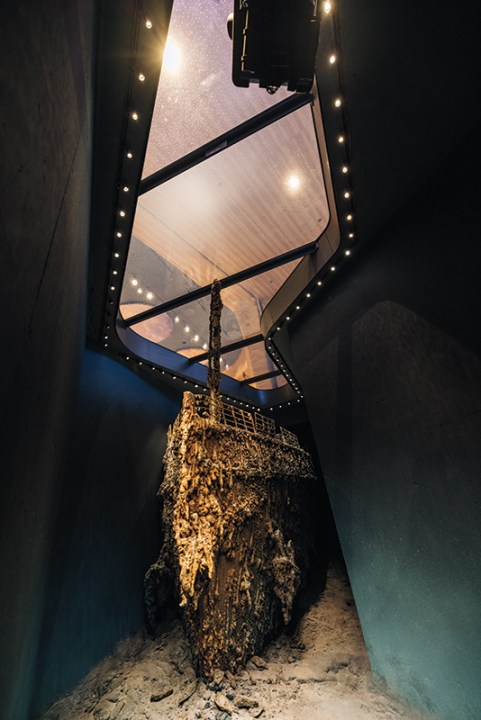
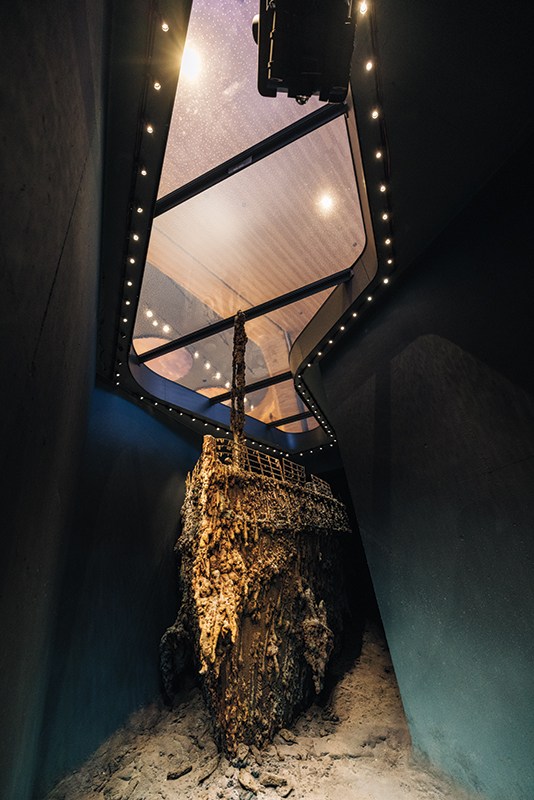
Only feet away from the Hollywood director lay a scale replica of the prow of the ill-fated ship, one of the exhibits at the museum, authentically covered in what look like assorted organisms of the deep. “In 2001, I started work with a new sub that could go to the deepest place in the world’s ocean, and I worked with this polymath engineer in Australia [called] Ron Allum,” Cameron explained. “It took us seven years to build the Deepsea Challenger, and that expedition would not have been possible without Rolex acting on its own spirit of exploration.”
The 2012 voyage Cameron made was to the bottom of the Mariana Trench, the Earth’s deepest point at nearly 11,000 meters. To his submersible, the filmmaker attached the prototype Rolex Deepsea Challenge Oyster-case watch, to test it in the way the Swiss company had been using expeditions to prove the quality of its products since its early days. In fact, Rolex had equipped the successful Everest expedition of 1953, and it was an article on this in National Geographic magazine that led to Rolex and The National Geographic Society forging a formal partnership a year later.
Today, that relationship endures with National Geographic and Rolex’s Perpetual Planet Initiative, which leads scientific research through exploration with the aim of discovering and protecting our world. The new museum, which is housed at Base Camp, National Geographic’s headquarters in Washington, DC, pays tribute to this initiative on its Rolex Explorers Landing, which honors the passion and inquisitiveness that drive us to discover the secrets of the world we live in.
A version of the Rolex Deepsea Challenge watch tested by Cameron is there, alongside Jacques Cousteau’s small submarine, SP-350 Denise, better known as Soucoupe Plongeante (or “diving saucer”), and many other displays of historic expedition equipment. It is an experiential celebration of human curiosity, and the positive impact exploration can have on our environment.






Comments