
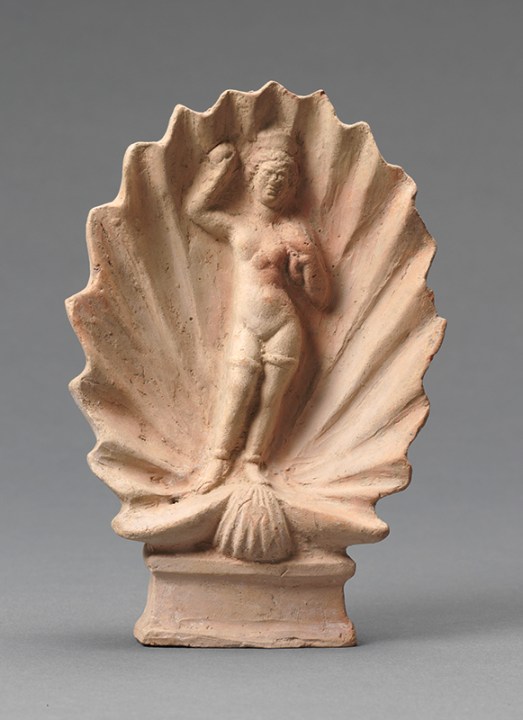
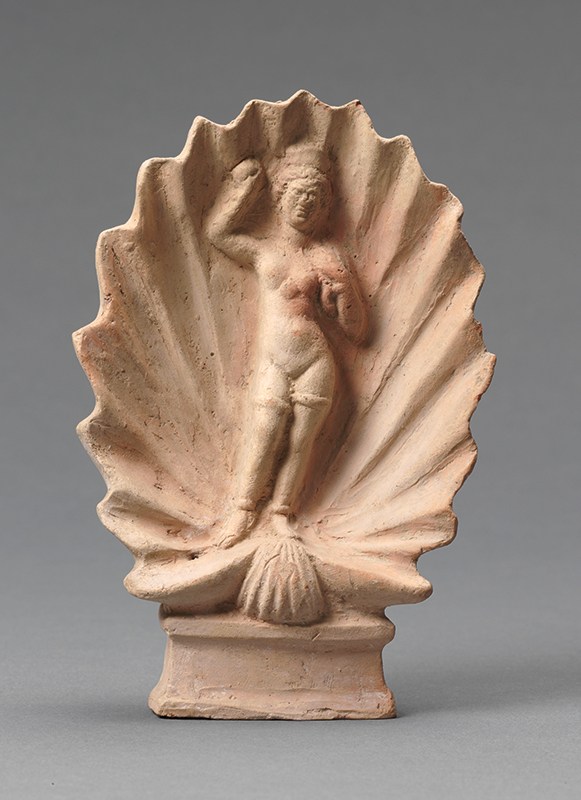
We know Aphrodite as the goddess of love and beauty. But there is more to her. A troublemaker, certainly – she did ignite the Trojan War over a golden apple. But protector of sailors? Symbol of Roman imperial dynasties? As a deity for fertility, she covered all seasons.
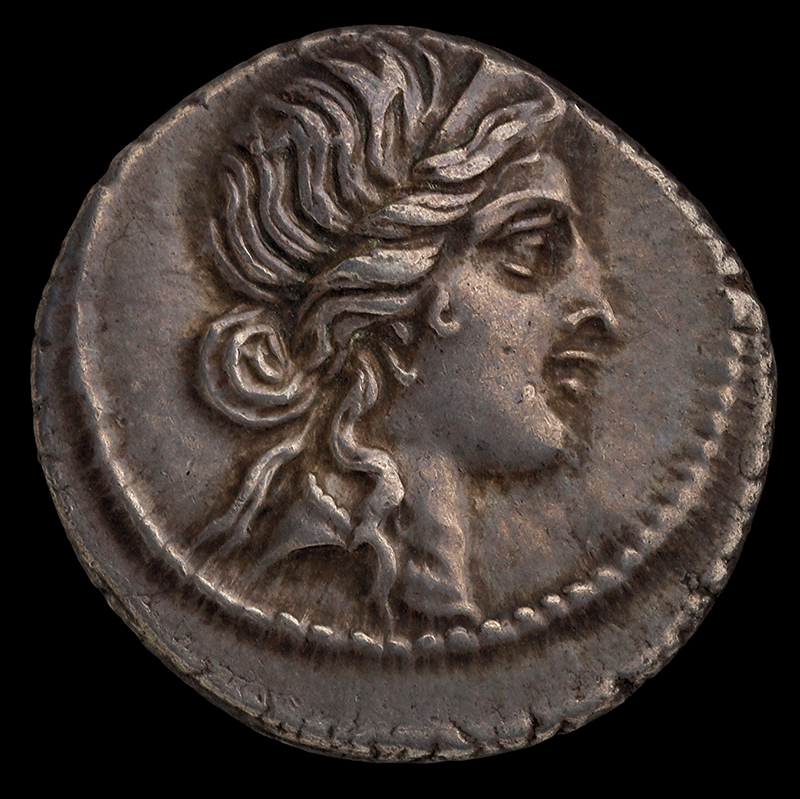
Aphrodite: The Making of a Goddess, coming soon to Oxford’s Ashmolean Museum shows through more than 200 objects the extent of the goddess’s influence on the minds of the ancient world – and how her myth, and that of Venus, her Roman name, has lasted more than 5,000 years to the present day. It is also the first time that classical images of the goddess have been shown alongside contemporary works of art, many of them echoing her archetypal pose.
The cult of the goddess first emerged in Cyprus: her earliest-known representation is a copper figurine, dating from 1200 BCE. It’s the oldest object in the exhibition and comes from the Ashmolean’s own collection. Elsewhere, a recreation of the goddess’s sanctuary shows how Aphrodite was worshiped in many diverse forms – as well as other starry loans: a Botticelli Venus from the Gemäldegalerie in Berlin, the Crouching Aphrodite from the Royal Collection, and 13 pieces from the Louvre, including the Capitoline Venus. “The museum loved the idea of the show so much, they approved our request within two hours,” says the show’s curator, Anja Ulbrich, who has studied Aphrodite for the past 20 years.
Ulbrich, an archaeologist and historian, wants us to understand that Aphrodite/Venus is “a goddess of many powers, many faces, many roles, far beyond love and beauty.” She explains, “[Aphrodite] basically rules every aspect of human life and nature. She is connected to the sky, to the sea, to nature, to fertility, and to violence, politics, and war.” She is also the only goddess in the Greek pantheon portrayed as nude, which further cemented the idea of her as the goddess of love. But before then, she was shown with a vegetable basket crowning her head, a nod towards her powers of fertility.
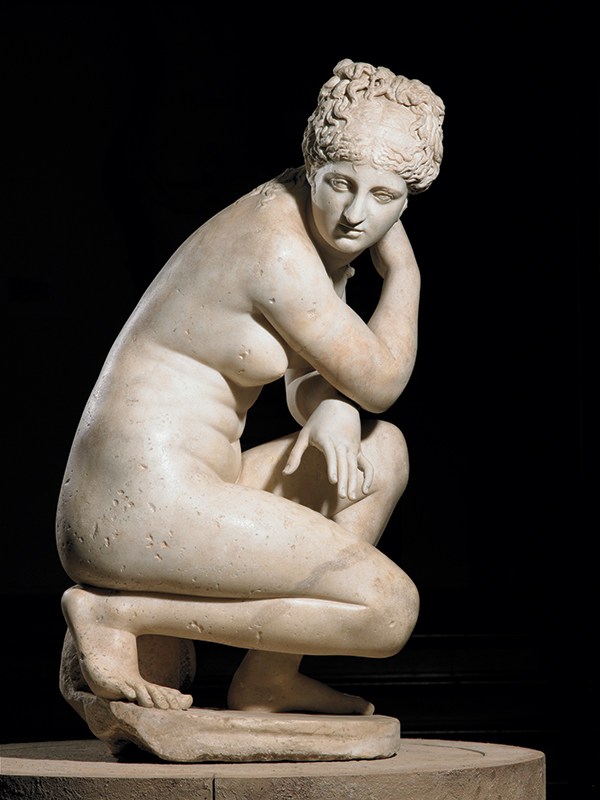
As Ulbrich points out, whenever there was a need for society to expand the role of the woman, Aphrodite/Venus was a ready-made solution. “It is easier to give a mythical goddess power rather than a mortal woman,” she comments. Through the ages, the deity has been depicted as goddess of merchants and seafaring – a Roman mosaic from the Louvre shows her resplendent on a sailboat with her wingman, Cupid, tending to the sails. She is also the personification of power, as depicted on an Attic vase which shows the goddess riding on a swan with a scepter in her hands.

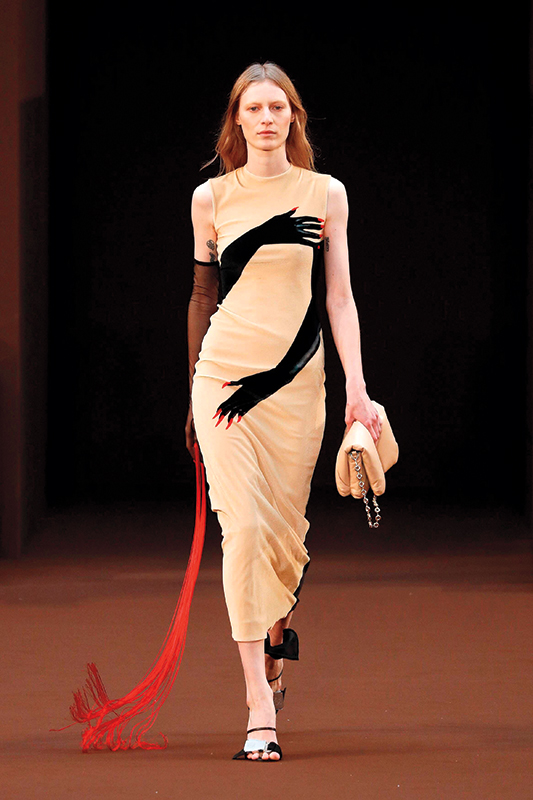
By the time Aphrodite became the Roman figure of Venus, she had been stripped of many of her iconographic attributes of power and put back on a pedestal as the naked beauty. Botticelli’s painting from Berlin revives the classical Venus pudica (modest Venus) template, with her hands and long golden mane demurely covering her body. It’s a pose so indelibly etched in our cultural memory that the designer Jonathan Anderson can evoke it on a dress (with a pair of black arms stretched teasingly across the fabric. Beyoncé wore a bodysuit iteration of this 21st-century Venus reboot on her 2023 Renaissance tour).
“When the focus is on the beauty of Aphrodite,” says Ulbrich, “society of that era requires women to be a perfect image. But as the many objects in the exhibition show, there have been times when women need to be seen as having power to give life and to sustain.”
Aphrodite: The Making of a Goddess at the Ashmolean Museum, October 8, 2026-April 11, 2027; ashmolean.org






Comments