
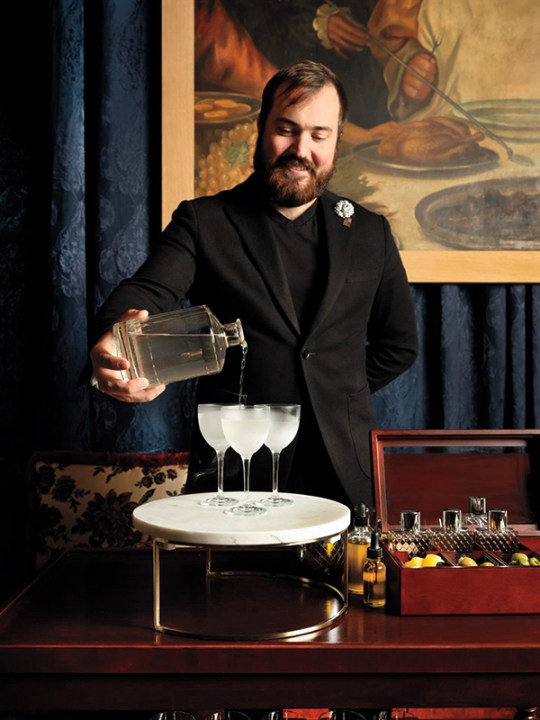
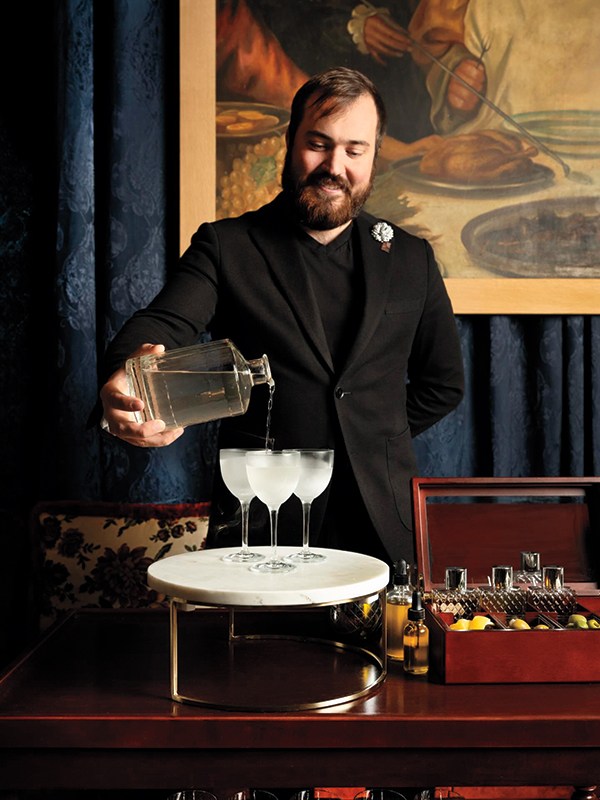
What’s so amazing about bar carts? The novelty and inherent theatricality of it all, sure. The opportunity to personalize a drink at your table, instead of sending instructions back to the bar – yes, that too.
But perhaps the most astonishing aspect? It prompts diners to put. the phone. down.
From my perch across the room, I’m spying on a table at Bazaar Meat by José Andrés where, in its New York and Las Vegas outposts, tableside martini service is part of the steakhouse’s opulent appeal. A group of four has ordered a round of martinis from the cart; for the first drink made, everyone instinctively whips out their phone to capture the initial dramatic swoop of dry-ice smoke, faithfully documenting every dash, splash, and pour.
If people are drinking less – but better – it makes sense that they would want more from their drinking experiences
By the halfway point, the phones are down. They’re watching, in the moment. When the cart cycles back for the next round, the phones don’t even make an appearance. And while I’m not claiming that the return of bar carts will save our society from the evils of social media distractions, it certainly seems like a step in the right direction.
“There’s definitely an analog moment,” says Cody Pruitt, owner of New York City’s Chateau Royale, where a bar cart conveys negronis, old fashioneds and martinis through the dining room. That said, at Chateau, it also solves a very specific problem: the bar is on the ground level, while the dining room upstairs has no bar at all. Instead of schlepping drinks up the stairs, drinks are pre-batched and stored in an industrial freezer, then served from the cart by a designated “boissonier,” or drink maker. “He wears a white jacket and brings the cart,” Pruitt explains. “It’s custom-designed, built like a tank, and probably costs as much as a car.” But it’s been an expense well worth it: on a busy service, the downstairs bar sells about 50 martinis a night, he estimates, while the cart upstairs does twice that.
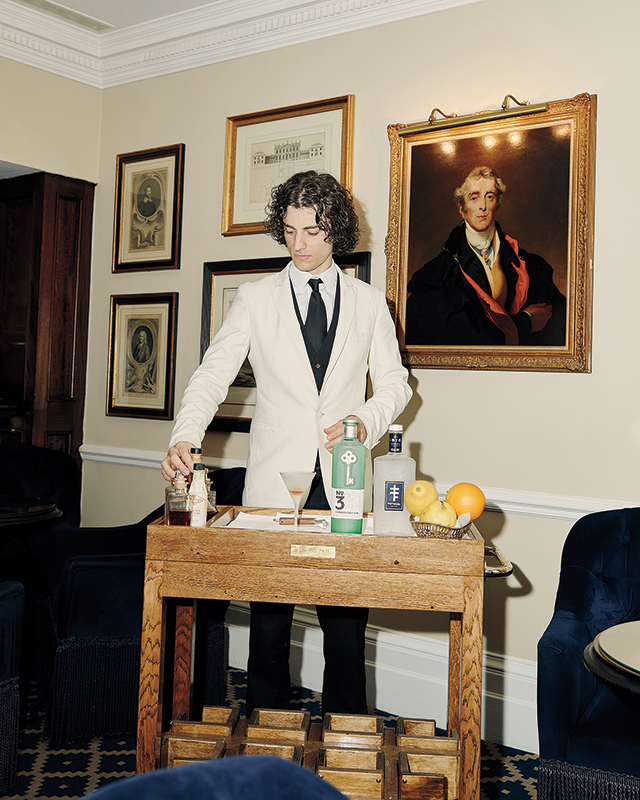
At restaurants across the country, tableside carts and trolleys ferry everything from dim sum to caesar salad and duck flambé. The drinks counterpart ranges less widely. Come brunchtime for example, you’ll find plenty of bloody mary carts roaming the aisles, as at Jack & Charlie’s in NYC, Baltaire in LA’s Brentwood neighborhood, or Toro, a Latin restaurant from chef Richard Sandoval, located in the Fairmont Chicago. Among other things, this presents the opportunity to switch up the base spirit, the blend of juices, and, most importantly, to select from the array of garnish accouterments. (After all, isn’t the bloody just an excuse to pile high with snackables?)
I’ve also been charmed by the interactive “vermouth service” cart at New York’s Park Rose with its selection of house-made styles, and the incendiary café brûlot cart at Arnaud’s in New Orleans, where the traditional coffee and orange-liqueur concoction is dramatically ignited with a cascade of flaming brandy poured down a long curl of clove-studded orange peel. Having that fiery spectacle wheeled up-close-and-personal to a white-clothed table seems wonderfully, wildly imprudent.
But the tableside martini is the undisputed champ of the carts. And for that, we owe a debt to London’s top bartenders.
For example, Pruitt points to Alessandro Palazzi, head bartender at Dukes Bar in Mayfair, and mixologists Agostino “Ago” Perrone and Giorgio Bargiani from the Connaught Bar as inspiration for their bar-cart martini serves. “We take a little bit of pride in following in the lineage and heritage of Dukes and Connaught and beyond,” Pruitt says. “We love doing a little bit of showmanship and pouring from height.”
If people are drinking less – but better – it makes sense that they would want more from their drinking experiences. And that’s where bar carts shine: they deliver the drink, as well as a show that’s impossible to miss, even from across the dining room.
BOTTLE OF THE MONTH
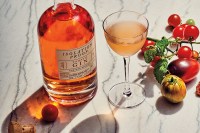
Created by a renowned fashion photographer and distiled like a fragrance, it makes sense that this new-to-the-US gin is inspired by a flower – and that its sleek, squared-off packaging resembles that of a high-end perfume.
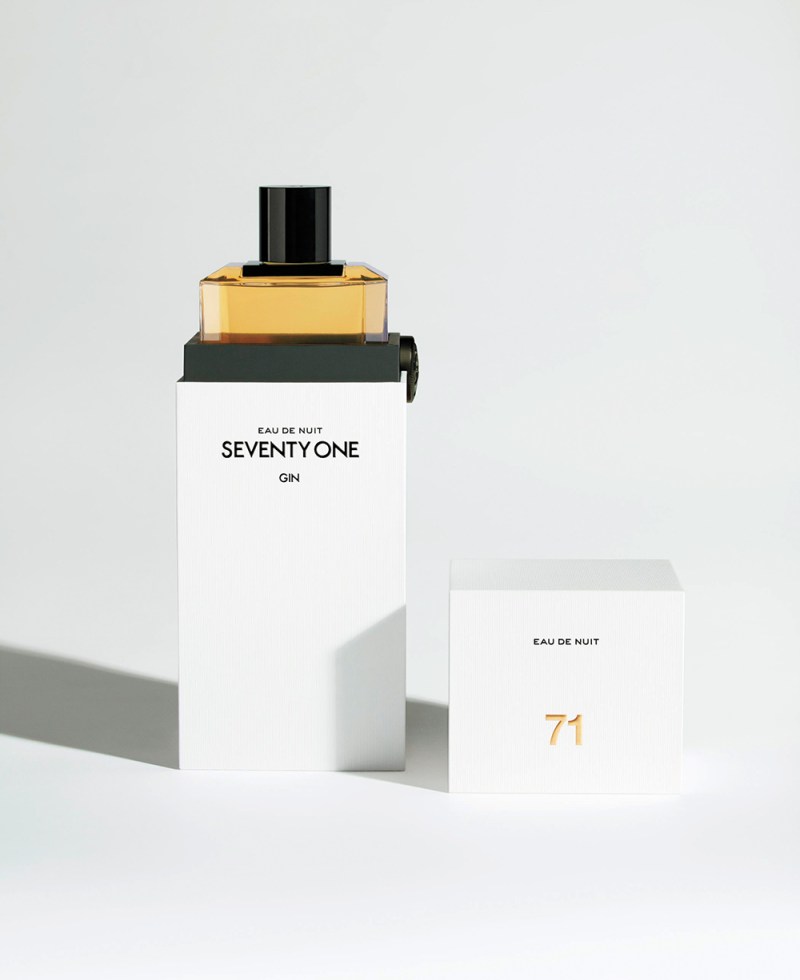
In fact, the floral muse behind Seventy One is no ordinary bloom: “Queen of the Night” (Selenicereus grandiflorus) is a white cactus flower so rare it opens only once a year, under cover of darkness.
Filled out with botanicals such as juniper, Damascus rose, pomelo, and tonka bean, the finishing touch is a 71-day rest (hence the name) in casks that previously held PX sherry and cognac, which adds a gentle golden glow to the liquid, along with a hint of vanilla.
After debuting in London and Dubai, Seventy One gin has now found its way stateside, showing up at New York bars including Kabin, Martiny’s, and Bar Chimera, where it’s the base for a memorable (if pricey) $55 “golden martini.” Look for it next in Miami and Las Vegas, says co-founder and CEO Tasso Ferreira, whose bona fides include stints at L’Oréal and La Roche-Posay.
Luckily, this floral-inspired spirit wasn’t made with another rare blossom: Amorphophallus titanum, which blooms once every seven years and exudes a stink that’s earned it the moniker “corpse flower.” I asked Ferreira if he’d ever heard of it. “No,” he replied. “And thank god for that.”
Seventy One gin, $185 for 700ml; seventyonegin.com





Comments