
If TikTok is your gospel, you’ll be aware that New York’s new Ambassadors Clubhouse has a waitlist ranging from 10,000 to 50,000 people, depending on the night. Spanning two floors and 8,000 square feet beneath film company A24’s NoMad headquarters, this thunderous Punjabi restaurant has captured a moment.
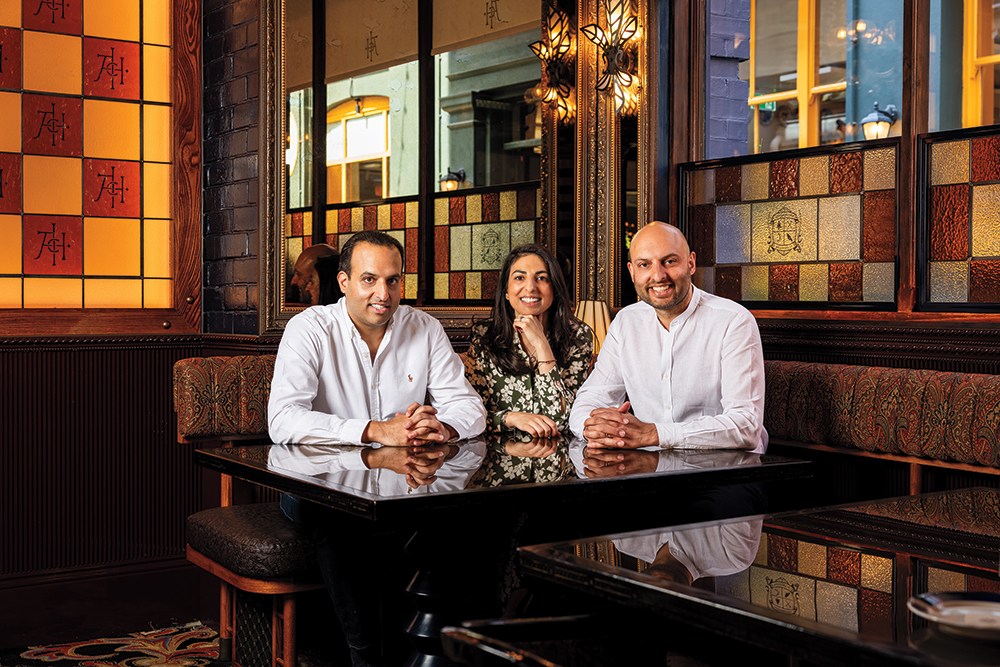
A cultural mélange drawing on both sides of the Indo-Pakistani divide, it’s the first big swing from British brand JKS in New York City, and the second American venture after Gymkhana landed in Las Vegas last December – more on that later. These two restaurants and the many international offshoots are all owned and operated by the British-born Sethi siblings, Jyotin, Karam, and Sunaina. “We have had our sights set on the US for the last 10 years, wanting to make our entry with the right brands, in the right cities, at the right moment,” Karam Sethi tells me. “The audience is broader, cities are bigger, and when people connect with a restaurant it seems they embrace it wholeheartedly.”
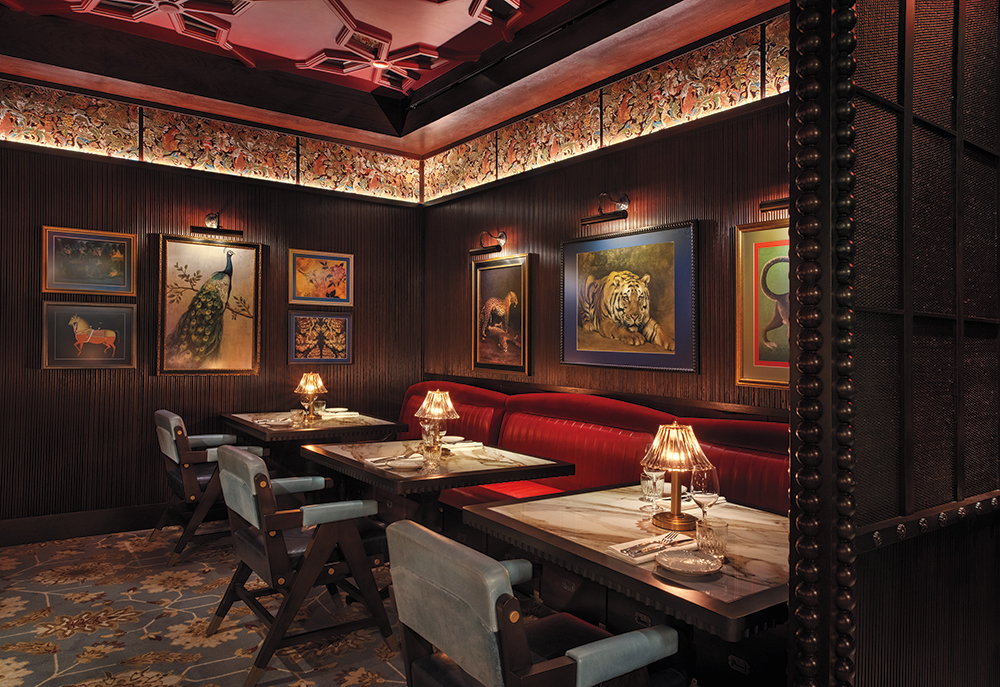
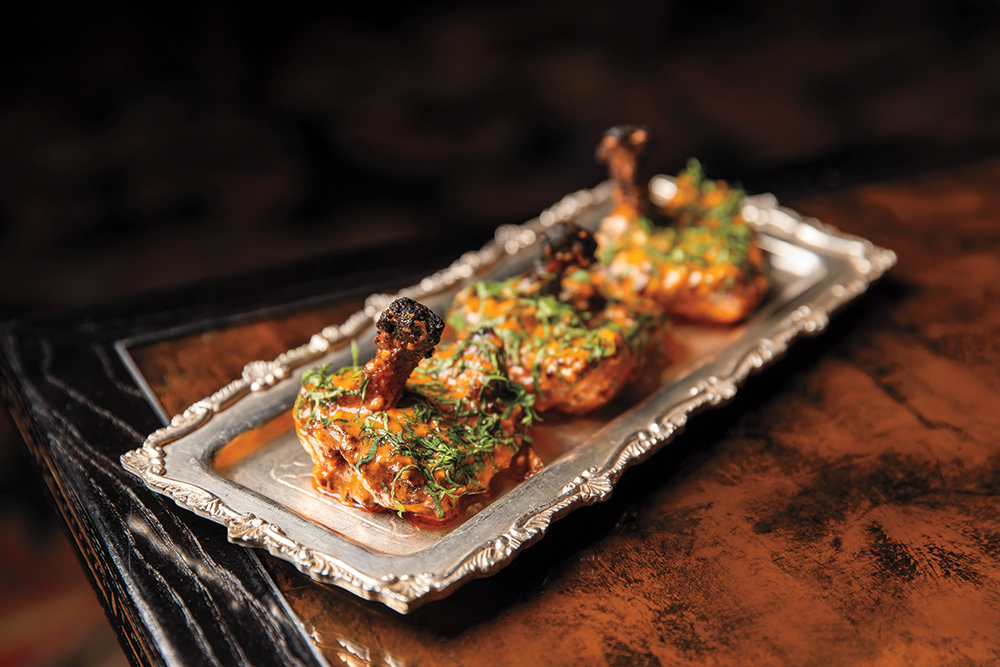
But nothing in today’s climate is a given. Kitchens are doing their best work in years. And stateside, “it also comes with different expectations – around consistency, understanding of the food and the concept, and how we conduct service. The US lends itself to more theater,” Karam continues. Ambassadors Clubhouse, for instance, has the only coal-burning tandoori oven in all of Manhattan. The rest run on gas. There is nothing like that pungent paste of garlic and spices wrapping itself around a chicken leg before it smolders in a rich tomato and cashew sauce. “We felt we did that correctly with the introduction of Gymkhana to the Las Vegas Strip, which is becoming a culinary mecca in America; and Ambassadors Clubhouse in New York City, where demand in the opening months is beyond our wildest dreams.”
Responsible for some 35 restaurants across the globe, the Sethis are running a water-into-wine operation. “We are currently looking for the right site for Gymkhana in New York but haven’t found the right space yet,” says Karam (it took over two years to find the perfect site for Ambassadors). “We have a bigger vision for America, and then beyond those borders.”
‘There’s satisfaction in bringing flavors together, shaping a menu, designing a space’
JKS establishments range from cavernous and opulent to casual and carefree; from sexy private dining rooms that swallow you up to Bhangra-blasting subterranean nightclubs; and, in some cases, outdoor terraces with swaying greenery, patio umbrellas, and open sky. As for its NYC outposts: “The dining culture is more sophisticated in New York and is part of a wider lifestyle, with fewer people cooking at home and electing to dine out multiple nights a week,” says Karam.
Ultimately, it starts and ends with the food. Each dish is more dramatic – more sour, more spicy, more salty, more sweet – than the last. The experience and the language are heady and almost physical: inky charred onions sprinkled over chewy, buttery naan; lip-smacking chutneys; pulverized coriander seeds wafting through the air; tenderized mutton thighs sputtering in a small, dry skillet. The denouement being when plates are scrapped clean before leaving the table. And, again, there is precision to the cooking but also an intimacy. “Growing up, our mother’s kadhi chawal, a popular Indian comfort food that is currently on the menu at Ambassadors Clubhouse in New York, was a childhood favorite,” says Karam.
Founded in 2008, ex-bankers Jyotin and Karam together with their sommelier sister Sunaina have quietly built an empire both vastand unstoppable. “It always felt instinctive,” says Karam. Arguably the catalyst of the whole enterprise, it was middle child Karam who first dangled the idea of taking this private passion, helping their mum in the kitchen, and gambling on the hospitality industry.
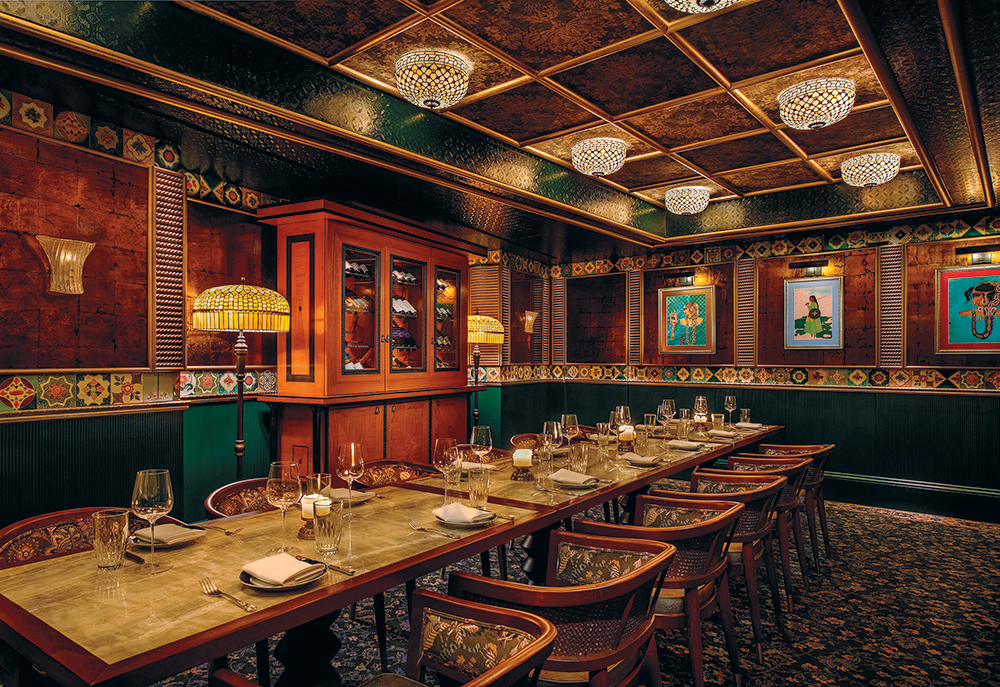
“What’s important to us is that every restaurant stands on its own and feels completely individual. There is no house style or formula.” With more than 30 outlets across the UK, US, and the Middle East, there’s also a delivery arm, and an international retail outfit, Ambassador General Store. Counterintuitively, the group juggles a portfolio (including Hoppers, Brigadiers, Berenjak, and Bibi) with both mass appeal and eight Michelin stars – with Gymkhana London piercing the 50 Best Discovery list.
“When we started, JKS didn’t really exist as a brand in the way it does today,” Karam says. Trishna, their first restaurant, opened on Blandford Street in Marylebone, London, and garnered a Michelin star in 2012. That outpost “was simply about opening one restaurant we believed in. Doing things properly, drawing on regional Indian cooking, and creating somewhere people genuinely wanted to return to; there was no bigger plan beyond that.”
Over time, JKS has evolved into something broader. “The biggest benefit is trust – that’s something you can’t manufacture in business,” says Karam. “There is a shared understanding of values, work ethics, and what really matters. That makes decision-making more instinctive, especially in an industry where things move quickly.” Amid limitless daily servings of seasonal pea pappardelle and poached monkfish with girolles, the Sethis have landed on something infinitely more evocative.
Formal and casual, big and small, experimental and classic, this is a world where the tangled relationship between the English and the curry house is anything but linear. Where, buoyed by the thousands of Indian, Pakistani, and Bengali offerings, chicken tikka masala is considered the national dish. This trio, with their capacious ambition, has transformed the London (and increasingly the global) dining scene. “The UK has a history built largely around the curry house, which played an important role,” says Karam. “But it was a narrow lens for such a vast and diverse cuisine to be understood. We’ve tried to broaden the narrative, representing regional Indian cuisine in its purest form.”
Any diner would be forgiven for rolling their eyes in response to likening a meal out to an “experience,” but there is a pulse at a Sethi institution. It’s not just the menu. It is design. It is music. “Growing up, our summers were spent in Delhi with our grandparents, and my favorite place was always in the kitchen with my grandmother,” recalls Karam. “In London, my parents loved to entertain, and I would watch and later join in with my mother, putting menus together, picking out cutlery, thinking about the music. The food was always as important as the generosity and hospitality.”
And then there is Gymkhana. The original opened in London in 2013, a nod to India’s closed-door social clubs, which offered white-tablecloth service to the British during colonial rule – and later to India’s upper crust after independence. The Mayfair restaurant now has two Michelin stars, and when Times of London critic Giles Coren wrote his original review, it had a near-hypnotic effect: “So that’s three visits in five days. I’ve now eaten 25 of the 34 savory dishes. Every one was out of this world.”
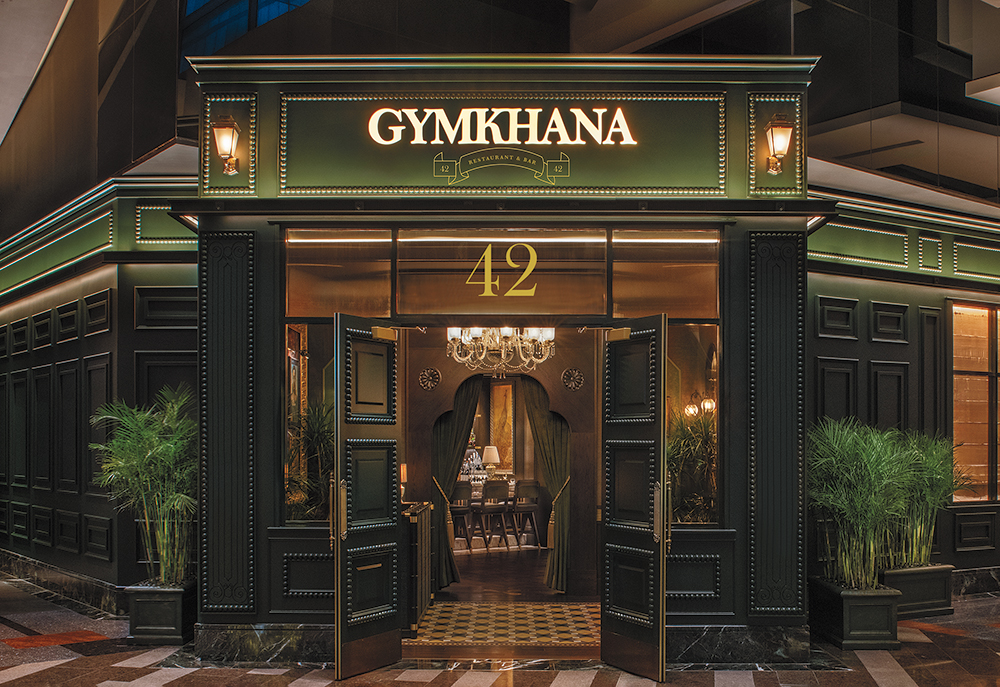
Aesthetically, the Vegas Gymkhana leans on its progenitor, with its seductive green entrance, plush furnishings and polished wood. Despite seating nearly 200 guests, it is deceptively intimate. The menu, too, features many Mayfair restaurant staples, and while the prices may be prohibitive for some, this isn’t conspicuous consumption. There are no gimmicky maneuvers – no chicken nuggets scattered with caviar or a $1,000 suckling pig for the table.
Back at Ambassadors Clubhouse, that brand and concept is a tribute to the Sethis’ maternal grandfather. “Born in Agra in 1910 and educated at Cambridge, he balanced a career between the military and the Civil Service,” says Karam. He served as an ambassador for India in the 1960s and became “a pivotal figure in India’s post-colonial diplomacy.” On the wall in the London restaurant, tucked just behind Regent Street, hangs a portrait of the ambassador himself, the patron saint, beguiling punters throughout the nightly service.
Beyond the five-figure waitlists and ecstatic five-star reviews, running a restaurant is almost comically difficult. “Restaurants are undeniably demanding, but that pressure is part of what makes the work meaningful,” says Karam. “There’s satisfaction in bringing flavors together, shaping a menu, designing a space and then watching it come alive. When everything clicks.”





Comments