Toby Young

Toby Young

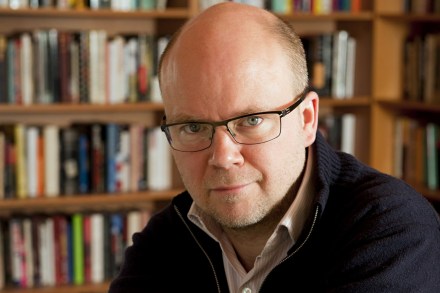
Toby Young is associate editor of The Spectator.

We’re facing a tsunami of censorship

From our UK edition

It’s open season on mavericks and dissenters at the moment. If you publicly challenge any of the sacred nostrums of the social justice left and you work in a school, a college, a university, an arts company, a public broadcasting organisation, a tech company, a charity, a local authority or, indeed, Whitehall, you are at risk of being cancelled. How do I know? Because in February I set up the Free Speech Union to protect those being targeted in this way and in the past month we’ve been contacted by people in all of these fields who have either been fired, suspended or are ‘under investigation’ for having said or done something controversial, usually on Facebook or Twitter. And by ‘controversial’ I don’t mean they’re guilty of hate speech.

Just-one-knee syndrome

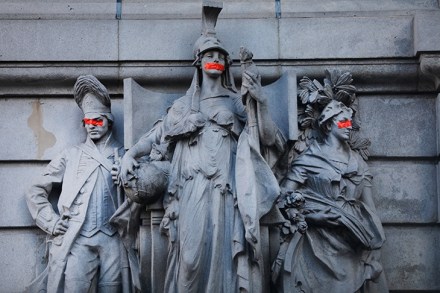
Never in the field of human conflict has so much misery been caused to so many by so few. I’m thinking of the hard-left rage mobs that have been policing the public square since the beginning of June — quite literally in the case of the Capitol Hill Autonomous Zone in Seattle. I’ve been keeping a list of all the people who have suffered catastrophic career damage because they’ve fallen foul of the Red Guards — and it’s growing ‘exponentially’, as a virologist might say. Like the COVID illness at its peak, it has been doubling every two to three days. Some of the victims have been people you’d expect to lose their heads in this cultural revolution.

knee

Who watches the broadcast watchdog?

From our UK edition

At the beginning of April, I became so frustrated by the supine coverage of the government’s response to the coronavirus crisis, particularly on radio and television, that I decided to start a blog called Lockdown Sceptics. The idea was to create a platform for people who wanted to challenge the official narrative. In addition to publishing original material by Covid dissidents, many of them eminent scientists, I include links to critical papers and articles, and write daily updates commenting on the news. One of the things that puzzles the contributors is why the coverage on broadcast media has been so hopelessly one-sided. The BBC, in particular, seems to have become a propaganda arm of the state.

The antibody test that proved my wife wrong

From our UK edition

Back in April, The Spectator ran a feature in which the partners of regular contributors wrote about what it was like being stuck in quarantine with the likes of us. What Caroline had to say was not very flattering: ‘Toby spent the first week of lockdown in bed convinced he had coronavirus. He didn’t. He is a complete hypochondriac at the best of times and this pandemic has sent his anxiety levels through the roof. He was so worried about catching it that the stress led to a bout of shingles, which is what actually laid him up.’ Ever since then I have been trying to prove to her that I really did have Covid-19, but without success.

The protestors have brought down the lockdown

From our UK edition

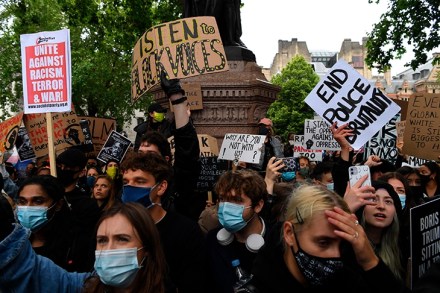
I wasn’t surprised to see that a woman whose father died at a care home in Bicester in April has decided to take legal action against the government. If I had an elderly relative in a nursing home whom I hadn’t been able to visit in the last months of his life because of the lockdown, I too would be angry. And I can imagine that anger turning into incandescent rage as I watched pictures of the Black Lives Matter protests on the nightly news. Why are police officers, who were so zealous about enforcing the social distancing rules until last week, now getting down on one knee to genuflect before the protestors?

Why is YouTube so afraid of free speech?

From our UK edition

On Sunday, the hosts of Trigger--nometry, a YouTube show, posted an interview they’d done with Peter Hitchens. They labelled it ‘Lockdown is a catastrophe’, which is an accurate summary of the journalist’s view. Over the next 24 hours, instead of generating tens of thousands of hits, which their interviews normally do, it got very few. Why? The hosts got out their laptops and discovered that when they searched for the video on YouTube or Google, its parent company, it didn’t come up. That wasn’t a technical hitch. On the contrary, it’s a tried-and-tested method that YouTube and Google employ to suppress traffic to material they regard as suspect. It’s a form of censorship known as ‘shadow banning’.

Ofcom shouldn’t be allowed to censor ‘harmful’ opinions

From our UK edition

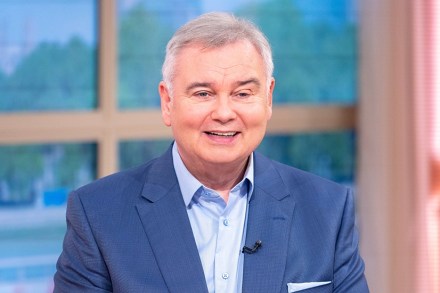
In my capacity as the general secretary of the Free Speech Union, I wrote to the chief executive of Ofcom, Dame Melanie Dawes, on 24 April to complain about its reprimand of Eamonn Holmes. According to the regulator, the breakfast television presenter had said something that ‘could have undermined people's trust in the views being expressed by the authorities on the Coronavirus and the advice of mainstream sources of public health information’. Holmes’s sin, in Ofcom's eyes, was to say on ITV’s This Morning that any theory running counter to the official government line – such as the one linking 5G masts and Covid-19 – deserved to be discussed in the mainstream media.

Unfortunately our new puppy is not just for lockdown

From our UK edition

Will the huge surge in demand for puppies and kittens during lockdown lead to a lot of abandoned pets when life returns to normal? That’s the concern of various professional bodies and animal welfare organisations. The Kennel Club has warned those searching for puppies on its website that a dog is for life, not just the coronavirus, while Battersea Dogs Home initially slapped a ban on rehoming, allowing only fostering during the crisis. ‘Now isn’t the right time to bring home a puppy, or make an impulsive decision to get a pet,’ warned Holly Conway, head of public affairs at the Kennel Club.

Liberal fears are contagious

From our UK edition

It has become a commonplace among social psychologists that one of the characteristics that unites conservatives is our sensitivity to disgust. A succession of experiments carried out over the past ten years seems to show that a person’s political views are linked to how disgusting they find the idea of, say, touching a toilet seat in a public lavatory. The more repulsed you are, the more likely you are to hold conservative positions on issues like gay marriage, immigration and abortion. These findings have been lapped up by liberal social scientists since they confirm their view of conservatives as uptight control freaks whose love of hierarchy and tradition is rooted in an irrational fear of contagion.

Xi’s useful idiots against free speech

On December 30, Ai Fen, director of the emergency department at Wuhan Central Hospital, got the lab results back about one of her patients who had a flulike illness. The words she read on the report made her blood run cold: ‘Sars coronavirus’. She circled the word ‘Sars’, took a photo and emailed it to a doctor at a neighboring hospital. Within hours, the photo had been sent to dozens of people in the Wuhan medical community. One of them sent a series of messages to a private group on WeChat, advising his colleagues to take precautions, and someone took screenshots of those messages and shared them more widely.

useful idiots

This lockdown may kill me

From our UK edition

I have a new job, which is maintaining a website called Lockdown Sceptics (lockdownsceptics.org). It’s a compendium of evidence that the lockdown is a needless act of self-harm that will almost certainly cause a greater loss of life than it prevents. I set it up myself, so I can’t complain, but trying to stay on top of all the news about coronavirus, moderating the comments and writing the daily update is taking up almost all my time. On Sunday, for instance, it took me about nine hours to summarise the latest data — and leaven the mix with jokes, memes and anecdotes —and by the time the clock struck midnight that post had received 544 comments. It’s a Sisyphean task and every day it begins all over again.

Professor Lockdown’s spell has been broken

From our UK edition

I originally had Neil Ferguson down as a kind of Henry Kissinger figure. The professor of mathematical biology at Imperial College London seemed to have bewitched successive prime ministers, blinding them with his brilliance. Whenever a health emergency broke out, whether it was mad cow disease or avian flu, there he was, PowerPoint in hand, telling the leaders of the country what to do. And they invariably fell into line. In 2001, after the outbreak of foot and mouth, his team at Imperial advised Tony Blair’s government to adopt a strategy of pre-emptive culling, leading to the slaughter of more than six million animals.

With Toby Young

From our UK edition

29 min listen

Toby Young is the Spectator's No Sacred Cows columnist and founder of the Free Speech Union. On the podcast, he talks to Andy and Benedict about getting coronavirus, the worst WHO gaffes, and the hardy 70-somethings down his street.

Neil Ferguson’s remarkable fall from grace

From our UK edition

I originally had Neil Ferguson down as a kind of Henry Kissinger figure. The professor of mathematical biology at Imperial College London seemed to have bewitched successive prime ministers, blinding them with his brilliance. Whenever a health emergency broke out, whether it was mad cow disease or avian flu, there he was, PowerPoint in hand, telling the leaders of the country what to do. And they invariably fell into line. In 2001, after the outbreak of foot and mouth, his team at Imperial advised Tony Blair’s government to adopt a strategy of pre-emptive culling, leading to the slaughter of more than six million animals.

Did anyone really believe what my wife wrote about me?

From our UK edition

One of the nice things about having a column in The Spectator is that I get a chance to reply to all the smears and lies published about me. Which brings me to my wife’s remarks in last week’s magazine. The editor asked the partners of regular contributors to write a few words on what it’s like living with us during lockdown and Caroline was unbelievably rude. Among other things, she accused me of being a ‘complete hypochondriac’, said the pandemic had sent my anxiety levels ‘through the roof’ and ascribed my own life-and-death battle with the virus to a bout of shingles brought on by the stress. Needless to say, this was manna from heaven for all the haters out there.

If you really want to lose friends, start a magazine

From our UK edition

I’m more impressed than most that The Spectator has racked up 10,000 issues, because I used to be a magazine publisher myself and I know just how hard it is. In 1991 I co-founded the Modern Review with Julie Burchill and Cosmo Landesman and appointed myself its first editor. Our motto was ‘Low culture for highbrows’ and we ran long, scholarly essays by intellectuals and academics about popular icons like Madonna. I remember one particularly good piece by David Runciman, now a politics professor at Cambridge, called ‘Wazza mazza wiz Gazza?’ about the footballer Paul Gascoigne. Among the magazine’s more dubious achievements was publishing the first ever article by Will Self. In 1995 it went belly--up after 21 issues.

Our puppy has no respect for the two-metre rule

From our UK edition

Since the beginning of the lockdown, Caroline has been congratulating herself for having bought a puppy ‘just in time’. She doesn’t mean it would have been impossible to get one after 23 March, because visiting a breeder is not an ‘essential’ journey. She means that a puppy is a great source of entertainment, as well as solace, when you’re cooped up in your home, particularly if you have children. It’s like having our very own therapy dog. She’s a cavapoochon — a cross between a Cavalier King Charles spaniel, a toy poodle and a bichon frise. A handbag dog, in other words.

Audio Reads: Toby Young, Douglas Murray, and Melissa Kite

From our UK edition

19 min listen

The Spectator is meant for sharing. But in the age of coronavirus, that might not be possible. This new podcast will feature a few of our columnists reading out their articles from the issue each week, so that you don't miss out. It's a new format, so tell us what you think at podcast@spectator.co.uk.Toby Young on why Britain needs Boris; Douglas Murray on what he finds heartening about the national response to coronavirus; and Melissa Kite's Real Life column.