Toby Young

Toby Young

Toby Young is associate editor of The Spectator.

Has Boris Johnson given up on free schools?

From our UK edition

For the founders of the West London Free School, of which I was one, last Thursday should have been a moment of great pride. We gathered in the assembly hall, surrounded by the politicians and officials who’d helped us, to celebrate the school’s tenth anniversary and reflect on what we’d achieved. Not only has the school thrived — it is now part of a growing academy chain — but where we led, others followed. As the first school of its type to be approved by Michael Gove, WLFS showed what a determined group of volunteers could achieve, and there are now more than 600 free schools. Contrary to the predictions of the critics — too many to mention — this is one education policy that seems to have worked.
The stories that are too good to check

From our UK edition

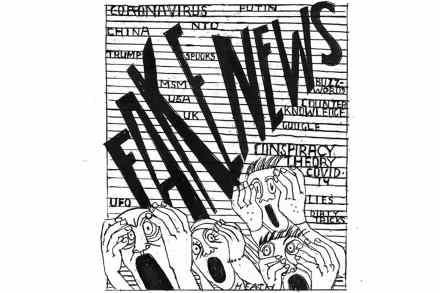
Last weekend, Rolling Stone ran a story about an interview an emergency room doctor had given to a local news station in which, according to the TV reporter, he’d said hospitals in his state were so swamped with patients who’d overdosed on ivermectin that gunshot victims were struggling to be seen. For context, ivermectin is an anti-parasitic drug used for deworming horses that has been touted by vaccine sceptics as an effective prophylactic against Covid-19. For boosters of the Covid vaccines, this story was manna from heaven. Here were a bunch of hicks so dumb they were stuffing themselves with horse pills rather than getting jabbed, with predictably disastrous results. There was only one problem — it wasn’t true.

Why Gove’s night on the dance floor is good news

From our UK edition

I was pleased to see pictures of Michael Gove at a nightclub in Aberdeen last weekend. According to press reports, he barrelled into a pub in the city centre at around 1.15 a.m. on Sunday, and when last orders were called he was persuaded by fellow revellers to accompany them to a nightclub called Pipe, where he spent the next hour dancing energetically to loud music. ‘I am almost sure he was by himself,’ said Emma Lament, a singer who had performed an acoustic set earlier in the pub and revealed a ‘merry’ Mr Gove had ‘rocked up’ before closing time. ‘He really was enjoying himself. I don’t think he left the dance floor the whole time I was there.

Sascha O’Sullivan, Ian Williams and Toby Young

From our UK edition

16 min listen

On this episode, Aussie journalist Sascha O'Sullivan begs to be let home (00:50); Ian Williams wonders whether China is experiencing its own MeToo moment (04:25); and Toby Young on his trip up north with his two boys (11:35).

My eye-opening mini-break in Hull

From our UK edition

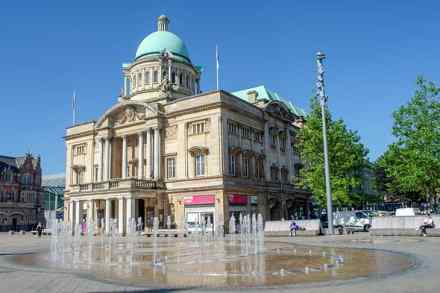
Given how difficult it is to arrange an overseas holiday, I thought I’d take Charlie and Freddie, my two youngest, to the north-east for a mini-break. Admittedly, not the most glamorous of locations, but we had a reason to be there: QPR were playing two away games on the spin, the first in Hull, the second in Middlesbrough. We planned to take the train to Hull in time for Saturday’s match, hire a car, drive along the coast, stopping at Scarborough and Whitby on the way, and arrive in Middlesbrough for Wednesday night’s game. Then it would be back to London the following day. Seeing a less affluent part of the country was an eye-opener for Charlie.

The Orwell Foundation has let George Orwell down

From our UK edition

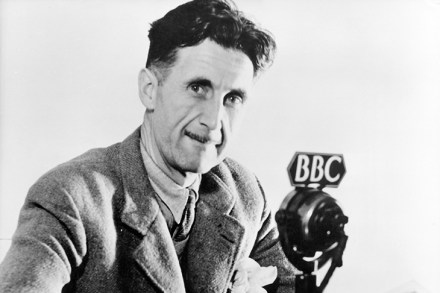
George Orwell would not have been surprised by the brouhaha surrounding Kate Clanchy. Two years ago, Clanchy published Some Kids I Taught and What They Taught Me, a non-fiction book about teaching poetry to disadvantaged schoolchildren which was well-received. Earlier this month a group of offence archaeologists on social media started trawling through it for ‘problematic’ passages and from their point of view it was as if they’d discovered the tomb of Tutankhamun. Clanchy had described an Afghan refugee as having ‘almond-shaped eyes’, another child as having ‘chocolate--coloured skin’ and nicknamed a third ‘African Jonathan’.

I took my wife to a Millwall match – and it didn’t go well

From our UK edition

The fighting started just as Caroline turned right on to the Uxbridge Road after emerging from QPR’s stadium on Loftus Road. About 25 football fans began punching and kicking each other in the middle of the road, forcing the pedestrians on the crowded pavement to surge backwards to avoid being caught up in the mêlée. Caroline suddenly found herself pinned against a shop window along with two of our sons, barely able to move. I was still on Loftus Road with our third son, struggling to re-attach the wheel of his bicycle, which he’d left locked up outside the stadium. I glanced up when I heard the commotion and saw police running towards the Uxbridge Road, batons held aloft. ‘Oh God,’ I thought. ‘I hope Caroline’s not caught up in that.

Andy Owen, Mary Wakefield and Toby Young

From our UK edition

20 min listen

On this week's episode, former intelligence officer Andy Owen gives his reflections on where we went wrong in Afghanistan - based on what he saw on the ground; Spectator columnist Mary Wakefield talks about the rise in neighbourhood crime; and Toby Young asks - why have my suits shrunk in lockdown?

Have my suits shrunk in lockdown?

From our UK edition

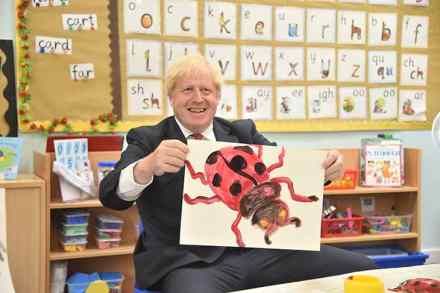
I hadn’t noticed how much weight I’d put on during lockdown until I went out for a business lunch a couple of weeks ago. It was the first time I’d put on a suit and tie in 16 months. As I struggled to pull on the trousers, I thought: ‘Something’s wrong here. Did Caroline hang one of the children’s suits in my cupboard by mistake?’ But no. It was mine. To fasten the trousers I had to suck in my stomach like Mr Incredible trying to squeeze into his superhero costume. And my ‘slim fit’ white shirt wasn’t merely snug; it was more like a straitjacket. I looked like a bald Boris in his pre-Covid pomp.

The true cost of my week in Wales

From our UK edition

Rather miraculously, my daughter managed to leave the country last week to go on holiday with a group of friends. To celebrate finishing their A-levels, they had bought tickets to a music festival in Croatia, but it was cancelled at the last minute due to a surge in Covid cases. Having been denied every other rite of passage in the past year, they decided to press ahead with the trip anyway, which left me having to sort out the PCR testing logistics. In order to be allowed into Croatia, she had to produce evidence of a negative test, then, once there, she had to test negative again in order to be allowed back into the UK, as well as produce evidence that she’d booked a third PCR test for two days after her return.

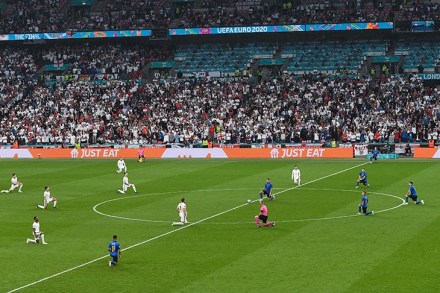
In defence of footballers taking the knee

From our UK edition

Before the television presenter Guto Harri took the knee live on air — which cost him his job at GB News last week — he explained that his understanding of the gesture had changed. Having initially thought of it as political with a capital ‘p’, he now realised that in the eyes of most people, including England’s young football players, it is simply a way of expressing your opposition to racism, as well as solidarity with its victims. It is not an expression of support for the Black Lives Matter organisation or its more controversial aims. In retrospect, that seems pretty obvious.

Football’s never coming home

From our UK edition

I failed a moral test last weekend. A friend offered me a free ticket to the Euro 2020 final and I accepted, knowing my 13-year-old son Charlie would be bitterly disappointed. I had told him I’d try to get two tickets so I could take him, but all my efforts had come to nought and we were resigned to watching it at home. When I broke the news that I’d be going but not taking him, he looked heartbroken, as I knew he would be. I spent hours trying to justify it to myself afterwards. Surely, if he’d been offered a ticket by a friend, he would have taken it? Opportunities to see England play in the final of an international tournament only come along once every 55 years. How could I turn it down?

My battle to be top dog

From our UK edition

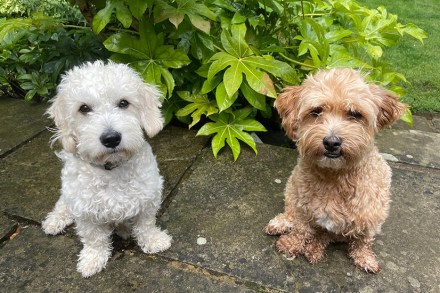
Even a small dog can be quite high maintenance. No, I’m not talking about Mali, our one-year-old cavapoochon, but Bertie, a six-month-old cavapoo. Bertie is Mali’s best friend and — I regret to say — almost constant companion. The reason they spend so much time together is because his owner, a close friend of Caroline’s, drops him off on her way to work and picks him up on her way home. They both think it’s a perfect arrangement because the two dogs can keep each other company, gambolling away all day in our garden, while they get on with their busy lives. But Muggins here, whose office is located at the bottom of said garden, is the one left carrying the can. Quite often, that can is full of poo.

I was a skateboarding pioneer

From our UK edition

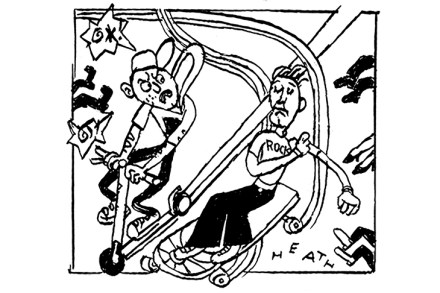
I was 12 when I got into skateboarding: the same age as Sky Brown, the youngest member of Team GB’s skateboarding squad at the Tokyo Olympics. And unlike most old fogies, I’m pleased that boarding has finally been recognised as an Olympic sport. When I took it up, I was constantly being told that it was a passing fad and would soon go the way of the hula hoop, the space hopper and the pogo stick. But I confidently told the doubters it was here to stay and it turns out I was right. I made my first skateboard by pulling apart some roller-skates and nailing the bits to a piece of wood. The first time I tried it out I fell off and cut my toe so badly I had to have stitches.

My problem with the Euros

From our UK edition

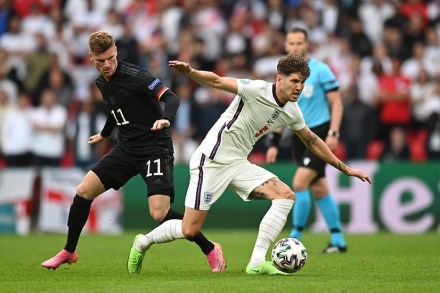
I’m struggling to work up much enthusiasm about England’s progress in the Euros. I know, I know, Tuesday night’s victory was the first time England has beaten Germany in the knockout stage of a tournament in 55 years — and the moment Gareth Southgate, the team manager, finally made amends for missing his penalty in the semi-final against Germany in Euro 96. It’s conceivable we might make it all the way to the final, but I’m more excited about watching QPR play Leyton Orient in the first round of the Carabao Cup. Why? One reason is that in the past ten years I’ve become a QPR superfan.

What would ‘sensitivity readers’ have made of my student scoops?

From our UK edition

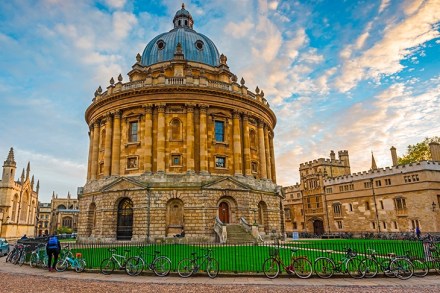
‘Whatever you do, don’t call them snowflakes,’ Caroline said the last time I spoke to Oxford students. ‘That’s not a grown-up way of conducting a political debate. It’s like calling you a gammon.’ She’s right, of course, but by God they make it hard. This week we learned that the Oxford University students’ union is planning to elect a ‘consultancy’ of ‘sensitivity readers’ to scrutinise articles in student newspapers before publication to make sure they won’t offend anyone. If the union has its way, the editor of Cherwell, one of Oxford’s oldest student publications, won’t have final say over what’s published in the weekly paper.

The luxury of being pro-lockdown

From our UK edition

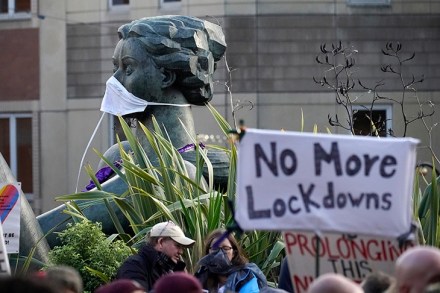
I’ve just written an essay for the People’s Lockdown Inquiry, a new collaboration between Buckingham University, the Institute of Ideas and the Reclaim party. The question I’ve puzzled over in my contribution is why the global elite became such enthusiastic supporters of the heavy-handed, statist approach to managing the coronavirus crisis — stay-at home orders, business closures, face masks — and passionate opponents of less draconian alternatives, such as those set out by the signatories of the Great Barrington Declaration. Choosing between these two positions is far from simple, with powerful moral arguments and compelling research evidence on both sides.

The curious parable of Dartington

From our UK edition

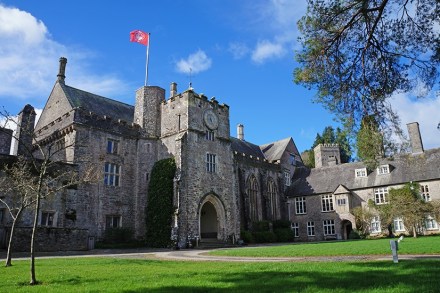
I spent last weekend in south Devon at Dartington, the former estate of Dorothy and Leonard Elmhirst, and now a charitable trust. I know the place quite well because my father was more or less adopted by the Elmhirsts when he was 14 and I spent four years there as a teenager while he was writing Dorothy and Leonard’s biography. He described it as his best book and I was pleased to see it on display behind the reception area at Dartington Hall, a Grade I listed building that is now a hotel, among other things. I’ve always thought the story of Dartington would make a good parable about the folly of left-wing idealism. When the Elmhirsts bought the estate in 1925, Dorothy was one of the richest women in the world, having inherited $15 million at the age of 17.

The rise of the pluto-meritocracy

From our UK edition

Meritocracy, a word coined by my father, gets a bad press these days. Two recent books — The Meritocracy Trap (2019) by Daniel Markovits and The Tyranny of Merit (2020) by Michael Sandel — hold it responsible for many of America’s ills, and in some settings saying you believe the most qualified person should get the job is classified as a ‘micro-aggression’ because it ignores the role that race plays in determining a person’s life chances. It’s one of those progressive doctrines that’s fallen out of favour. So kudos to Adrian Wooldridge, the political editor of the Economist, for producing a full-throated defence of the principle.

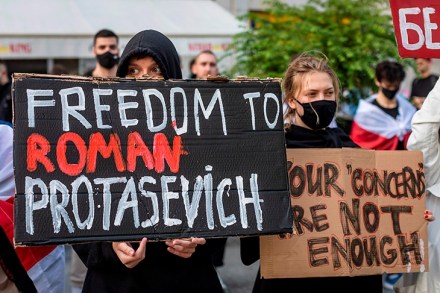
For journalists like Protasevich, free speech is a matter of life and death

From our UK edition

Last August I wrote a column in The Spectator’s US edition urging Donald Trump to take a leaf out of Alexander Lukashenko’s book and campaign for re-election on a vodka-and-sauna approach to managing the pandemic. Belarus was one of a handful of European countries not to impose a lockdown last year, with the President urging his citizens to have plenty of vodka and lots of saunas to avoid infection.