Sophia Gaston

Sophia Gaston is the UK Foreign Policy Lead at the ASPI think tank and a Research Fellow at King's College London.

Britain shouldn’t wait for America to ban TikTok

TikTok's success provides a striking example of Western complacency towards its own survival. After a decade shaped by the disruptive influence of American social media behemoths such as X and Facebook, our governments have permitted the stratospheric growth of a China-owned platform with an even greater capacity for malign influence. With Beijing’s intentions for global economic and military dominance growing clearer by the day, the deteriorating geopolitical landscape has laid bare just how wilfully naive the West has been towards adversaries playing a sophisticated long game.
Aukus is a gamechanger

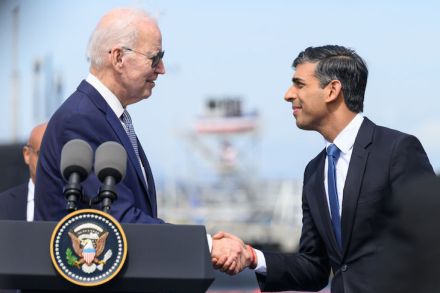
Aukus is one of the most significant security pacts in modern history. It marks a bold new era in how we think about our alliances and our national resilience. Brits are on board with the pact: 64 per cent are confident about its ability to make us safer; a similar number (65 per cent) think it will make the UK more competitive towards China. After 18 months of intensive research and negotiations, the Aukus trilateral pact is finally taking shape. An elegant solution has been found for Australia’s submarine deficit, with Rishi Sunak joining the American and Australian leaders in San Diego in the United States to announce the launch of a state-of-the-art SSN-Aukus submarine project.

The world will welcome the new ‘Global Britain’

Just what does ‘Global Britain’ actually mean? In the five years since the UK’s foreign policy was thrown into chaos after the EU Referendum, this question has reverberated without reply. In the publication of its Integrated Review of the UK’s Defence, Security, Development and Foreign Policy today, the UK Government has finally put its cards on the table. ‘Global Britain’ is no longer simply a slogan, but a roadmap underpinning a fundamental shift in our international ambitions. The Global Britain set out in the Review is a dynamic, forward-looking, tech-savvy nation, in which our domestic and international resilience is seen as one.

The price of an ‘Australian-style’ quarantine system

Richard Curtis’s iconic Love Actually airport scenes may fall on the wrong side of saccharine, but they capture something of the human story at the centre of the travel experience. As the government pursues an ‘Australian-style’ hotel quarantine scheme for the UK’s borders, we should not lose sight of these human moments. With the UK’s hospitals stretched to the limit and the population’s patience wearing thin, it is tempting to envy Australia, where images of seaside holidays and packed summer festivals filter out from the antipodes, shimmering like a desert mirage. Like many of its counterparts in the Asia-Pacific, Australia moved swiftly in the early phases of the pandemic to shut its borders, and imposed hotel quarantine systems for all arrivals.

Did Australia’s China-scepticism prepare it for Covid-19?

As Britain struggles through the eye of the coronavirus storm, it is difficult not to cast our eyes across the world and compare our fate with that of our friends and allies. One nation in particular stands out – Australia – seemingly on course yet again to assume its role as ‘The Lucky Country’. It's tasteless to say, but Australia has had ‘a good crisis’ – it’s one of the few nations to emerge relatively unscathed from the pandemic’s deadly grip and has recorded just 75 deaths so far. Now Sydney’s famous beaches are re-opening this week, and visitor restrictions on care homes are being relaxed. Australia’s performance is especially intriguing given its geographic proximity to Asia.

The West is failing to rise to the challenge of coronavirus

Having apparently shaken off the first phase of the coronavirus pandemic, the Chinese Communist Party’s propaganda machine is now in full swing. One of the more preposterous conspiracy theories they are peddling is that the spread of the disease was a deliberate attempt at subterfuge from the American government. As in the middle of the tragic Aids epidemic in the 1980s, geopolitical conspiracy theories are running rife, and overwhelmed national governments are desperate to find someone to blame for the crisis. The notion that the United States somehow contrived to unleash such a contagious and pernicious virus on its economic rival, however, is simply absurd.