Peter Hoskin

A high stakes game of fiscal tinkering

From our UK edition

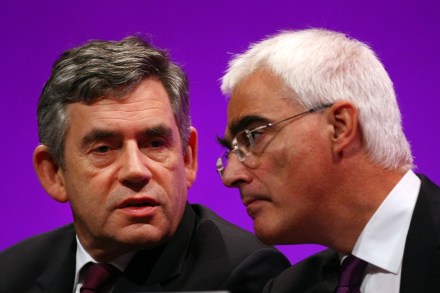
Do read Edmund Conway in today’s Telegraph for an admirably evenhanded analysis of Brown and Darling’s Keynesian rescue plan for the economy. It might work, he says, but the potential’s there for catastrophe. Here’s the worst-case scenario:  “Keynes’s argument was not only that governments should borrow when times are tough, but that they should pay that money back when times are good. If the international investors who keep money flowing into the country believe that Labour will return the borrowed cash a few years hence, Brown et al could get away with the extra debt. But, given that they have a track record of racking up record deficits in times of plenty, what would your guess be?
There may be trouble ahead | 23 October 2008

From our UK edition

Here's another entry for the list of blots on Brown's horizon: a series of strikes involving hundreds of thousands of civil servants.  The Public and Commercial Services union has scheduled them to begin on 10 November, and they'll continue intermittently for at least three months after that date.  The root cause is anger over below-inflation pay increases ("Just look at how much money the banks are getting!" say the union officials), and the aim is to create "maximum disruption" to government services.  It's exactly the kind of thing to draw a final line through the Brown Our Economic Saviour narrative, so Downing Street will be especially desperate to resolve things in the next two-and-a-half weeks.

Did Osborne drip poison about Davis?

From our UK edition

A few weeks ago, Lord Mandy hinted that he may not have been the only one dripping poison about his colleagues in Corfu - that George Osborne may have indulged in some less-than-kind comments about his fellow Tories.  Well, according to the Standard's Paul Waugh, it's emerged that David Davis was one of those privately criticised by the Shadow Chancellor.  The Mandelsonian cluster bomb effect continues...

The culpability game

From our UK edition

This seems like some kind of credit crunch milestone: a minister admitting that no-one, not even the government, can completely escape blame for the current financial crisis.  In doing so, the City minister Paul Myners has departed from the line we've been hearing from No.10 so far - that, in the Age of Irresponsibility, the irresponsibility was all on the part of the bankers.  The question is whether this change in tone has the blessing of the Team Brown spin merchants.

It’s the statisticians wot done it

From our UK edition

Much hoo-hah - and rightly so - over the crime statistics that the Home Office have published today.  The issue is with the "Most serious violent offences" figure, which has risen by 22 percent since last year - an increase that Jacqui Smith attributes to previous inconsistencies in how the police totted up the "GBH with intent" numbers (for the official explanation, click here).  But a passage from another Home Office document (pdf, here) is worth highlighting: "At least two-thirds of the 26% increase in GBH with intent can be attributed to the clarification in the counting rules referred to earlier. This also influences the overall figure for ‘Most serious violence against the person’.

There are still plenty of hurdles in Brown’s way

From our UK edition

Recession.  Glenrothes.  Unimpressive poll gains.  Whilst Gordon Brown may be enjoying the recent, Mandelson-orchesrated hijinks, there are certainly plenty of potential blots on his horizon.  Martin Bright adds a relatively undernoticed - but oh-so-significant - one to the list, in his latest blog post: "The polling remains dismal for Labour, though. The government’s electoral recovery is slipping despite admiration for Brown’s handling of the crisis within the Westminster village. The latest Guardian/ICM poll had the Conservatives on 42 per cent and Labour on 30 – a 12-point gap, which remains unchanged from the same poll a month ago.

Osborne won’t sue

From our UK edition

According to today's Standard, George Osborne and Andrew Feldman have ruled out court action to clear their names over the Rothschild allegations.  Rightly or wrongly, this development could encourage the view that the Tory pair have something to hide.

The R-word

From our UK edition

The throng saying we're entering a recession has been joined by its most significant member so far.  Mervyn King deployed the R-word in a speech to Leeds businessmen last night, and the markets have reacted accordingly.  Sterling collapsed against the dollar - hitting a five-year low of $1.6203 earlier.  Whilst the FTSE share index has looked wobbly since opening.  All of which fuels the idea that no amount of Mandelsonian manoeuvring - or no amount of public cash - can prevent the poor state of the economy being the story of the next few weeks, months, years.  The question that remains is whether Brown & Co. will capitalise because of it.  Or whether it will sink them.

The pressure’s still on Osborne

From our UK edition

George Osborne's hanging on - for now.  The chronology the Tories released seems convincing, and he has the backing of David Cameron.  But the forces against him are ranking up.  Yesterday evening, Nat Rothschild unveiled a witness to back up his allegations - one New York fund manager, James Goodwin.  The basic position, though, remains the same - it's essentially one man's word against another's.  And as CoffeeHouser Ricardo so rightly put it yesterday: We've got to decide who's word to accept: a politician or a man who runs a hedge fund. Hmmmmmmmmmmmmmmm. Where did I put that coin? This uncertainty comes across in this morning's papers; few come down completely on one side or the other.

Tory leadership odds

From our UK edition

Courtesy of Ladbrokes, the odds for the next permanent leader of the Tory Party: William Hague --- 2/1 Boris Johnson --- 5/1 George Osborne --- 5/1 Liam Fox --- 16/1 Chris Grayling --- 20/1 David Davis --- 25/1 Michael Gove --- 25/1 Dominic Grieve --- 33/1 Justine Greening --- 50/1 Zac Goldsmith --- 50/1 John Redwood --- 100/1 George Osborne was at 4/1 before today's Deripaska allegations.

The debt adds up

From our UK edition

Well done Brooks Newmark, who's taking on Gordon Brown over his fiddled debt statistics.  The Tory MP, and member of the Treasury Select Committee, releases a report today which builds on Coffee House's work by adding together some of the more recent off-balance sheet debts and liabilities that Brown has swept under the fiscal carpet.  The grand debt total?  Some £1,854 billion - around 127 percent of GDP, and over 3 times greater than the Govenrment's 40 percent debt ceiling.  Here's what's included in that: It you throw in the potential costs of the banking bailout, that figure climbs to £2,354 billion - some 161.1 percent of GDP.

One to watch | 20 October 2008

From our UK edition

A friend of Coffee House has flagged up the episode of the Tonight programme screening on ITV at 8pm this evening.  Here's the premise of it, taken from the show's website: "New Labour has gone back on its promise to hold a referendum on a new European constitution – despite most people wanting one. Tonight steps in, organising a special poll in Luton. Do its voters want to be in or out of Europe?" I'm in the dark over what the result of that "special poll" is.  But - whatever the outcome - the very fact that programmes like this are getting commissioned hints at the depth of public feeling over the Lisbon Treaty.  Should be worth tuning into.

Brown counts on the Sarah Effect

From our UK edition

According to today's Daily Record, Sarah Brown is set to "spearhead" the Labour campaign in Glenrothes.  It's hardly suprising news - talk of her involvement has been doing the Westminster rounds since her much-vaunted cameo at last month's Labour party conference.  But it shouldn't be forgotten that this is far from normal practice.  As the Record points out, "It's believed Sarah will be the first Prime Minister's wife to actively campaign during a by-election"; raising all kinds of questions about how involved PM's partners should be in the political process.  Whether they'll undermine the "Sarah Effect" remains to be seen.

CoffeeHousers’ Wall, 20 October – 26 October

From our UK edition

Welcome to the latest CoffeeHousers' Wall. For those who haven't come across the Wall before, it's a post we put up each Monday, on which – provided your writing isn’t libellous, crammed with swearing, or offensive to common decency – you’ll be able to say whatever you like in the comments section. There is no topic, so there’s no need to stay ‘on topic’ – which means you’ll be able to debate with each other more freely and extensively. There’s also no constraint on the length of what you write – so, in effect, you can become Coffee House bloggers. Anything’s fair game – from political stories in your local paper, to chat about the latest football results.

Recession bites

From our UK edition

Although it comes as little surprise, the warning from the Ernst & Young Item Club that the UK is already in recession is the most significant confirmation that we’ve had so far about the poor state of our economy. Using the same forecasting model as the Treasury, they also predict that inflation is set to fall – giving more scope for interest rate cuts – and that the economy will start growing again in 2010. The question remains about what the political effects of recession will be. Will a prolonged downturn erode the Our Saviour Brown narrative, along with the poll gains he’s made over the past few weeks?

What to make of Darling’s spending spree?

From our UK edition

Just as with Phil Woolas's immigration claim, there are a whole load of question marks hovering around Alistair Darling's revelation that the Government will boost public spending to help support the economy.  The biggest of them is simply: will it work?  And, to be honest, there's no set answer to that.  Only time will tell.  It is ominous, though, that Keynesian injections of cash didn't do much to help Japan a decade ago. But then there are the particulars.  Darling claims that the money will be taken out of future Budgets, but paid for by extra borrowing now.  Will this mean a significant reduction in future spending projections?