Jonathan Fenby

The Chinese trade deal is a Christmas gift to Xi

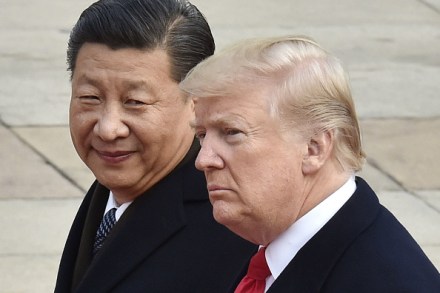
If Donald Trump wanted to deliver a seasonal gift to his ‘good friend’ Xi Jinping, the ‘Phase One’ trade deal reached this weekend fits the bill pretty well.  From the viewpoint of the Beijing leadership, it vindicates the Chinese refusal to budge during the long months of trade negotiations despite the threat of escalating duties. What has resulted is less the kind of overall trade agreement originally aimed at by the Trump administration and feared by China as interference in its economy —  and more of a purchase agreement accompanied by reduced tariffs.
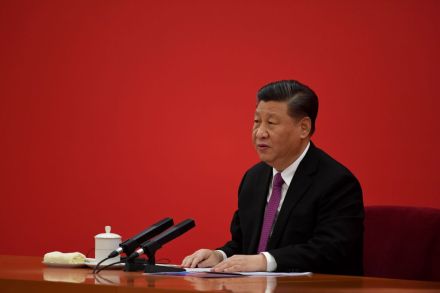
xi

Why China needs a deal with Donald Trump

From our UK edition

China’s leadership knows it has badly underestimated the Trump administration’s will to raise the stakes on the trade front. They therefore hope that today’s meeting between the president and Xi Jinping in Buenos Aires produces a return to the status quo ante. The ideal outcome for Beijing would be agreement to establish an on-going dialogue similar to the one conducted earlier this century in which China could dictate the pace of concessions in order to alleviate the pressure from sanctions. This would be based on making the most of the Trump’s positive evaluation of his personal relationship with the Chinese leader and concern in the administration at the impact of tariff escalation on US consumers and inflation.

How China sees the trade war

What started out as one of those trade wars that Donald Trump believes are ‘easy to win’ has turned into a far broader confrontation between the US and China which is set to expand and deepen further. In his no-nonsense manner, the President has brought the era of ‘constructive engagement’ between the world’s two largest economies to a shuddering halt. Gone are the days when successive administrations thought economic growth would make the Chinese and their leaders ‘more like us’. Instead, the last major country ruled by a Communist Party is identified as a strategic competitor whose further economic political and military expansion has to be checked in America’s national interest.

china xi jinping

Has Kim Jong-un finally grown up?

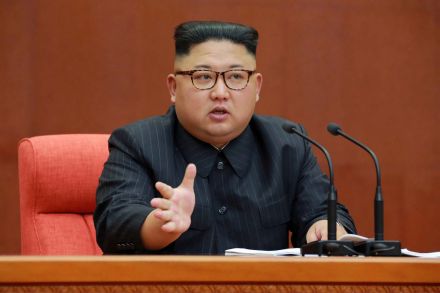
Given the mutual bluster, threats and sabre-rattling we got used to from Donald Trump and Kim Jong-un, it may be hard to credit the air of sweet reasonableness that has spread over the Korean peninsula in recent weeks leading to the weekend announcement of an end to weapons testing by the North. The potential for a reversion to confrontation is all too evident. Pyongyang has a long record of reneging on agreements and its announcement contained no mention of a reduction in its arsenal that includes missiles which can hit Japan and South Korea even if it stops development of ICBMs aimed at the USA.

One man rules

From our UK edition

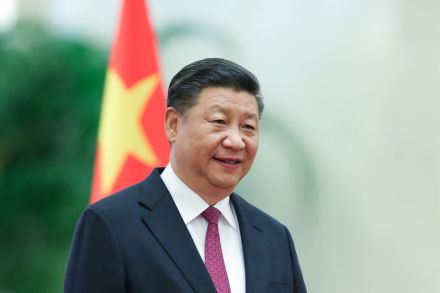
Optimists speculate that Xi Jinping’s power accumulation is the prelude to a burst of liberalising reform in his second five-year term as the Communist party’s general secretary, which will be consecrated at the current Congress. Nothing seems more unlikely, with the Chinese leader insisting in his marathon opening speech on Wednesday that his country should ‘strive for the great success of socialism with Chinese characteristics’ to take ‘centre stage in the world’. While he recognises the need for China Inc. to operate more efficiently, his chosen route lies through the reinforcement of the party state, the repression of dissent and the centralisation of his authority. This represents a sea change in the direction of the last major Leninist state.

The Macron miracle

From our UK edition

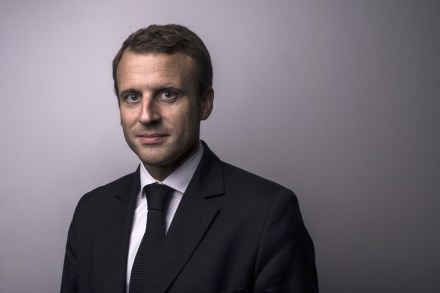
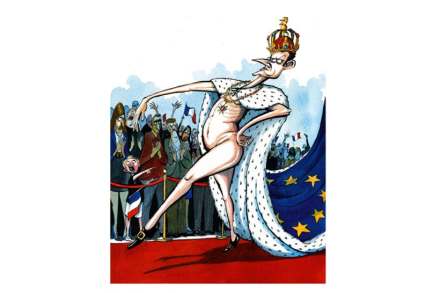
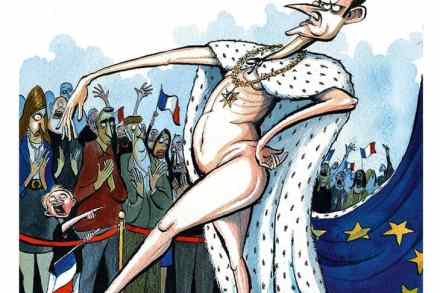
 Paris While Theresa May flounders in a mess of her own making, Emmanuel Macron is striding out on to the sunlit uplands of French politics. Six decades after Charles de Gaulle set up the Fifth Republic, his seventh successor is charging ahead with his attempt to restore a quasi-monarchical authority to the occupant of the Elysée Palace. After three hollow presidencies, the 39-year-old hope of the European reformist centre is bent on turning the clock back in terms of presidential power with a broad-based electoral appeal, positioning himself above the sclerotic political world that has alienated most voters and blocked structural change in France since the 1980s.

Emmanuel Macron is marching towards disaster

From our UK edition

Coming out of a celebratory dinner at a Montparnasse brasserie after topping the poll in the first round of the French presidential election on Sunday, Emmanuel Macron had a brief brush with the press. A reporter asked: ‘Is this your Fouquet moment? This referred to a notoriously showy celebration by Nicolas Sarkozy at Fouquet’s restaurant after his own victory in 2007. The 39-year-old centrist was visibly cross. He simply wanted to thank his secretaries, security officers, politicians and writers, he said. Then came the dig. ‘If you don’t understand that,’ he said, ‘you understand nothing about life. I have no lessons to learn from the petit milieu Parisien.

What’s the matter with Macron?

From our UK edition

Coming out of a celebratory dinner at a Montparnasse brasserie after topping the poll in the first round of the French presidential election on Sunday, Emmanuel Macron had a brief brush with the press. A reporter asked: ‘Is this your Fouquet moment? This referred to a notoriously showy celebration by Nicolas Sarkozy at Fouquet’s restaurant after his own victory in 2007. The 39-year-old centrist was visibly cross. He simply wanted to thank his secretaries, security officers, politicians and writers, he said. Then came the dig. ‘If you don’t understand that,’ he said, ‘you understand nothing about life. I have no lessons to learn from the petit milieu Parisien.

Le Pen’s long game

From our UK edition

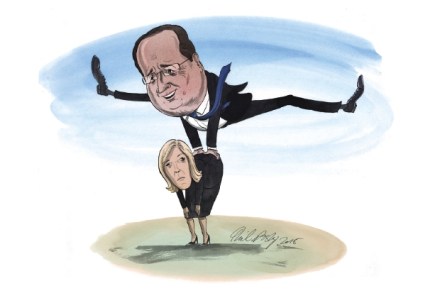
Marine Le Pen can be excused for thinking her time has come. With six months to go until France’s presidential election, the left-wing government of François Hollande has produced only one winner, and it is her. She’s providing the Gallic contribution to the insurgent charge epitomised elsewhere by Brexit and Donald Trump. France, the home of joie de vivre, has become an introverted place whose citizens fear their nation has lost its way. It is an existential challenge, in the birthplace of existentialism, that the mainstream right is failing to answer. Le Pen, on the other hand, says she has all the answers — and, despite the questionable nature of many of her remedies, up to a third of the electorate appears to agree.

François Hollande could still win in 2017 — tonight’s election result proves it

From our UK edition

François Hollande appears to have been consigned to the political mortuary. The first Socialist French president since François Mitterrand has been more unpopular than any of his predecessors in office — his approval rating sank to 13 per cent towards the end of last year. His style of government has been ridiculed. His private life has been the subject of mockery. He is compared to a hapless captain of a pedalo navy or a wobbly French pudding, a Flanby. But don’t write off Flanby just yet. Thanks to the peculiarity of French presidential elections, he may well win a second term.

Vive Hollande?

From our UK edition

François Hollande appears to have been consigned to the political mortuary. The first Socialist French president since François Mitterrand has been more unpopular than any of his predecessors in office — his approval rating sank to 13 per cent towards the end of last year. His style of government has been ridiculed. His private life has been the subject of mockery. He is compared to a hapless captain of a pedalo navy or a wobbly French pudding, a Flanby. But don’t write off Flanby just yet. Thanks to the peculiarity of French presidential elections, he may well win a second term.

Does Xi Jinping really want reform? If so, he would unravel China

From our UK edition

It is now 35 years since Deng Xiaoping gained mastery of China and launched a process that changed the world. The diminutive, chain-smoking ‘paramount leader’ adopted market economics to make his nation a great power once again and to cement the rule of the Communist party with no room for political liberalisation. The formula he adopted at a Party plenum after winning the power struggle at the end of 1979 that followed the death of Mao Zedong has been amazingly successful by its own lights, but is fast running out of steam.

Très difficile

From our UK edition

François Hollande is nothing if not a traditionalist. French governments of the left usually come to office promising to reject austerity and pursue a holy grail of growth, only to hit the buffers of economic reality on election. In 1936, the Popular Front sought to overturn the orthodoxy of its predecessors after the Great Slump and in 1981 François Mitterrand pledged to escape from Giscard d’Estaing’s rigorous policies in reaction to the first oil shock. After being appointed as the country’s latest finance minister this summer, Pierre Moscovici duly declared that ‘austerity’ was a word he did not like.

Buried in China

From our UK edition

Despite our government’s best efforts, we’ll probably never know why Neil Heywood died Dealing with China is never easy, as everybody from Margaret Thatcher (over Hong Kong) to Barack Obama (over everything from currency issues to who is going to be top dog in the Pacific) has discovered. Now David Cameron and William Hague find themselves embroiled in the biggest political earthquake in the People’s Republic since the protests that led to the killings in Beijing in 1989. At first, the death of a British businessman, Neil Heywood, in a hotel room in the city of Chongqing in western China last November did not seem to be an event of political importance.

Cracks in China

From our UK edition

The downfall of Bo Xilai has been the closest thing the Chinese get to a proper public scandal. Here was the attention-seeking boss of the mega-municipality of Chongqing, a colourful rock star in the country’s monochrome politics, sacked in mysterious circumstances that gripped a gossip-hungry nation. China’s authorities this week even felt compelled to ban the word ‘coup’ from microblogging sites, amid wild speculation that an overthrow was in the offing. The choice of Bo’s successor, a trusted establishment figure, suggests that the authorities who ousted him have had enough of big personalities in politics — but the truth is more complex. For all its pride in its growth, the People’s Republic is wracked with uncertainty about its future.