James Ball

James Ball is the Global Editor of the Bureau of Investigative Journalism, which last month launched a two-year project looking into Russian infiltration of the UK elite and in London’s role in enabling overseas corruption

How the multi-billion-dollar wellness industry is putting us at risk

From our UK edition

No one could accuse Dr Nick Tiller of taking health and wellness issues lightly. In his latest book he recounts an occasion in which a friend asked him whether he was an extrovert or an introvert – the kind of question most of us would treat as small talk to pass the time. Tiller, though, took it seriously. What did she mean by those terms, he asked, hearing in response that it depended on whether he got energy from being around others, or not. OK, then: what did she mean by energy? ‘At this point,’ he writes, ‘she got frustrated and didn’t speak to me for the rest of her wedding. Which was awkward, since I was the best man.

The new power players running the world

From our UK edition

At the opening of The Hour of the Predator, Giuliano da Empoli describes Spain’s conquest of the Aztec empire, its doomed ruler Moctezuma II’s response (ineffective vacillation, delaying any course of action), its consequences and its relevance to politics today. It is a striking introduction to a brief, bracing and profoundly alarming book. The author argues that an alliance of tech bros and authoritarian rulers – whom he calls modern-day Borgias – are sweeping away the rules-based international order. He sees our elected leaders as comparable to the procrastinating Aztec emperor, appeasing and hesitating as the opportunity for action passes into history. Da Empoli has a peculiar vantage point.

The end is nigh – or is it?

From our UK edition

When most people start screaming that the sky is falling, they can safely be ignored. But Eliezer Yudkowsky is not most people. He was one of the first to take the idea of superintelligent AI – artificial intelligence that greatly surpasses humanity – seriously. He played a role in introducing the founders of Google DeepMind to their first funder; and Sam Altman, the CEO of OpenAI, credited Yudkowsky as a man who was ‘critical in the decision’ to start the organisation. His influence goes still further – he was a key thinker motivating the effective altruism movement and its founders, and the wider rationalist movement to which they belonged.

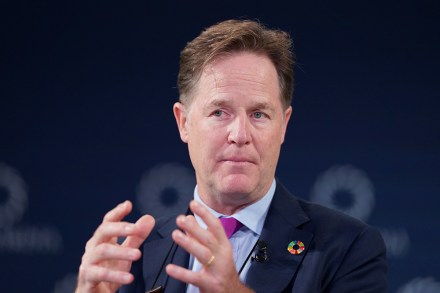
Even now, Nick Clegg offers too little too late

From our UK edition

Earlier this year a former staffer of what was then Facebook, now Meta, wrote a gossipy tell-all memoir about her time in the office there. It was a huge hit – especially after the company’s chief global affairs officer Joel Kaplan secured a ruling to prevent its promotion. Careless People, by Sarah Wynn-Williams, proved that there was a considerable appetite for anything that describes what it’s like to work for big tech. All of which boded well for Nick Clegg, who was Kaplan’s predecessor as the public face of Meta to governments across the world – until his departure was unceremoniously announced a few days before Donald Trump’s return to the White House.

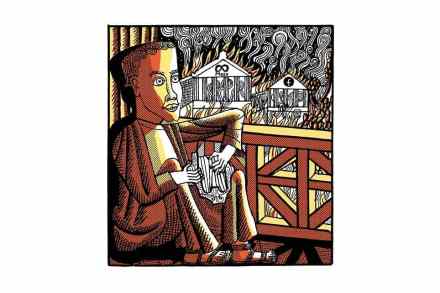
The bloodstained origins of the Italian Renaissance

From our UK edition

War – huh – what is it good for? According to Duncan Weldon, throughout most of history it’s been fantastic for economic growth and development and has perhaps fuelled technological innovation and more. Blood and Treasure is a delightfully quirky approach to military history. Colonial Spain was thought to be cursed by the gold brought home from its colonies in the New World, since the crown somehow bankrupted itself multiple times during this period, despite the riches. Weldon contends that since the gold meant that Spain’s monarchs did not need to approach parliament for money, it left them untethered from their economies and constraints.

Petty, malicious and tremendous fun – the Facebook office drama

From our UK edition

Careless People, Sarah Wynn-Williams’s account of her time at Facebook, has landed top of the New York Times’s bestseller charts and fourth in the UK’s Sunday Times equivalent. It owes its success in large part to a ferocious campaign that Meta – Facebook’s parent company – waged against it on publication. When Meta faces a barrage of public criticism, which it often does, it typically stays quiet and gets on with things. And that approach works – its share price has continued to soar despite scandal after scandal. So when the company not only published a series of furious denials but also had staffers post about the book on their personal social media feeds, and even launched a legal action to prevent Wynn-Williams promoting it, people started to take notice.

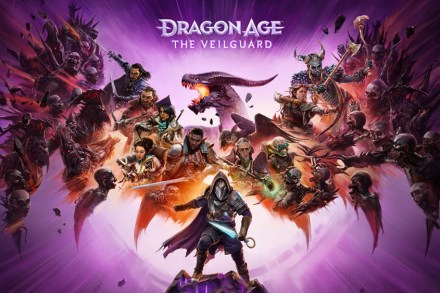
The latest Dragon Age game is unbearably right-on

From our UK edition

Like all other forms of culture, video games offer a way to escape from, or reflect on, reality through fiction. Unlike almost any other form of culture, they are interactive – you, the player, control the experience. Nowhere is this more true than with immersive role-playing games (RPGs), in which the player embodies a character forced to make moral (or wildly immoral) choices in a fictionalised world, which change the narrative of the game for good or ill. That might sound nerdy (it is), but it’s big business. Baldur’s Gate 3 has comfortably topped $1 billion in global sales, and won numerous industry awards. Baldur’s Gate 3 gives you lots of choices.

Conspiracy theories are as old as witch hunts 

From our UK edition

To millions of people across America, Hillary Clinton sits atop a global network of satanic child-traffickers and is battling an underground resistance led by Donald Trump to maintain her malign influence. That is the core tenet of the QAnon movement, a conspiracy theory that originated in obscure corners of the internet before being seized upon by members of the Republican elite for their political advantage. Did the Clintons get rich while undertaking a life of public service? Absolutely QAnon is at the heart of Gabriel Gatehouse’s The Coming Storm. But the book begins with a conspiracy theory from centuries earlier, about witches in medieval Europe.

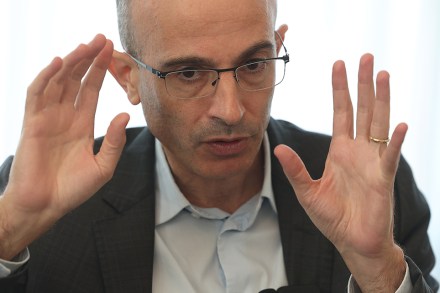
Is now the most exciting point in human history?

From our UK edition

Yuval Noah Harari has sold more than 45 million books in 65 languages. He is a professor with a PhD from the University of Oxford, has spoken at TED and the World Economic Forum in Davos, and his latest book, Nexus, is considered ‘erudite, provocative and entertaining’ by Rory Stewart and ‘thought-provoking and so very well reasoned’ by Stephen Fry. This is the story the book’s cover tells us about its contents, and Nexus itself argues that it is stories which are fundamental to shaping the world. It posits that the strength of humanity comes from building large networks in which we work together co-operatively, but that our weakness is that once we have amassed power this way, we use it unwisely.

The dirty war of Sefton Delmer

From our UK edition

There is an obvious problem with trying to judge who ‘won’ a propaganda war. Unlike its physical counterpart, there is virtually no real-world evidence either way, and everyone involved has spent years learning how to spin, manipulate and outright lie about reality to try to shape it into what they want. As a result, it remains the conventional wisdom – among those who think of such things, at least – that despite their eventual and total defeat in the second world war, it was the Nazis who won the propaganda war of their era.

What would life on Mars actually look like?

From our UK edition

Just as extreme altitudes have notable effects on the human body and mind, so too does extreme wealth seem to have a particular effect on psychology. Or at least that’s how it appears when you look at the shared ambition of two of the world’s most prominent billionaires, Elon Musk and Jeff Bezos. Both men are fixated on the idea that humanity’s future lies beyond Earth and are funnelling fortunes into the vision that we will soon have significant human settlements off-planet, whether on the moon, Mars or elsewhere. It’s an argument grounded not just in exploration and discovery, but in survival. If humanity’s future on Earth looks to be in doubt, is living off-world not the ultimate insurance policy for our species?

The bored teenagers who can disrupt the world

From our UK edition

Most of us live a strange double life when it comes to hacking. We read headlines saying that our toaster might spy on us, that Russia is trying to hack into our social media, and that society as a whole could be under threat. At the same time, we install smart speakers in every room of our house, post more than ever to social media, and the worst we see of hacking attempts is the occasional email from a Nigerian ‘prince’. Trying to calibrate whether we should be terrified or unconcerned is a difficult task, so it’s refreshing when Scott Shapiro – a Yale law professor who also serves as the director of the university’s cybersecurity lab – says early in his book that neither is the correct approach.

Zuckerberg’s empire collapses

From our UK edition

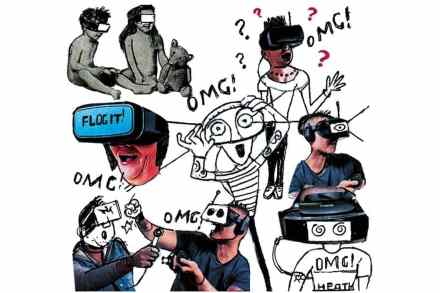
Mark Zuckerberg is in a lot of trouble. He has turned away from the slog of running Facebook to focus almost entirely on his ‘metaverse’, a vision of the internet where people enter interactive virtual spaces using virtual reality (VR) headsets. He has pledged investment of at least $10 billion a year for a decade, and investors have been told that profits will be lower for the next decade as a result. He saw the digital future once. Can he repeat the trick? Right now, it seems not. His company’s stock price has more than halved, wiping $600 billion off its market value. Shareholders are worried. Meta is to cut expenses by at least 10 per cent in the coming months, in part through redundancies. More cuts are expected.

Brexit isn’t to blame for sewage dumping at sea

From our UK edition

Facing inflation rates in excess of 18 per cent, a painful recession, and the prospect of electricity bills costing more than a mortgage, the UK’s troubles are mounting. But weighing on our minds almost as much is the fact that we seem to be pumping unprecedented levels of sewage into the sea. This would be far from ideal – to say the least – at any time of year, but coming in the peak of August, just as families are out trying to enjoy the beach, the issue is understandably hitting home. But while it’s true that there have been days of huge sewage discharge into the sea, there has also been an awful lot of garbage talked as to why it’s happening.

What is the metaverse, actually?

From our UK edition

There is a concept in tech and innovation – branded by an expensive consultancy company, naturally – known as the Gartner Hype Cycle. Any innovation, be it NFTs (a means of owning ‘unique’ digital art), blockchains (the technology powering crypto-currencies like bitcoin), self-driving cars or wearable tech, will go through distinct (buzzword-heavy) stages before it is adopted by the mainstream. First, it will head to a ‘peak of inflated expectations’, before entering the ‘trough of disillusionment’. As people then work out what the tech might actually deliver it climbs the ‘slope of enlightenment’ to the ‘plateau of productivity’.

Will there ever be a reliable lie detector?

From our UK edition

For as long as we have been human we have looked for some way of telling when we are being told the truth. We tried dunking witches, only to find that buoyancy is not connected to the supernatural. We tried torture, but discovered that people will eventually say just about anything to make it stop. We experimented with scopolamine and sodium pentathol, to learn that ‘truth serums’ do little more than make their targets susceptible to suggestion. And we’re still trying – with scientists pushing MRI scans and ECGs alongside AI as a ‘brain fingerprinting’ technique. The jury is out as to whether the latest ideas will prove any more reliable than those that went before.

Russia had nothing to do with Brexit

From our UK edition

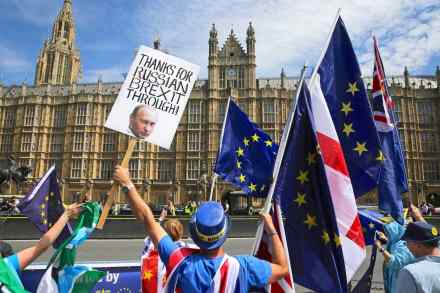
In light of Russia’s abhorrent invasion of Ukraine, certain corners of the internet have become obsessed – yet again – with Russia’s supposed involvement in the 2016 Brexit referendum. The connections are always left necessarily tenuous: there is very little in the way of logical reasoning that could really connect the two. Plenty of pro-Brexit figures have been hawkish on Russia since long before the 2016 referendum. Plenty of liberal remainers have, intentionally or not, acted as apologists to Russian wrongdoing. There is nothing to suggest Brexit enhanced Russia’s ability to invade Ukraine, either. The EU is not Europe’s primary security alliance, Nato is.

What motivates Peter Thiel apart from the desire for more wealth?

From our UK edition

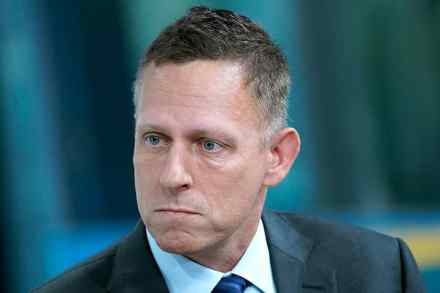
If you’ve only heard one thing about Peter Thiel (and many have heard nothing at all) it is that he is a believer in the power of young blood. The tech multibillionaire and founding investor of the surveillance company Palantir is a public advocate of parabiosis, an experimental field of biology investigating whether transfusions of blood from young people to older ones can stall or even reverse ageing. Rumours that Thiel himself has received such transfusions have persisted for years. When asked about them directly in a rare interview, he replied simply: ‘I’m not a vampire.’ Max Chafkin’s The Contrarian makes for deeply uncomfortable reading.

Priti Patel’s war on encryption is doomed

From our UK edition

The modern world has an unfortunate habit of making life difficult for those working to keep us safe. For the police, security services and others, so many inventions seem to be created just to make it more difficult for them to see who’s up to no good.  Take envelopes, for one. Envelopes make it much fiddlier to see what’s in the letters we send to one another – and they could show anything: that envelope could contain financial fraud, revenge porn, or even be plotting a murder. What is it hiding? Modern Britain is unreasonable to state snoopers in so many other ways too. Inconsiderately we put locks on our doors, with no regard for how much more difficult this will make things if the authorities need to get into our home.

TikTok intifada: the role of new media in old conflicts

From our UK edition

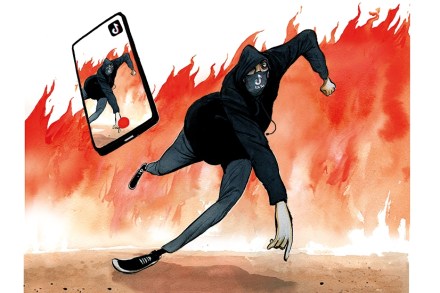
In Israel last month, a video on the social media platform TikTok encouraged users to film themselves assaulting Orthodox Jews. That video became a spark that ignited outrage across the country. A band of Jewish extremists, Lehava, organised a march in response. They clashed with Arab groups at Damascus Gate. In a situation that was already a tinderbox, things escalated from there. Why did it happen? Why would any ordinary person get pleasure from assault? ‘There is a competition for likes and views,’ a 15-year-old victim told an Israeli news organisation. ‘A video of an Arab slapping an ultra-Orthodox man will get you both.’ A violent riot set off by teenage longing for likes. Welcome to the TikTokisation of global politics.