Spectator Life

Spectator Life

An intelligent mix of culture, style, travel, food and property, as well as where to go and what to see.

RIP to my old band T-shirts

‘This is beginning to fall apart – I think it’s just age.’ Words spoken on the evening of my 32nd birthday. Thankfully, my wife wasn’t referring to my body or our marriage. Almost as tragic though, it was another band T-shirt, the fourth in as many weeks to finally give up the ghost. Big things, like turning 30 or becoming a dad, don’t really rattle me This is no small thing for me. From about 2007 onwards, I had a reliable default outfit: band T-shirt, black skinny jeans, black Converse All-Stars (high-top). Unlike many of my peers, I escaped the early years of marriage without a wardrobe purge by my wife, and so this get-up served me well until fairly recently. But, as Auden wrote, you cannot conquer time.

Get police out of the playground

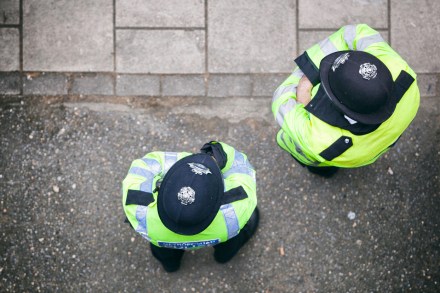
It’s not just that the lunatics – sorry, ‘neuro-diverse’ – have taken over the asylum. They’ve taken over the asylum and started walking on their hands, and they’re determined to make us do the same or feel ashamed for staying the right way up. That is what I thought, anyway, when I read that children as young as nine are being cautioned by the police for calling each other names in the playground. Half a century later, at 65, I have extremely high self-esteem The correct way to counter name-calling is either to hurl them back or ignore them. As a teenager, I was occasionally called a ‘witch’ by schoolmates because of my big nose. Sometimes I simply stuck my massive beak in the air and flounced past, sometimes I retorted with an observation about my accuser.

The surprising second life of Colonel Seifert

There was a time, not so very long ago, when the skyline of London was dominated by the work of one architect: not Sir Christopher Wren, but Colonel Richard Seifert. But while Wren is universally admired, Seifert has been reviled. Architects hated his success; the public his uncompromising brutalist aesthetic. Yet now, more than two decades after his death, that appears to be changing. Seifert – who did a spell in the Royal Engineers during the second world war and then insisted on being addressed by his military rank throughout his life – was often said to have had more of an impact on the capital than anyone bar the creator of St Paul’s.

The rise of the reckless divorce columnist

It is now 20 years since I left university. Two pints in an evening and I feel groggy the next morning. My oldest child is in his last year at primary school, I regularly wake up with mysterious aches and pains, and we still have a very long way to go on our mortgage. All of which is to say that I am firmly and undeniably middle-aged. As it happens, I am rather enjoying myself at the start of my fifth decade. My midlife crisis takes one of the more benign forms: crafting a 1:76 scale model of an interwar rural branch line in the attic. That almost half of children do not have both parents present is grim But that is clearly not the universal experience.

Hollywood is quietly welcoming Trump

When I lived in LA in the 1990s, there was one golden rule of the film industry: Hollywood should follow and never lead. This mantra was, predictably, ignored in the wake of the election. Variety splashed with the headline ‘Hollywood on Edge After Trump’s Devastating Victory’. One actor was quoted bemoaning the ‘unimaginable cruelty that’s going to be unleashed on women, immigrants and the LGBTQ community’. Another said they had called LA pharmacies to ‘hoard birth control pills’. ‘I know lots of agents and producers who voted Republican’ Yet this fractious relationship is about to see a surprising plot twist.

The fundamental flaw in Britain’s maternity care

Just over a year ago, I gave birth to my daughter. Labour was surprisingly smooth, unlike my previous emergency c-section. Once I started pushing, my daughter came quickly. I heard the reassuring sound of a newborn crying, and I felt the most indescribable sense of relief. Then, I started haemorrhaging. Before I knew it, I was under general anaesthetic in the operating room. When I came to my senses a few hours later, my first thought was the hospital’s policy: no visitors after 8 p.m. I had 12 hours before being left alone overnight with my daughter in a room full of equally badly injured mothers. A sense of panic set in. The countdown had begun.

Would we even notice a farmers’ strike?

You might think that, as a country, we have had our fair share of food security wobbles over the last few years: first with pre-Brexit panic, and the hoarding that went along with it, and then the empty supermarket shelves that few of us will forget during the height of the pandemic. But this time, the call is coming from inside the house: British farmers are threatening to stop supplying supermarkets in protest against the government’s plans to apply inheritance tax to family farms. What we might be able to cook in a few weeks is as expansive as ‘almost anything’ or as limited as ‘almost nothing’ What does that mean for the average person doing the weekly shop? Are we returning to the days of rationed eggs and powdered milk? Not quite.

Two 10-1 ante-post plays for big races

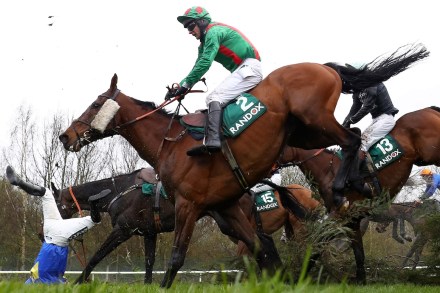
There are two big handicap chases looming over the next fortnight: the Coral Gold Cup at Newbury and the BoyleSports Becher Chase at Aintree run over the Grand National course. I am hoping there are good ante-post bets to be had in both races. The Coral Gold Cup, still known as the ‘Hennessy’ by many older racegoers after its former sponsor, takes place a week tomorrow and the runner I am keen to get onside is BROADWAY BOY for the Twiston-Davies yard. Trainer Nigel has one son Willy as his assistant and another son Sam as his stable jockey and they are all convinced they have a horse to go to war with.

Revenge of the rural Barbour

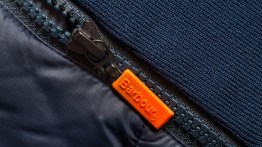
Time was, a Barbour meant one thing: the classic Beaufort model that stank of wax, wet dog, and had pockets stuffed with cartridges from a shoot. Naturally, the late Queen Elizabeth modelled it best, standing at Balmoral in hers with her trademark neckerchief. There is an apocryphal tale that, like all die-hard Barbour devotees, the Queen refused to buy a new one from the 1970s onwards, instead preferring to have hers re-waxed until it presumably fell apart in one of Prince Philip’s Land Rovers. Such was the genius of the Barbour brand, which acted as a sartorial shorthand for the make-do-and-mend postwar generation, evoking all sorts of British no-nonsense, pull-your-socks-up attitudes ever since its inception in 1894.

Glastonbury and the problems of youth

On Sunday, I was in deepest Wales, listening to birdsong, braying donkeys and a demented cockerel, but instead of getting away from it all I was staring at three different laptops all clicked to the same link: the Glastonbury ticket sale countdown clock. This was the fifth year in which my daughter has sought tickets and, determined not to fail once again, she had arranged a military-style operation, recruiting a small army of volunteers, including me, to be online on the stroke of 9 a.m. in the hope that one of us would get lucky. The other five people she was planning to go with had all done the same. There must have been 50 people trying for the the tickets. My daughter had arranged a military-style operation, recruiting a small army of volunteers At first it was fun.

Should we worry about Ozempic?

History has taught us to be shy of miracle drugs. But that hasn’t stopped weight-loss drugs being eagerly promoted by fans such as Boris Johnson, and even touted by Keir Starmer as a possible means of getting people back into the workforce. In the US, according to a survey by polling firm KFF earlier this year, one in eight adults has already taken a weight-loss drug. Grand claims have been made. Could RFK Jnr be right in suggesting that weight-loss drugs are causing more harm than they are worth? A trial of 17,600 overweight adults suffering from heart disease – sponsored by the manufacturer of Ozempic, Novo Nordisk – found that those who took it saw reduced deaths from all causes relative to a control group given a placebo.

Babycham is back!

Babycham, the drink you perhaps last sipped while tapping the ash from a black Sobranie as Sade played on the jukebox, is coming back. Launched in 1953 by Francis Showering of the Somerset cider family, it was aimed at giving women something to drink in the pub other than a port and lemon. Demand for the ‘genuine champagne perry’ soared after it became the first alcoholic drink advertised on the new ITV in 1955 – to the extent that Babycham was once said to be stocked by all but two pubs in the country. It’s a ‘champagne’ rather than a ‘sparkling’ perry to this day – an attempt by Bollinger to sue for abuse of their trade name in the 1970s was dismissed by Lord Denning.

Chilean wine is hard to beat

We were assembled to taste Chilean wines assisted by magnificent Scottish food, courtesy of the Scottish embassy in London, otherwise known as Boisdale. But there was a problem of etiquette. As we were dealing with Chilean matters, I thought that we should propose a toast to a great Chilean and a staunch ally of this country, General Pinochet, who saved his own nation from becoming another Cuba or a mess like the current Venezuela. The left will never forgive Pinochet or Kissinger for frustrating Marxist ruin My neighbour expressed doubt. Surely the general committed atrocities? I conceded that the overthrow of Allende was not bloodless.

The fall of Match of the Day

Match of the Day is looking for a new presenter now that Gary Lineker is leaving after 25 years. The truth is, it really doesn’t matter who replaces him, whether they’re male or female, a former player or nepo baby like Roman Kemp. That’s because Match of the Day really doesn’t matter to a vast majority of football fans any more. There will be those who lament the fact that, as seems likely, MotD will get a female presenter. But does it really matter? The viewing figures, recently lauded by St Gary as ‘amazing’, are around the four million mark. This is out of a football-mad population of around 60 million people – excluding Scotland, which has its own highlights programme, Sportscene, on the BBC.

Blackpool is cheap, tacky and wonderful

Arriving in Blackpool by train is just as I’d always dreamed. At the Pleasure Beach station, I disembarked right by the roller coasters, which rear up like Welsh hills beside you and, with the seagulls, welcome you with shrieking riders and clattering wheels. There are vast coasters in wood and metal weaving in and out of each other. Curvaceous and sprawling, they’re Gina Lollobrigida in steel. I’ve wanted to visit Blackpool for years. Spending my early childhood near Clacton-on-Sea, I got used to the delights of a tacky seaside town, and Blackpool is surely the mother of them all – even if it’s a mother with too much blusher and mascara on, who looks as though she’d scratch your eyes out if provoked.

Why am I banned from buying a tuna knife?

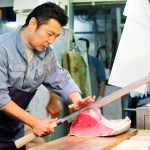
My brother went to Japan recently, and I asked him to buy me a knife. As anyone who has entered the bowels of a restaurant knows, Japanese blades are highly sought after. I had to decide between an 18cm utility knife or a metre-long Maguro bōchō. The carbon steel of the latter can fillet a 500-pound tuna in a single cut. In Japan, it is wielded by two highly skilled fish butchers, and it usually comes with a wooden scabbard as protection for the blade – and anyone standing near it. The Maguro bōchō was created purely in a culinary capacity, not as a weapon of war Boringly, I opted for the utility knife. I reasoned that I could always buy a razor-sharp, 24-inch blade online at a later date. However, my hopes have been dashed.

Why would anyone choose an induction hob?

In a letter to Katie Morley, consumer champion for the Telegraph, CK from London explained that her £4,000 Smeg hob doesn’t work with her Le Creuset pans. She said she was ‘furious’ because she had renovated her kitchen and had a marble worktop cut to fit it. ‘Given the price tag, I expected it to work like a dream, but instead I am having some significant performance issues with it... I feel very badly let down, and I may have to report this to trading standards’. Induction is a bit like using an Aga but worse, because at least Agas can look attractive Why would anyone choose an induction hob over a gas stove top? It is the worst kitchen invention since electric carving knives and soda streams.

Britain gave up on farmers centuries ago

Farmers are threatening a national strike over the inheritance tax increases, the first in history. Given how quickly the Labour government yielded to public sector unions, it is little wonder that the farmers have sensed that strikes are the best way to achieve their goals. By 1851, the proportion of Britain’s male workforce employed on the land had fallen to 22 per cent – lower than China in 2022 But it is not surprising that the government thought it would get away with stinging family farms for more inheritance tax. The voice of farmers (as opposed to landowning nobility) has long been weak in Britain for simple demographic reasons: few people are employed in agriculture, and this has been the case for centuries.

I’m one of the new wave of stroke victims

The NHS has warned of a staggering 55 per cent rise in strokes among healthy middle-aged people in the last two decades. Sir Stephen Powis, medical director of the NHS, offered no explanation for what he calls an ‘alarming’ increase, beyond the standard advice to take more exercise, eat carefully, and avoid smoking and excessive alcohol consumption. The figures on which Sir Stephen bases his alert are truly startling: 12,533 people in their 50s suffered strokes in Britain last year, up from just 8,033 in 2005, while 19,421 people in their 60s were stricken – compared to just 13,650 in 2005. I have a personal interest in these statistics.

Can you ever be fluent in a foreign language?

A couple of weeks ago, at one of my local bars in Antequera, a waiter asked me something as he served our glasses of wine. I didn’t catch it, so I asked him to repeat what he’d said. After the third time, I still hadn’t understood and clearly wasn’t going to. This guy has a thick Andalusian accent and sprays out about a thousand syllables per minute, but we usually communicate without problems. Two Spanish girlfriends also taught me a lot, and that’s definitely the most fun way to learn a language There’s also a local character, we call him ‘Gummy’, who roams the streets asking for cigarettes or change. I never understand a word he says either, except for ‘eurito’ (a little euro) or ‘cigarillo’ (cigarette). In my defence, he has no teeth.

Can Beaujolais take on Burgundy?

You could say the British were to blame. The dramatic rise and subsequent fall of Beaujolais has its roots in the early 1970s, when Sunday Times wine correspondent Allan Hall laid down a challenge for his readers. The first to go to Beaujolais, in eastern France, and bring him back a bottle of that year’s just-pressed wine (known as Beaujolais nouveau) would win a bottle of champagne.  Readers rose to the challenge, enlisting cars, trucks, private jets and even parachutes and an elephant as they rushed to be first. The Beaujolais Run became an annual institution, and local vignerons frantically planted new vines to meet demand.

So long, Bob Dylan

‘We have heard the chimes at midnight, Master Shallow.’ Bob Dylan took his leave of our shores last week at the Royal Albert Hall, with 5,000 people cheering him on a victory lap. Dylan is 83 and too frail to stand unsupported for long. He occasionally needs notes for his lyrics, but he will never surrender. I’m a performer, he seemed to say throughout every minute of the hour and 40 minutes he was on stage, and performers perform. I’m a performer, he seemed to say throughout every minute of the hour and 40 minutes he was on stage, and performers perform It's fairly clear we won’t see him again. The three nights at the Kensington Bowl ended the British leg of his Rough and Rowdy Ways tour, which seems to have been going on since the relief of Mafeking.

Two more bets for Cheltenham’s November meeting

Cheltenham’s three-day November meeting, starting today, will take place on much faster ground that normal and so anticipate plenty of non-runners if, as expected, there is very little rain over the weekend. This is usually a meeting at which soft-ground horses have their preferred conditions but that’s definitely not the case this time. The big race tomorrow is the Paddy Power Gold Cup (2.20 p.m.), a handicap chase over two miles four furlongs that has attracted a field of 15 runners. I had expected to put up Ga Law who I backed at tasty prices to win this very race two years ago. However, his odds have contracted all week and a current top price of 13-2 seems short for such a competitive race even though he is guaranteed to love this quick surface.

The Swedish model: Ikea’s restaurant puts others to shame

Ikea has opened its first high-street restaurant in the UK. There's not a flat-pack in sight – but a hotdog is 85p and a children’s pasta dish with tomato sauce (plus soft drink and piece of fruit) is 95p. A nine-piece full English will set you back £3.75, while a serving of their famous meatballs (with mash, peas, cream sauce and lingonberry jam) is £5.50. Vegetarians are amply catered for. It’s open 12 hours a day (and that may be extended further to enable dinner). There’s free wifi and somewhere to charge your phone. Even better, there is no music. It’s not pretending to be anything it isn’t.

Hotels are good for the soul

I love hotels. Growing up, my family never stayed in them (we were poor but we were honest, M’Lud). Instead we went to Butlin's, sharing a tiny ‘chalet’, or we stayed at bed and breakfasts; private lodgings where you got exactly those two things but had to be out and about during the daylight hours – come hell, high water or hailstones. For those too young to have experienced them, a B&B is basically the exact opposite of an Airbnb, where you’re allowed to stay in every single moment of every day you’ve hired it for, if that’s what turns you on. I’ve only stayed in one Airbnb, which was a houseboat in Amsterdam; I love boats and I love Amsterdam (or I did, before it went mad), but I never wanted to repeat the experience, because – hotels.

Why Britain needs Shinto

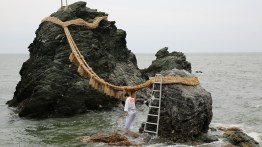
Ise, Japan They say of Japan that if you come here for a week, you want to write a novel about Japan. After a year, maybe a few essays. After a decade, a page. It is one of those countries which seems to get simultaneously more fascinating and opaque. Possessing an ancient monarchy is like having a Gothic cathedral in your back garden So it is for me, on this, my first trip to Japan in 30 years (I lived in Kyoto in the mid-1990s). This time around I have been doing prep by reading the early history of Shinto, the ‘state religion’ of Japan, an animist creed which sees the divine in everything – trees, rocks, lakes, rugby balls (really) – all in the form of kami – which can be spirits of place, mood or idea.

Blooming marvellous: the year’s best gardening books

I am an absolute sucker for a handsome reproduction of a rare and highly illustrated natural history, preferably more than two centuries old. This may possibly be a niche interest, but Catesby’s Natural History was pronounced a wonder when it was first published and is a wonder still. Mark Catesby was ‘a procurer of plants’, sponsored by a group of rich, curious patrons, including William Sherard and Sir Hans Sloane, to explore and record the flora and fauna of the most southern of the Thirteen Colonies – the Carolinas and Florida, as well as the Bahamas Islands. He made several perilous trips in the 1720s, sketching his subjects live, and completing paintings in England. He finally published his text and 220 hand-coloured plates in 1747.

The thrill of the Beaujolais Run

‘Le Beaujolais nouveau est arrivé!’ If that phrase means anything to you, you’re likely of a vintage that remembers pre-Clarkson Top Gear. Growing up in the 1980s, you couldn’t miss adverts for the Beaujolais Run – an annual race to be the first to bring the new wine back to England. People would rush over to Burgundy in their Aston Martins and Jaguars, fill up with Beaujolais and roar back home. The idea for a race across France was cooked up by Clement Freud and wine merchant Joseph Berkmann in 1970. It really took off in 1974 when the Sunday Times offered a prize to the first person to bring a case of wine back to the newspaper’s offices following its release at midnight on the third Thursday in November.

A light in the darkness: Home Kitchen reviewed

Home Kitchen is in Primrose Hill, another piece of fantasy London, home to the late Martin Amis and Paddington Bear. It is a measure of the times that Elizabeth II had no literary chronicler – no Amis, no Proust for her – but was, almost against her will, given Paddington Bear instead. When I saw the small bear at her memorials, I thought: is that her genre? Infants’ fiction? Couldn’t she do better? The question that follows is, of course: would they have eaten together at Home Kitchen? The barley is doughty, fragrant and from the earth.