Spectator Life

Spectator Life

An intelligent mix of culture, style, travel, food and property, as well as where to go and what to see.

The perils of public grief

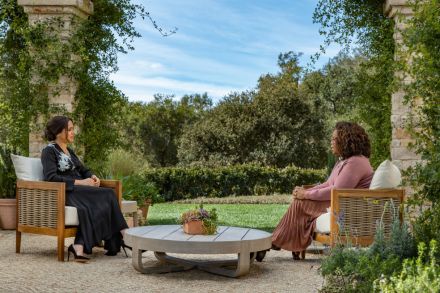
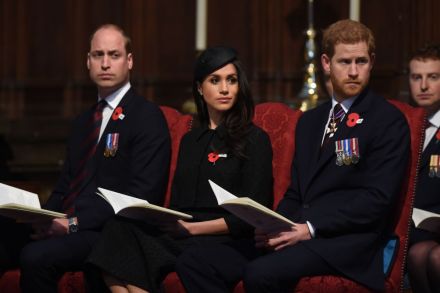
There is no greater tabula rasa in the public imagination than grief.  Prince Philip’s four children - no strangers to the glare of public interest - now find themselves the target not of global ire, but rather unusually, of collective sympathy. For public figures, the warm light of communal compassion imbues recognition and significance on the lives of lost loved ones; their grief is one that is shared, which must be a consolation. But in today's 24/7 news cycle public grief of this kind comes with its own pressures and expectations. In the annals of Royal public relations, this should be a relatively straightforward chapter. Approval for the Royal family soars amid a public outpouring of hagiography, and all is well.

Eat. Sleep. Repeat: 10 films that play with time

Over the recent long months of lockdown, many may feel that they are stuck in their own personal Groundhog Day. With working from home and the few opportunities for travel or socialising, life, for some, has become a matter of dull routine. It's somewhat of a surprise, then, that the well-worn genre of the time loop movie, where protagonists are doomed to live one single day time after time, is striking a chord. Recent comedy Palm Springs has had plenty of attention from critics, perhaps because it resonates so strongly with our lockdown experience. On the face of it, this genre is a recipe for monotonous viewing, but it is to the credit of filmmakers that many have played out the concept in ingenious ways.

It’s time to revive the handshake

Those with a watchful eye might spot something this week (or next)  not seen in a while. And I’m not talking about a freshly poured pint, or the sight of your forehead after three months without a barber’s care. Rather, as England and the whole of the UK, begins to ‘open up’ after the third national lockdown, and as we emerge socially emboldened into the spring sunshine inoculated to the tune of some 32 million first doses of Covid vaccine, there's a chance we might see the handshake make a tentative return. I can't be the only one who has begun to wince slightly every time I see someone on TV shaking hands in a social setting, in a film or programme evidently filmed in the world before Covid robbed us of such basic, everyday civilities.

The necessary politics of Promising Young Woman

Last month there occurred an event so culturally seismic that it made, well, a barely perceptible dent on the news headlines. Not just one but two actual women were nominated for the Best Director Award at the Oscars, a category that has for many years now been open to five nominees. It was the first time that two women have ever made it into contention in the same year and, by their audacious presence at the top table, Emerald Fennell (Promising Young Woman) and Chloé Zhao (Nomadland) have at a stroke increased the number of women the Oscars have ever nominated for this prize from five to seven. (Only one, Kathryn Bigelow, for The Hurt Locker, in 2009, has won).  Given that 2021 will see the 93rd iteration of the Academy Awards, that’s not bad going.

Shakespeare on screen: 8 unmissable adaptations

The National Theatre’s made-for-screen production of Romeo and Juliet (currently available on Sky Arts) has been delighting theatre-starved Shakespeare fans over the past week. Starring Josh O'Connor and Jessie Buckley this intimately shot film version of the Shakespeare play makes for perfect viewing for an audience starved of both social contact and theatre.  If you’re in the mood for more of the Bard, and can’t wait until theatres reopen, here’s our pick of the best film adaptations. A Midsummer’s Night Dream (2016), BritBox https://www.youtube.com/watch?v=eb8Ku8-MBRA With a judicious trim of the text, the ever-wonderful Russell T Davies turns Shakespere’s classic comedy into the perfect prime time romp.

Where does music come from?

When did music start? It’s an idle question, and in 1866 the Société de linguistique de Paris got so fed up with empty speculations about the origin of language and music that they banned the subject. There are a series of exhibits, though, which can help us answer the question. The first is the ‘Seikolos song’, the world’s oldest surviving piece of music, discovered inscribed on a second-century grave stele in present-day Turkey. The second is ‘Hurrian Hymn No. 6’, written on clay tablets, excavated from the Royal Palace of Ugarit, and dated 1400 BC.

How to back the right horse: top tips for the Grand National

Around £250 million was placed in bets on the 2019 Grand National, and this Saturday’s Grand National, which will be shown live on ITV at 5.15pm, looks set to be equally popular. Cloth Cap, they say, ‘should win it’. Trained by Jonjo O’Neill, he has a stone in hand carrying 10st 5 – which is one of the reasons why he’ll be ridden by Tom Scudamore, who picked up the ride in the Ladbrokes Trophy at Newbury due to being able to make the 10 stone weight. He won easily. The pair went on to romp up at Kelso as well; but what would make this a nice tale is that both the jockey and the horse have Grand National heritage behind them. Scudamore’s grandfather Michael rode in the race 16 times, winning in 1959 on Oxo.

A handy guide to vaccine passports

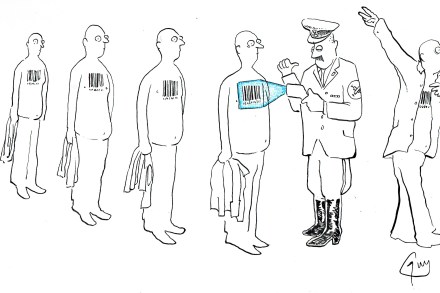
Soon, we will have to show vaccine passports to pass through covid checkpoints placed outside workplaces, football grounds, theatres and pubs. Until recently, we only needed to flash a passport when we entered a foreign country. Now, it seems, that the outside world will become foreign to us, unless we can prove that we’ve had the jab.  When we leave the house, it will feel like we’re going on a little adventure. Will we be stopped? Has my lateral flow test result registered on my app? Will we all get into the pub? Vaccine checks might add some spice to a Friday night pub crawl. Will some of our mates be exposed as vaccine renegades and ordered onto the street by covid bouncers?

How to solve Joe Biden’s dog problem

Pity poor Major Biden, First Dog of the United States, FDOTUS for short. Thrust first from the lowly surroundings of a shelter in Delaware then on to the porticoes of the Biden HQ and finally the White House, he appears to be experiencing teething problems as he adapts to his new life. And teeth are, quite literally, the problem. Prone to biting, the German Shepherd has now been found guilty of two biting incidents having first injured a member of the Secret Service and now a White House staffer whilst out on one of his walks. But this is not all. Major is also suspected of pooing outside the Palm Room doors of the Diplomatic Room in the carpeted sanctuary of the West Wing.

The best cop dramas to rival Line of Duty

As the sixth series of Line of Duty heats up, the good old police procedural drama is clearly back in fashion. If you need an additional fix before the next helping from AC-12, here are our favourite cops on television: Jimmy McNulty, The Wire https://www.youtube.com/watch?v=-otZBORF0JY As a rule of thumb, fictional cops tend to gravitate towards two moral archetypes: rule-breaking mavericks at one end and corrupt cynics at the other. But David Simon’s seminal work about the city of Baltimore blew that spectrum wide open, showing its various police teams as every bit as complex and compromised as the criminals they pursued.

Armie Hammer and Hollywood’s new moral code

I am always irritated by film versions of classic novels, especially when I’ve recently read them. I needn’t have worried about Death on the Nile. Kenneth Branagh's Agatha Christie adaptation, already subject to no fewer than six delays, has been pushed back yet again to the first quarter of 2022. By the time it comes out – if it does – I’ll have forgotten the original. With that airless sense of ‘here we go again’, Nile’s delay has been caused because its leading man, Armie Hammer, has been accused of sexual assault, including rape, and sundry other unsavoury forms of sexual conduct - allegations which he denies.

‘I couldn’t possibly comment’: Novels about political scandals

Thanks to the indelible characters found in the Houses of Parliament, and beyond, it sometimes seems as if there is nothing especially shocking that novelists could dream up for their fictitious political scandals. This means that stories about political naughtiness and shenanigans have to be that much more dramatic in order to ring true. Here are seven novels that mix fiction and reality in the most readable of ways. Rest assured, our current Prime Minister looms large in at least two of them, too. Seventy-Two Virgins, Boris Johnson To date, Boris Johnson has only written one novel, along with several works of non-fiction, but it’s surely one for biographers to seize upon.

The joy of ancient woodland

What’s the thing that’s kept you going during these interminable lockdowns? For me, it’s been walking in my local forest, Ruislip Woods. Ruislip may be the acme of suburbia, a maze of bungalows and crazy paving - but Ruislip Woods is only a short walk away, and it’s vast. As I’m sure you’ve discovered yourself these last few months, there’s nothing quite like a walk in the woods to alleviate the lockdown blues. It feels great to go somewhere entirely unaffected by Coronavirus, a place where this pesky pandemic seems utterly inconsequential. A forest is a precious place in any part of the country, but to me Ruislip Woods feels particularly special because it’s managed to survive despite being entirely within London.

What should go in the Brexit museum?

Have you ever wondered what happened to Boris Johnson’s Brexit bus? One might think such a large, controversial item would be too conspicuous to vanish into the ether, but for the life of me, I have no idea where it is. Yes, I know, red buses aren’t exactly a novelty in the UK, being the favoured mode of transport of Liverpool footballers, the loud actor fellow who was in Lewis, and most of the city of London. Perhaps it’s decided to leave its infamy behind and hide in plain sight, and is currently ferrying people from Hammersmith to Chiswick. But that particular bus shouldn’t be left to a quiet, mundane life out of the spotlight.

Twisted worlds: 10 films about cults

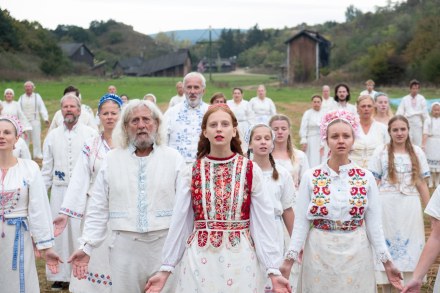
It makes sense that a closed, secretive world full of strange rules and rituals would appeal to film-makers but the sheer number of films about strange sects makes it more than a passing fascination. The cult has become a well-established cinematic trope. Here are ten films that are worth your time: Midsommar (2019) – Amazon Rent/Buy https://www.youtube.com/watch?v=1Vnghdsjmd0  Ari Aster, who also helmed Hereditary (another cult-themed movie), directs this fine-looking folk horror picture which depicts off-the-beaten-track Swedish communities as pagan holdouts where human sacrifice to the old Norse gods is still practised.

A brief history of ‘lived experience’

All experiences are lived, of course, but it seems some experiences are more 'lived' than others. Truth has become a moveable feast. This may seem like a contradiction. But this is where we find ourselves. How you define the notion of truthfulness is yet another signifier of where you stand in the increasingly wearisome culture war. Whether you see the subjectivity of lived experience as a progressive force for good or just another postmodern mash-up will depend on your age and political persuasion. Those who view experience through the lens of victimhood - mostly the activist young - tend to see objectivity as a tool of oppression.

A handy guide to flags

The Union Jack is back. No TV interview with a government minister is complete without a flag and their departments have been ordered to hoist them above their offices. Soon our country will look like a never-ending Golden Jubilee street party, but with neither refreshments nor festivities. We’d all like a street party, but many are embarrassed by constant flag waving, especially when the flag in question is the Union Jack. The students of London's Pimlico Academy were so put out by the idea of flags that they even went as far as to argue that the Union Jack flying outside their school was an emblem of racism, demanding that the headteacher took it down. Since it's now the job of pupils and protestors to decide school rules, he duly granted them their wishes.

The puppy pandemic is getting out of hand

They came in their droves. Labradors, Alsatians, French bulldogs, Spaniels, Cavapoos, Cockapoos, Labradoodles, Corgis, like a roll of dog poo bags, the list goes on. No sooner had Boris locked us up in the March sunshine last year than the nation rushed to acquire a dog. After years of standing firm, parents finally gave in to their children’s pleas and took the plunge. Those living alone, confronted with the prospect of indefinite confinement, threw caution the wind (and their furniture) and gave in to the idea of a dog. Those who had not owned a dog for years, decided they would once more fling themselves unto the canine breach. I know all of this because when I walk my Pointer, Percy, in the fields and parks around my house I am assailed by people with boisterous puppies.

Why is cinema obsessed with remakes?

The game is afoot! Yes, yet again! Hot on the hob-nailed heels of Enola Holmes, the Netflix film about the great detective’s younger sister, comes yet another spin on Sherlock. This time the streaming service brings us The Irregulars, a gaggle of Victorian urchins hired by Dr Watson to investigate crimes with a supernatural element. Elementary, you might say. Though I won’t, because it’s so tired and clichéd. And this convoluted Conan Doyle cash-in isn’t just jumping the shark — the producers of The Irregulars are so far gone, they’ve cleared the wall of the orcas’ tank and have beached themselves in the carpark. ‘Whatever is it like in your funny little brains?’, as Benedict Cumberbatch’s Sherlock said.

Covid virtue-signalling has infected our TV dramas

Not for the first time in its history, Eastenders managed to make a bit of a stir last week. In a break from the more harrowing stuff, viewers were treated to the sight of the ever-sprightly Patrick Trueman waltzing into the Minute Mart to jubilantly announce he’d received his second Covid vaccine. ‘Good for you! I’m due my first one later today,’ replied the shop-keeper, before dismissing the objections of a vaccine hesitant customer (called Karen, of all things). As you can imagine, the scene went down like a cup of cold sick with conspiratorially-minded types online. But you don’t have to believe odd things about Bill Gates to ask the more obvious question: which is why soap operas are tackling the pandemic in the first place. I get it.

Why Gen-Z is turning its back on the BBC

Do 16-34 year olds still watch terrestrial TV? More importantly, will they still be watching in a year's time when BBC 3 re-launches as a linear station? Six years ago, the youth orientated channel switched to digital-only as part of a £100 million cost cutting measure. Since then they have produced a couple of runaway successes such as the all-conquering Fleabag, hence the decision to have another crack at broadening their appeal to a rapidly dwindling youth market where TV sets are a rarity and scheduling anathema.   Once it is up and running again in January will the channel be able to fulfil its remit by appealing to a broad spectrum of younger viewers most of whom have already switched to subscription platforms?

What Chariots of Fire can teach us about identity politics

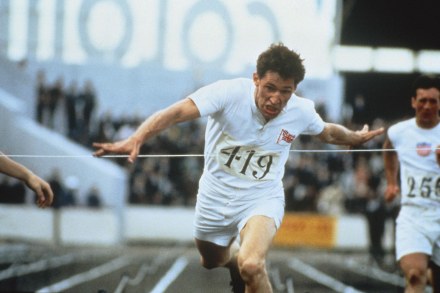
Next week marks the 40th anniversary of Hugh Hudson’s Chariots of Fire, the Oscar-winning true tale of Olympic glory which captured the affections of critics and mass audiences alike. Fondly cited by everyone from Maggie Thatcher to Joe Biden, parodied by Mr. Bean, beloved and bemoaned for its Vangelis score and heightened slow-mo cinematography, Chariots reliably jerks tears from most filmgoers of a certain generation. Yet, four decades on, the film has lost none of its vitality, even for the newcomer. Indeed, so far from being a faded relic of its era, it still crackles with a sharp and nuanced screenplay that offers particularly apt food for thought in a news age dominated by debates over discrimination, both racial and ideological.

10 conspiracy thrillers to watch this weekend

Whilst the genre has never gone out of fashion, the 1970s were seen by many as a Golden Age of the paranoia-thriller, with Watergate, the Vietnam War and speculation about the Kennedy assassination leading to classics such as The Parallax View (1974), Three Days of the Condor (1975), Winter Kills (1979) and others. For this piece, we will look at more recent conspiracy-driven motion pictures, which have all used technological advances and the ‘surveillance society’ as a way of ramping up the paranoia.

Cancel culture on film

As fireplace salesman-turned-Education Secretary Gavin Williamson enters the ‘cancel culture’ wars with his planned campus 'free speech law', what better time to investigate the phenomenon as depicted in the movies? There are a surprising number of films that deal with the subject, from every side of the political spectrum, with right-wingers, the left and libertarians all on the receiving end of censorship from the authorities at some point. As always, the focus will be on more recent movies, but first it’s worth mentioning a few older pictures that paved the way for later films.

What the British can learn from French attitudes to culture

Asked to defend France’s reputation on the global stage, a French diplomat once told the International Herald Tribune, 'If Germany has Siemens, we have Voltaire.' In this vision lies something very obviously French: a single-minded belief in superiority grounded not in the future but in the glorious intellectual past. Schooled in the tradition of exception culturelle or cultural superiority, the French truly believe that their cultural capital is the finest in the world. Think Diderot, Condorcet, Sartre and Camus and you can see why.

The problem with Desert Island Discs

It should be the basis for new playlists, exciting discoveries, the leftfield, the overlooked, the forgotten gem. But too often these days listening to Desert Island Discs is akin to being stuck in a minicab with the radio locked to Golden Greats FM, where the hits just keep on coming. It’s not so much that many guests have bad taste but that they have no discernible taste at all, their choices plucked almost exclusively from the canon of the bleeding obvious. It’s Exile on Mainstream Street.

It’s all about the blooms: eye-catching blossom to spot this spring

There is no finer sight in spring than a blossom tree. Planting one is, to my mind, a public service, as it will cheer generations of people plodding down your street, both with the blooms that appear on its branches, and with the confetti of petals thrown along the pavement. In the next few weeks, the streets are going to become incredibly well-dressed with blossom, and here are five to look out for in particular:  Mimosa, Acacia dealbata  This is already out in London, and my goodness, you can't miss it. It is the most vivid lemon yellow collection of little pompoms you can imagine, bursting out of beautiful ferny foliage.

Can song lyrics be considered poetry?

‘A notion at which we had but guessed.’ So said the poet Paul Muldoon recently, publicising Paul McCartney’s forthcoming book The Lyrics, an autobiograpy-through-the-songs based on conversations between the ex-Beatle and Muldoon. The notion in question was the one that ‘McCartney is a major literary figure who draws upon, and extends, the long tradition of poetry in English’. You can tell from the fact that ‘we had but guessed’ at it that Muldoon is an Important Poet. Fair enough, if it’s Macca’s own thoughts about his life as seen through his lyrics, with recollections of how he wrote them and what he was doing at the time, then it’s going to be good. Lots of stories, fascinating memories (we assume).

The must-see foreign language films to watch

Fancy a more sophisticated slice of entertainment to lighten up the last few weekends of lockdown? Here’s our pick of the best foreign language films you might not have seen yet: Minari, Amazon (to rent) https://www.youtube.com/watch?v=KQ0gFidlro8 The extremely moving Minari triggered a bit of a debate when it was first nominated for Best Foreign Film at this year’s Golden Globes, with various Hollywood luminaries protesting that the (largely) Korean-language immigrant story, set in rural Arkansas, deserved to be considered for the main prize. And in many ways, they’re right: you’d be hard-pressed to find a more stirring portrayal of the American dream.