Politics

Read about the latest political news, views and analysis

Open access

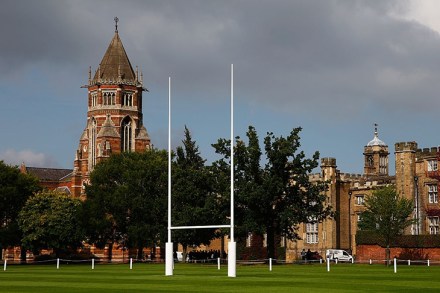
Rugby was immortalised in Tom Brown’s School Days, but its headmaster, Peter Green, is brandishing another book — a Christie’s catalogue with the school’s name on it. During an attic clear-out items were discovered in an archive room and were put up for sale. They had been given to the school in around 1880 by the Old Rugbeian Matthew Holbeche Bloxam, and included Chinese ceramics and British watercolours. The highlight was a rare drawing by Dutch Old Master Lucas van Leyden, which sold for £10 million. If the decision to sell that seems crass, it isn’t, says Green. ‘Why would we keep it? It has no intrinsic value to Rugby School. If we were able to build a massive museum, then perhaps.

School report | 14 March 2019

Should we scrap GCSEs? A senior MP has suggested getting rid of GCSEs and reshaping A-levels altogether; but not everyone agrees. Robert Halfon, chairman of the Education Select Committee, wants to rewrite the exam system so that A-levels include a mixture of vocational, academic and arts subjects, arguing that ‘all the concentration should be on the final exam before you leave’. ‘All young people should have access to the technical and creative subjects that will give them the skills that employers are looking for,’ says Halfon. ‘We must move from knowledge-rich to knowledge-engaged.

Jess Phillips says she would make a good prime minister. I’m not convinced

On Saturday, the Times published a much-lauded interview with Jess Phillips. As with all her public outings, she comes across as decent, kind, funny, hard-working, honest, and down-to-earth. These are certainly fine qualities to have in an MP. But the interview concluded with Phillips stating that she thought she would be a good prime minister. Many people concurred. This should make us stop and consider whether we’re looking for the right qualities in a potential PM, especially given that we might be seeking a new one sooner rather than later as a result of Theresa May's failure to get her Brexit deal through Parliament at the second attempt.

Mark Francois: I was in the army, I wasn’t trained to lose

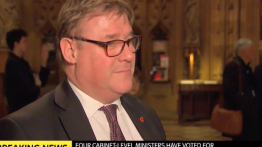
Following the government's defeat on a motion ruling out no deal, Brexiteer MPs in the Tory party will be asking themselves one key question this evening: if Brexit might not happen at all, should I support May's deal? The issue already appears to have split some of the Brexiteers in parliament, with MPs such as former Brexit secretary David Davis swinging behind May's agreement, while ERG chairman Steve Baker has said he'll continue to vote it down. One parliamentarian who doesn't like he's going to budge though is Brexiteer and ERG member Mark Francois. Speaking to Sky news presenter Beth Rigby following the vote against no deal, Francois was asked: 'I don't understand: why you don't just take her deal and bank the win?

Row breaks out between the whips and Number 10

As if the government did not have enough troubles right now, a major row has erupted between the Whips’ Office and Number 10. The whips think that a Number 10 aide was telling ministers they were safe to abstain on the no to no deal motion, when there was a three-line whip to vote against it. After the amendment ruling out no deal in any circumstances passed, the government decided to whip against its own motion rather than allowing a free vote on it. This irritated a slew of Remain / soft Brexit ministers who wanted to vote against no deal. Sarah Newton resigned as a Minister of State to do so. A handful of Cabinet Ministers — Amber Rudd, David Gauke, Greg Clark, David Mundell and Claire Perry — abstained.

Meaningful vote 3 in the next seven days

Theresa May’s extension motion makes clear that she intends to bring her deal back for another vote in the next seven days. The motion states that if a meaningful vote has been passed by the 20th of March, then the government will request a short technical extension to pass the necessary Brexit legislation. (This request would be made at the European Council meeting next Thursday). But if no deal has been passed by the 20th, the UK would request a much longer extension — which would require the UK to participate in the EU Parliament elections. So, it is clear that the government are going to try and pass the meaningful vote between now and the 20th. There is optimism in government that it might be third time lucky for the withdrawal agreement.

The latest government shambles could help May pass her deal

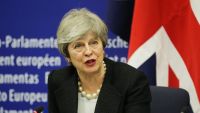
This evening Theresa May's week went from awful to terrible. After her deal was heavily defeated for a second time on Tuesday night, the Prime Minister had planned to placate MPs by offering them a free vote on whether they wished to try and rule out a no deal Brexit. As Isabel reports on Coffee House, that plan soon backfired. A backbench amendment from Tory MP Caroline Spelman to try and rule out no deal in more explicit terms than the government's motion passed by four votes. At that point, the government changed its voting strategy and whipped its MPs to vote against the motion – effectively voting to keep no deal as an option. This led to much confusion in the voting lobbies.

Theresa May: if you don’t accept this deal, there will be a long extension to Article 50

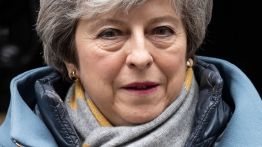
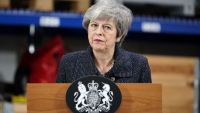
The House has today provided a clear majority against leaving without a deal. However, I will repeat what I have said before. This is about the choices that this House faces. The legal default in UK and EU law remains that the UK will leave the EU without a deal unless something else is agreed. The onus is now on every one of us in this House to find out what that is. The options before us are the same as they have always been: We could leave with the deal which this Government has negotiated over the past two years. We could leave with the deal we have negotiated but subject to a second referendum. But that would risk no Brexit at all, damaging the fragile trust between the British public and the members of this House. We could seek to negotiate a different deal.

Tory Brexiteers were wrong not to back May’s useless deal

Amongst the wrath we should pour upon our elected politicians – yes, especially the Tory Remainers and Labour’s bereft and shameless MPs – let's keep some in reserve for the stoic, hardline, Brexiteers, huh? I’m with them: no deal is better than her deal. I agree. But – and this is the argument I’ve been having with people for the last three weeks, maybe longer – there is no prospect of no deal going through. None whatsoever. You can cleave to the idea of it for as long as you like, but there is not the remotest prospect of it happening. Why do they not understand this? You have to see the world as it is, not as you would like it to be. And yet they seem utterly incapable of that.

Government in chaos after rebel no deal amendment passes

Theresa May has just suffered another extraordinary defeat, losing on Caroline Spelman’s amendment (which rules out no-deal Brexit under any circumstances) by just four votes. This was not expected. Spelman even tried to withdraw the amendment, but was too late. This Spelman amendment said that the House “rejects the United Kingdom leaving the European Union without a Withdrawal Agreement and a Framework for the Future Relationship.”. This is different to the main motion, which offers a caveat: specifically a declaration that ‘leaving without a deal remains the default in UK and EU law unless this House and the EU ratify an agreement’. The Spelman amendment is not legally binding: it’s a vote expressing the view of the House.

Full list: The Tory MPs that voted to keep no deal on the table

Theresa May has just been dealt another blow after the House of Commons voted decisively against a no-deal Brexit. MPs voted by 321 to 308 for a motion which rejects the UK leaving the EU without a deal, under any circumstances. The motion did not force the government to either revoke Article 50 or to request an extension, and so the UK will still leave without a deal on 29 March, until other arrangements are put in place.

Full list: The Tory MPs who voted to reject a no-deal Brexit

The big news tonight is that MPs have voted by 321 to 308 for a motion which rejects the UK leaving the EU without a deal, under any circumstances. The motion did not force the government to either revoke Article 50 or to request an extension, and so the UK will still leave without a deal on 29 March by law, until other arrangements are put in place. A dozen government ministers defied the government whip by abstaining on the motion, including work and pensions secretary Amber Rudd. The others are Claire Perry, Greg Clark, David Gauke, Stephen Hammond, Robert Buckland, David Mundell, Tobias Ellwood, Richard Harrington, Alistair Burt, Margot James, and Anne Milton.

Tory MP: Brexit mess is like a ‘cat’s arse’

What's the best way to describe Britain's current Brexit situation? 'Mess' and 'disaster' probably spring to mind. But Mr S would also find it hard to disagree with the verdict of Trudy Harrison. The Tory MP delivered this verdict: 'We were just discussing in my office how we would describe the current situation, and using good old Cumbrian terminology we were really torn between whether it's a pig's ear, a dog's dinner or a cat's arse' Perhaps all three?

Watch: Steve Baker’s catastrophic Brexit interview

Tonight MPs will have their say on whether Britain should leave the EU without a deal. The views of Tory Brexiteer Steve Baker on the subject are unlikely to come as much of a surprise. Baker thinks that taking no deal 'off the table' would be a 'really catastrophic negotiating error'. But Mr S. couldn't help but notice Baker's objection to the word 'catastrophe' in the same interview with ITV. Just moments later, Baker had this to say: 'Catastrophe is a word that should be reserved for genuine loss of life. No politician should use it.'   https://twitter.com/DanielHewittITV/status/1105875603163627520?ref_src=twsrc%5Etfw Perhaps it is time for Baker to take his own advice on board...

Michael Gove’s Brexit agony

I feel particularly sorry for Michael Gove, because there is psychological torment here. His understandable reasoning for not resigning over Theresa May’s Chequers proposal was that he had been accused first of betraying David Cameron, then of betraying Boris Johnson. He could not face being accused of a third betrayal by walking out on Mrs May. This meant that he unintentionally betrayed the cause of Brexit. He is now the government’s media apologist for whatever piece of contortion comes out of Downing Street, and is humiliated when the line he has just peddled collapses a few hours later.

Philip Hammond loses the crowd

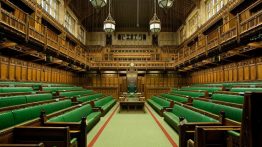
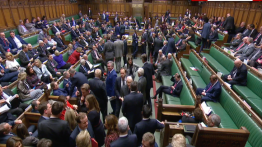
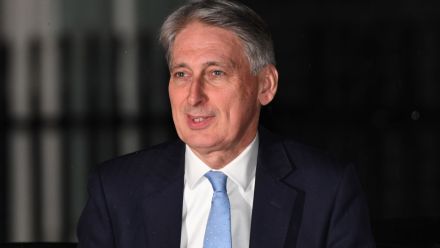
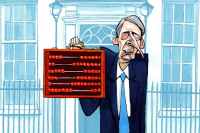
Anyone who's ever sat through a statement given by Philip Hammond, knows that he's not quite what you'd call a gifted orator. With his cringeworthy gags, stilted delivery and all the charisma of Milne's Eeyore, the Chancellor's budget announcements tend to resemble bad eulogies rather than the unveiling of exciting new policies. But even he might have been surprised this afternoon by how few Tory MPs were willing to stick around to listen to his full spring statement in the House of Commons. Although Hammond managed to draw a big crowd when his statement began, soon his colleagues began to trickle away.

Philip Hammond tore up the Brexit script at his Spring Statement

Brexit was always going to dominate this Spring Statement. Philip Hammond even began by saying he’d keep it short to allow the Commons to move on to the ‘no deal’ debate. But the most eye-catching thing Hammond said on Brexit came at the very end. He talked about the need to build consensus across the House. This is Westminster code for a customs union style solution. Hammond has been making the case for this approach at Cabinet for quite a while now. But it isn’t yet Government policy—most ministers still think that there is a chance May’s deal could pass in a third meaningful vote. So it was quite remarkable to hear Hammond saying it from the despatch box at the Spring Statement. It is another demonstration of how discipline is breaking down.

Hammond to MPs: make up your mind on Brexit or the domestic policies get it

Philip Hammond’s squeeze message to MPs trying to work out how to vote on Brexit over the next few days was clear: if they don’t reach a consensus, then there won’t be lots of lovely spending on important domestic policies such as social care.  Theresa May has been so busy procrastinating on Brexit that her failure to make decisions on these policy areas has not attracted the level of attention it deserves. The social care green paper, for instance, has been pushed back by over a year. This isn’t as much to do with Brexit as ministers like to make out, by the way, but all the same it is now highly convenient for the Chancellor to link the two.