Politics

Read about the latest political news, views and analysis

Barometer | 14 March 2019

Cox’s codpiece Attorney general Geoffrey Cox returned from Brussels without even a ‘codpiece’, the name used by some Tories for the concession on the backstop which he was hoping to win from the EU. — Why is a codpiece called by that name? The expression is traced by the Oxford English Dictionary to the year 1460, a pivotal year in the Wars of the Roses, when the Battles of Northampton and Wakefield were fought — It has survived in spite of the fact that the word ‘cod’, to indicate scrotum, has since fallen into disuse. This itself can be traced back to Old Norse, which used ‘kodd’ to describe something distended and unevenly shaped.
The leadership deficit

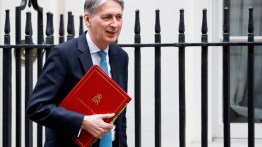
In all the madness of the Brexit voting, it's easy to forget that Philip Hammond revealed a mini-Budget this week. Even the Chancellor started his speech by promising not to talk for long, so MPs could discuss the no-deal Brexit which he has so lamentably failed to prepare for. Ever since the referendum result, he has been expecting economic gloom. It has refused to follow: the figures in his statement seemed to mock his general pessimism. Disaster has struck Westminster though. Theresa May has lost control of her party and her government and yet her opponent, Jeremy Corbyn, is so weak that he strikes most voters as an even worse option. It’s hard to think of a time when our politics looked more dismal.

Why a Brexit extension spells trouble for the EU

Now that Theresa May's deal has been decisively defeated again, the message from Brussels has been clear: the Brexit impasse is your problem, not ours. But for all the bluster, don't believe it: the Brexit deadlock is bad news for the EU. Perhaps understandably, there is anger and frustration on the continent over Westminster's rejection of the withdrawal agreement. As a result, the EU is attempting to suggest that an extension to the transition period might not be on offer. This was the implied message in Donald Tusk's reaction to the vote on Tuesday night. The president of the European Council said there must be a 'credible justification for a possible extension'. 'The smooth functioning of the EU institutions will need to be ensured,' he said.

Moving on | 14 March 2019

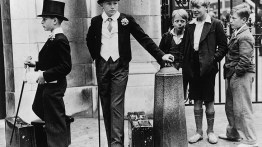
Will independent schools ever be sensibly discussed in the media, in politics or over the supper tables of the nation? It is a long-standing national habit to view all independent schools as aloof, expensive, exclusive and barred to almost everyone in the land. The impression is now gaining ground that the cost has become so great (the figure £40,000 a year crops up regularly) that soon only Russian oligarchs and other members of the world’s super-rich elite will be able to afford them. This takes to extreme lengths a misapprehension that all independent schools, of which there are 2,500, have been created in the image of a handful of famous public schools. Discussion revolves around the famous few as if they were typical representatives of the sector as a whole.

The most shocking thing about Trump’s Brexit comments? He’s right

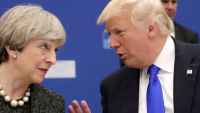
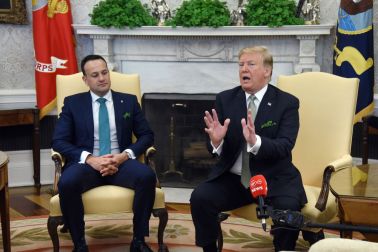
Tune out all the noise around Brexit, and read what Donald Trump said today: ‘I’m surprised at how badly it’s all gone from the standpoint of a negotiation,’ he told reporters at a bilateral meeting with Irish Taoiseach Leo Varadkar. ‘But I gave the Prime Minister my ideas on to negotiate it and I think you would have been successful. She didn’t listen to that and that’s fine, she’s got to do what she’s got to do, but I think it could have been negotiated in a different manner, frankly. I hate to see everything being ripped apart now. I don’t think another vote would be possible because it would be very unfair to the people that won … But I thought it would happen, it did happen, it’s a very tough situation.

The full list: the MPs who voted to delay Brexit

MPs have voted by 412 to 202 in support of a government motion which will seek to extend the Article 50 deadline. Under its terms, if Theresa May's deal passes by 20 March, she will ask the EU for a short extension, in order to pass the necessary legislation to leave. If May's deal does not pass by 20 March, then the government will ask the EU for a longer extension. If the UK cannot agree an extension with the EU before the 29 March, then Britain will still leave without a deal.

The risk of a no-deal Brexit just increased again

What kind of Brexit delay, if any, would the European Union's leaders sanction, when the Prime Minister asks for one in a week's time, at the next EU Council? Truthfully no one knows. Actually that is only half right. In the implausible event that MPs next week ratify the PM's Brexit deal at the third time of asking, they would grant her a couple of months' postponement of the moment we depart, so that legislative and technical preparations could be completed. Just to be clear, I don't see how she wins. Too many Brexiter and Remainy Tory MPs hate her deal so much that they'll never be intimidated into backing it.

Parliament backs plan to delay Brexit

Parliament has backed a plan to delay Brexit. MPs approved a motion to delay Britain's departure from the EU beyond the end of March by 412 to 202. Despite the vote, Britain will still leave without a deal unless one can be struck in the next 15 days, or the EU agrees to an extension. The motion means that if Theresa May's deal passes by next Wednesday, Britain will ask the EU for a short extension. If her deal does not pass, a longer extension will be sought. Theresa May earlier secured a rare Parliamentary victory after MPs rejected an amendment that would have allowed them to take control of Commons business on March 20th away from the Government. This could have handed over time to hold a series of indicative votes on Brexit.

Ministers clash at stormy political cabinet

Today's Cabinet meeting was bound to be an unhappy affair after four cabinet ministers broke a three-line whip and abstained on a government motion. Amber Rudd, David Gauke, Greg Clark and David Mundell broke collective responsibility in order to abstain rather than vote against a motion ruling out a no deal Brexit. These ministers claim they thought it was okay to abstain – with Theresa May's PPS Andrew Bowie allegedly telling ministers they would not be fired as a result. At this afternoon's political Cabinet, Theresa May made her displeasure known (and criticised the level of press leaks from these meetings). However, the minister who made the greatest impression on his colleagues was the Chief Whip.

Scott Mann’s Ministry of Good Ideas

The Conservative MP, Scott Mann, was widely mocked this morning, after he suggested that Britain's knife-crime epidemic could be solved by putting a GPS tracker inside every single knife in the UK: https://twitter.com/scottmann4NC/status/1106128906480951296 Quite quickly, it was pointed out that there might be a slight flaw in the MP for North Cornwall's plan: there are a lot of knives in the UK, and a lot of them are used for things other than stabbing people. Happily, his colleague and fellow MP Johnny Mercer was on hand to help today, and headed to Mann's office, newly dubbed the 'Ministry of Good Ideas' to see what the general public thought of his inspired policy idea. Watch here: https://twitter.

MPs get cold feet over second referendum amendment

This evening, MPs have a chance to try and take control of Brexit by voting on a series of amendments to a government motion on extending Article 50. With Theresa May struggling to keep any semblance of control after her deal was voted down for a second time on Tuesday evening, there is a real worry in government that May could be heading for her third consecutive Commons defeat in as many days. Among the amendments to be voted on are a call for indicative votes on Brexit scenarios, an Article 50 extension accompanied by a promise to rethink the current strategy and a pledge for a second referendum. To the surprise of many, John Bercow selected TIG MP Sarah Wollaston's second referendum amendment calling for the government to bring legislation for a public vote with Remain as an option.

Watch: Chris Grayling joins the Cabinet rebels

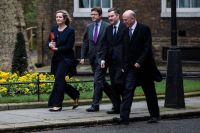
After abstaining on a vote against no deal yesterday evening, the three Cabinet ministers who defied the whip: Amber Rudd,  Greg Clark and David Gauke seemed to be enjoying their newfound notoriety, as they walked to an impromptu Cabinet meeting this afternoon in Number 10. The trio rocked up to the meeting as a bunch in a display of strength, solidarity, and no doubt hoping to be snapped by the waiting press photographers. But the group seemed far less prepared to be joined by transport minister Chris Grayling, who bumped into them as they strolled down Downing Street on their way to the meeting. The unwieldy foursome ended up walking awkwardly together in relative silence, spoiling any photo opportunities the rebels may have been hoping for.

Benn, Letwin, Cooper and Boles have launched a coup against the PM

The most important amendment going on the order paper today is the one in the names of Hilary Benn, Oliver Letwin and Yvette Cooper - because it is the one that would wrest control of shaping Brexit from the prime minister and deliver this control to MPs. This is a coup against the PM, against the executive, so Theresa May is honour bound to oppose it, to instruct Tory MPs via a three-line whip to vote it down. But it was clear from what Greg Clark, the business secretary said on my show last night, and what the Chancellor said in his spring statement yesterday, that important members of the Cabinet - them, plus Rudd and Gauke, for instance - support this revolt of the backbenches.

Parliament’s plot to thwart Brexit is complete

It is time for plain speaking. The stakes are too high for euphemism or obfuscation. Bluntness is required now. And the blunt fact is this: Britain’s parliamentarians are in revolt against the electorate. They are defying the demos. They are pursuing a coup, albeit a bloodless one, against the public. This is what last night’s votes against a no-deal Brexit reveal: that our representatives now refuse to represent us. What else are we to make of the events of the past few days? They voted against Theresa May’s deal, which was a super soft Brexit, unloved by Brexiteers like me. So they don’t want a soft Brexit, clearly. Then they voted against a no-deal Brexit, twice (why give the electorate just one slap in the face when you can give it two?).

It’s highly unlikely that May’s deal will pass on the third vote

Everyone is getting over-excited. Calm down. The idea that Theresa May will seize victory from the jaws of humiliation with her constitutionally dubious decision to put her Brexit deal to a vote for a record-breaking third time next week is highly questionable. First even if the Attorney General admits with the full magisterial regret for which he is notorious that he stupidly excused from his initial interpretation of the palimpsested backstop that - after all - there is a unilateral escape route from the backstop via the Vienna Convention, this would be just one hired lawyer’s opinion, and an oddly convenient one at that. It won’t change all Brexiters’ minds.

Will there be an election?

When a British government loses control over parliament, the natural remedy is to hold a general election. Why prolong everyone’s agony? But despite Theresa May having now failed twice to pass her signature Brexit deal, there is no sign she is willing to go back to the country. Jeremy Corbyn is keen for an early election to break the deadlock and others are beginning to agree with him. Asked this week what would happen if the government’s deal was rejected for a second time, a cabinet minister replied: ‘an election in two weeks’ time’. It’s a sentiment shared by Charles Walker, the vice chair of the 1922 Committee of backbench Tories.

It’s not over yet

Almost three years have passed since Britain voted to leave the European Union, and yet we are still no closer to a Brexit resolution than we were on that June morning. No one is in control and this country’s whole system of governance is creaking. We are in an interregnum that shows no sign of ending. What is remarkable about this moment in our history is that something must break the impasse. This means that, although Theresa May’s deal suffered the biggest defeat ever for a piece of government business and was defeated a second time by a three-figure margin, it is not dead yet. Many cabinet ministers, including several of those who are very critical of May, think there is a chance that the deal will pass at the third time of asking.

Reassurance today, excitement tomorrow: your UK Optimist Fund portfolio

The nation certainly needs optimism this week, so what better moment to start building our ‘UK Optimist Fund’ of shares with exciting prospects for the post-Brexit era, for which I invited suggestions last week? I’m grateful to all  respondents but was particularly glad to hear from former minister Edwina Currie — whose stock picks show a penchant for high dividend yields — and this column’s very own veteran investor Robin Andrews, whose market eye has stood Spectator readers in such good stead over the years. Our underlying quest is a serious one. We’re heading into new territory in which businesses will clearly suffer if they previously depended on tariff-free access to European markets.