Politics

Read about the latest political news, views and analysis

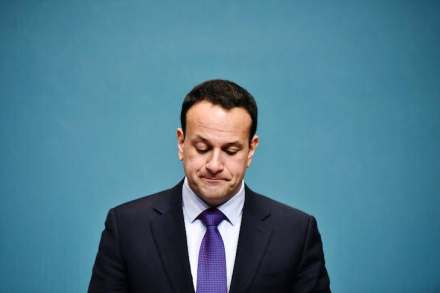
Varadkar resigns

Leo Varadkar, the Irish Taoiseach, has tendered his resignation. After gambling his political career on an election in which he hoped Brexit would be the defining factor, the Irish voters decided they cared about pretty much anything but. In fact, just one per cent of Irish voters cited Brexit as a decisive factor for them in this month's general election. Instead, voters focused on issues that might actually affect their lives such as housing and healthcare. The result was that Varadkar's Fine Gael party was knocked into third place, behind Fianna Fail and Sinn Fein. The gamble clearly failed. Ireland's new parliament, the 33rd Dail, met for the first time yesterday.
The Thérèse Coffey Edition

28 min listen

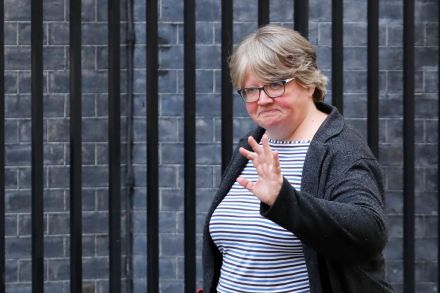
Thérèse Coffey is the MP for Suffolk Coastal and the work and pensions secretary. On the podcast, she talks about her famous karaoke parties, the importance of her Catholic faith to her, and that picture from one Spectator party.

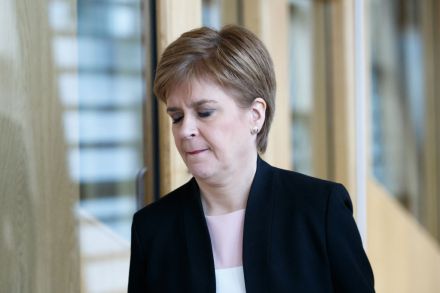
Nicola Sturgeon’s immigration hypocrisy

Living in Scotland, it’s depressing to hear the way UK Government ministers talk about immigration. I have one proposal in front of me right now that advocates ‘a points-based approach’ as part of ‘a controlled immigration system to meet our own economic, social and demographic priorities and needs’. Anyone who wishes to ‘work, study or live’ here ‘will have to meet a set of reasonable and fair requirements to gain entry or approval to remain’. Predictably, for all the usual talk about attracting ‘skilled individuals from overseas’, there is the familiar obsession with numbers, especially of non-Europeans: ‘If there are higher than required numbers of non-European Economic Area/Swiss migrants...

A fuel duty hike shows the Tories are struggling for Budget ideas

Could motorists be hit with the first fuel duty rise in ten years in this month’s Budget? According to the Sun, the PM’s chief advisor Dominic Cummings wants to use petrol and diesel as a revenue-raiser to fund big infrastructure projects outside the capital. But ending the fuel duty freeze after a decade might not be a good idea, particularly when many new Tory voters in the North are likely to be the worst affected. Fuel duty is an easy way to raise revenue in theory, as the demand for fuel is always high. It is also a tax that is difficult for motorists to avoid (though this doesn’t stop some from trying).

Hinden-Bloomberg: NYC mayor goes up in flames at Vegas debate

Former New York City mayor Mike Bloomberg got a taste of front-runner status on Wednesday night, getting absolutely walloped by his primary opponents during the ninth Democratic debate in Nevada. Bloomberg, who was not on the ballot in the Iowa caucus or the New Hampshire primary, has been surging in the polls thanks to massive ad buys and a social media-oriented campaign. However, his absence from debates has allowed him to avoid scrutiny for the issues raised by massive opposition research dumps. Bloomberg took a gamble by appearing at Wednesday’s debate — presumably he assumed he had the political experience to put up a good performance.

What Lisa Nandy must do to reassure Britain’s Jews

Lisa Nandy is the best candidate for Labour leader. That’s what I said last week and since then, she’s been endorsed by the Jewish Labour Movement (good) and backed calls for the Israel-ending ‘right of return’ (less good). So was I wrong to back Nandy? I’m not so sure. My argument for Nandy wasn’t of the Liz-Kendall-should-be-queen-of-everything variety. It was an acknowledgement that good governance requires an effective opposition. It reflected my view that Nandy is the candidate best placed to hold the Conservative government to account. But, yes, it was also a contention that Nandy’s speeches and proposals for addressing anti-Jewish racism were strong and impressive.

Priti Patel’s immigration crackdown is a sham

Once you accept that Brexit is happening - because, like it or not, the British people demanded it - it is not so very hard to accept that Brexit must come with consequences. In the absence of free movement from the European Union to the United Kingdom, new immigration arrangements must be put in place. As a political matter - which should not be confused with the policy design or practical application of new immigration controls - these must be seen to be tougher than the regime which preceded it. That is the meaning of 'Take Back Control'. So it is no great surprise that the measures announced today represent, on the surface, a toughening of immigration rules. A low moment, you may feel, and I am inclined to agree.

Has the Environment Agency given up in its fight against flooding?

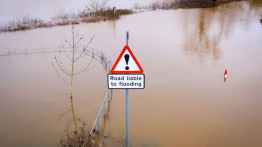
Where are the engineers? Whenever climate change comes up we hear from ecologists, activists and the odd scientist. But engineers? The very people we need to solve problems seem to be shut away in a box while school kids and dopey vegan campaigners are handed a megaphone with which to tell us the planet is going to die unless humans go back to pre-industrial poverty. This week’s floods are a prime example of our anti-engineering age. Hundreds of homes have been inundated with water, while several flood defences have failed, even though they were only recently installed. One might think the Environment Agency – the national body responsible for food defence in England – would be asking what is going wrong.

Priti Patel’s immigration crackdown might not be enough

The argument for excluding the low-skilled from work visas under our new post-Brexit migration system is reasonable enough. As Home Secretary Priti Patel argued this morning, excluding low-skilled migrants should encourage businesses to invest in automation and in training higher-skilled staff who might be able to do the work of two of more unskilled staff. The weak spot for the UK economy over the past decade has been productivity, which once again has flat-lined over the past year. According to ONS figures released yesterday output per hour increased by just 0.3 per cent over the past year. Output per worker was static. When you have a seemingly endless supply of cheap labour on tap, why bother to invest in labour-saving technology?

British police must learn from France in dealing with Extinction Rebellion

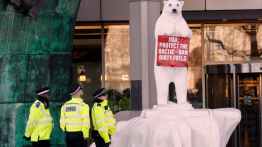
I’ve always been a fan of the French police, in part because when I lived in the south of the country I played rugby in a team that contained a couple of coppers who told me stories of what they had to deal with on a daily basis. But I’m also a little partial to them because they do what it says on the tin: they police I recall a summer’s evening in Montpellier a few years ago when two young drunks were causing a disturbance for diners and drinkers in a crowded square. The police arrived and manhandled the louts into their squad car, one of whom made the mistake of resisting arrest. As he was manoeuvred into the back seat the man’s head met the door frame. An accident? Mais oui, and one that drew a raucous cheer from diners.

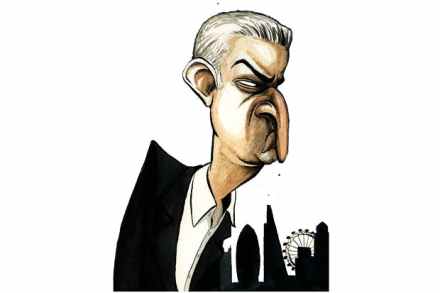
Sadiq Khan should get on with his day job

It is often said a job is what you make of it. If so, it is hard to avoid the conclusion that London's mayor Sadiq Khan regards his mainly as a means of burnishing his personal brand. Rather than getting to grips with the core responsibilities of his position – making transport work better, getting more homes built and fighting crime – his mayoralty has been punctuated by an apparently endless series of photo opportunities and overseas tours, often related to issues over which he has no direct responsibility. Today he took an entourage to Brussels to discuss his post-Brexit agenda with big players at the European parliament and European commission, fighting, as he put it himself, “for a deal that protects London’s economy and the rights of all Londoners”.

My fight against the police over ‘transphobic’ tweets

The police have no jurisdiction over our thoughts, but that hasn’t stopped them trying recently. Just over a year ago, a plainclothes officer from Humberside Police turned up at my workplace to 'check my thinking' for getting involved in the transgender debate online. An individual had taken offence at something I’d retweeted and reported it as a hate crime. The crime in question? Well, it was retweeting a silly song lyric that brought the complaint, but the subsequent police investigation found another 30 'transphobic' tweets I'd made. As a former police officer myself, I considered the force's intrusion to be deeply Orwellian.

In defence of Sadiq Khan’s EU citizenship plan

Sadiq Khan has ventured to Brussels today to meet with European Union negotiators. London’s mayor has a plan to convince EU officials to offer Brits ‘associate citizenship’ after the Brexit implementation period ends this year. The citizenship would grant Brits continued access to freedom of movement and residency within the EU, along with a possible host of other rights linked to healthcare, welfare and voting in European Parliamentary elections. The bid, Khan says, is for ‘heartbroken’ Londoners and others. Of course, Khan is extremely unlikely to be successful.

Dawn Butler’s transgender madness

Imagine if a politician went on TV and said ‘The Earth is flat’. Or ‘Man didn’t really land on the Moon, you know’. We would worry about that politician’s fitness for public life. Well, Dawn Butler has just done the trans equivalent of that. She appeared on Good Morning Britain yesterday and said babies are born without a sex. That is easily as loopy and anti-scientific as saying the Earth isn’t a sphere. Butler, the Labour MP for Brent, was taking part in another discussion about Labour’s interminable slide down the trans rabbit hole. Labour has completely lost the plot on this issue.

No. 10’s latest BBC row is a helpful distraction

How do you move on from a week of torrid headlines over a power struggle between senior No. 10 aides and a recently departed Chancellor? The old Tory playbook – mastered by Boris Johnson's former election guru Lynton Crosby – would suggest throwing a dead cat. The dead cat strategy used when a party wishes to change the conversation by any means necessary. The idea is that by the time it's done people will stop talking about the thing you want to move away from and instead become distracted and effectively go: 'Jeez, mate, there's a dead cat on the table!' It's worth remembering this device when considering that we are in day three of No. 10's latest BBC row.

Sturgeon’s main strength is her lack of real opposition

The SNP’s ability to defy political gravity — a poll conducted last month put them on 51 per cent in Holyrood voting intentions — is easier to understand when you consider the alternatives. Jackson Carlaw, unveiled on Friday as Ruth Davidson’s successor at the helm of the Scottish Tories, is a pleasant chap with a certain flair but unlikely to bring the House of Sturgeon to its knees. Scottish Labour is led by Richard Leonard, a man so anonymous there are members of the witness protection programme with better name recognition. Scots go to the polls next May for the Scottish Parliament election and the choice is between the least effective government of the devolution era and an opposition most voters aren’t aware exists.

Watch: Lisa Nandy says she would abolish the monarchy

Throughout the Labour leadership election, Lisa Nandy has sought to pitch herself as the more moderate candidate in the race – the candidate who can break away from Corbyn’s rule of the party, and win back traditional, working-class Labour voters in the North and Midlands who abandoned the party at the last election. So it was perhaps a little surprising to see the Labour MP reveal her more radical side on last night’s Channel 4 Labour leadership debate. As part of a series of quick-fire questions, the candidates were all asked if they would abolish the monarchy if a referendum was held on the issue.

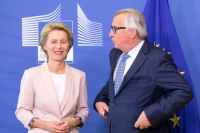
The EU is in trouble and Ursula Von der Leyen is the wrong person to rescue it

Ursula von der Leyen was an unloved choice to replace Jean-Claude Juncker as the next president of the European Commission. She emerged from a ferociously contentious process as a last-minute compromise and she promptly fell into a storm of criticism. Even members of her Christian Democratic Union (CDU) shellacked her. In the thankless role of German defence minister, she was unable to overcome the handicaps imposed by Germany’s postwar pacifism and mindless fiscal stinginess, while a former defence minister blamed her for the “catastrophic” state of the German army. A member of the Bundestag mockingly said: “It’s good for the army that she’s going.