Politics

Read about the latest political news, views and analysis

Labour’s trans rights problem

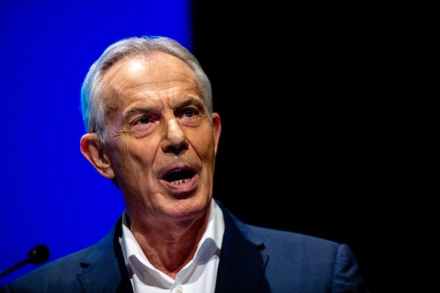
How do you save a party that doesn’t want to be saved? Tony Blair doesn’t know but it hasn’t stop him trying. He is now warning Labour against retreating into a safe space of identity politics and angry, hectoring progressivism. Specifically, he has in mind the transgender movement and its astonishingly swift march through the institutions, including the Labour party. Blair cautioned: ‘You have got to distinguish between the advocacy of things that are right — gay rights, transgender rights, whatever it is — and launching yourself politically into a culture war with the right. If you go, “Transgender rights is our big thing,” and the right goes, “Immigration controls is our big thing,” you’re going to lose that.
Auditions for Sturgeon’s replacement are already taking place

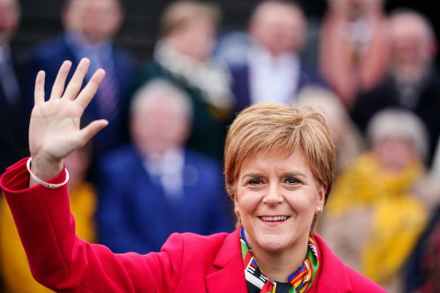
Nicola Sturgeon has told Andrew Marr: ‘I do intend to lead my party into the next Scottish Parliament election and hopefully win that and stay as First Minister.’ What’s this all about, then? Didn’t she just record a stonking General Election victory north of the border? Yes, she did. Isn’t polling support for the SNP at levels that would impress even Kim Jong-un? Not quite, but not far off. The SNP leader finds herself in an unusual position. Electorally, she is her party’s most successful leader – winning three Westminster elections in a row and a third term in office at Holyrood. But Scottish Nationalists didn’t become Scottish Nationalists to win Westminster elections; they yearn to break free from the clutches of colonial tyranny.

Sunday shows round-up: Former Brexit Secretary’s jibe at special adviser Dominic Cummings

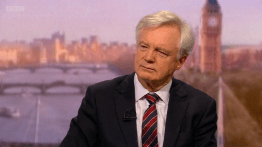
David Davis – Huawei decision could be among worst ever made The former Brexit Secretary David Davis joined Andrew Marr this morning to argue the case against involving the Chinese tech giant Huawei in the UK’s rollout of 5G infrastructure. Davis said that because this arrangement had the power to compromise the ‘Five Eyes’ agreement on intelligence sharing between the UK and its Anglophone partners, it could pose a serious risk to national security: https://twitter.com/BBCPolitics/status/1231514221520834561?

When will Joe Biden accept it’s all over?

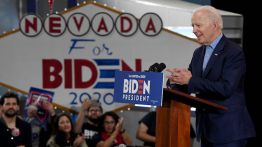
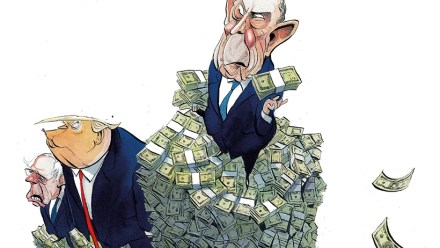
In Iowa, Americans had to wait the entire night before a caucus winner was declared. Today in Nevada, the wait was much, much shorter – with barely four per cent of the state’s precincts reporting, Bernie Sanders was announced as the victor. That the result was declared so decisively and so early on, was a fitting illustration of how superior the senator’s get-out-the-vote organisation was on the ground. Democratic voters in Nevada know Bernie, and they like what they see. While MSNBC’s Chris Matthews was comparing a Bernie Sanders victory in the Democratic primaries to the fall of France in 1940, Bernie’s supporters were jubilantly celebrating a big win in a state with diverse demographics.

The UK is booming – despite Brexit

After the vote for Brexit, it was often said that our departure from the EU was most likely to harm the very people who voted for it: the industrial workers of the Midlands and North. Didn’t they know that a vote for Brexit would, in itself, lead to 500,000 more job losses? Couldn’t they see that Nissan was bound to wind down its operations in Sunderland and move business to mainland Europe? Almost four years on, it’s safe to say that most of the economic doom-mongering was nonsense. This week’s figures on jobs and earnings show that, since the referendum, employment is up by one million — and it is rising still. Unemployment in the UK is at its lowest since 1974. Unemployment in Wales is at its lowest since records began.

Trust issues mean Heathrow’s third runway is unlikely to ever take off

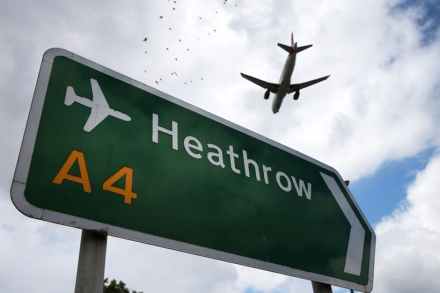
Downing Street is acutely aware that one of the biggest dangers to this government is losing voters’ trust. As I say in the Sun today, if people come to see this administration as just another bunch of politicians who don’t do what they said they would, then it is doomed. Number 10 also knows that Boris Johnson’s opponents love to attack him as ‘untrustworthy’. This didn’t hurt him too much at the election because voters regard most politicians as untrustworthy. But if there was a clear and compelling example of him breaking his word to voters then that could change, and very quickly. The whole emphasis on promise-keeping is bad news for Heathrow and the third runway.

In defence of the wood burner fuel ban

Open the papers this morning and you would think the government had just announced plans to slaughter the first-born. The cause of the outrage? The environment secretary has just said that the sale of coal and damp logs for burning in domestic properties is to be banned from next year. Apparently it is an attack on people who live in the countryside, and on the Tories’ new-found voters in the north of England – whom some Conservatives in the south still no doubt think keep coal in their baths. Maybe there are still a few coal-burners in the likes of Bolsover – although the business of that particular town was for many years producing Coalite, a smokeless fuel which it appears will not fall foul of the ban.

Trade talks between the UK and the EU are heading for a blow-up

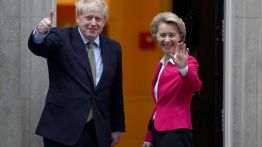
‘The reality is the talks will blow up shortly’. As I say in the Sun this morning, this is the verdict of one Downing Street figure on the UK / EU negotiations. The EU might still be finalising its negotiating mandate. But if you read the draft of it and David Frost’s speech this week, it is clear just how far apart the two sides are. This is going to come to a head quickly as the EU line is that there must be agreement on ‘level playing field’ and governance before the talks proper can commence. If the EU side insists on these preconditions in the opening round of the negotiations, scheduled for the first week of March, then the government will dismiss the talks as pointless.

Barometer: Who actually goes on a cruise?

Breeding controversy A Downing Street aide, believed to have been recruited as a result of Dominic Cummings’s advert for ‘weirdos and misfits’, resigned after it was revealed he had spoken favourably of eugenics in the past. Where did eugenics come from?— The term was coined in 1883 by Francis Galton, a half-cousin of Charles Darwin. As well as studying meteorology and introducing the first weather map to the Times, he proposed experiments to test the heredity of intelligence — including the somewhat unethical proposal of separating twins at birth. The weak, he proposed, should be prohibited from breeding. Galton himself failed to have any effect on the gene pool because, in spite of 43 years of marriage, he never fathered a child. Right as rain?

I’ve seen wars more amusing than BBC comedy

Last weekend’s papers claimed that the government desires a ‘massively pruned back’ BBC. Former Conservative cabinet minister Damian Green and someone called Huw Merriman spoke out against this, which allowed the BBC to put the headline ‘BBC licence fee: Tory MPs warn No. 10 against fight’ atop its characteristically impartial coverage. I suppose there are various reactions one can have to this, ranging from outrage at supposed ‘cultural vandalism’, via a vague shrug, all the way through to the full Charles Moore. In recent years I have moved through all these stages. The discovery that mattered most was the realisation that the less BBC I had in my life, the better.

The Brexit reshuffle: every great office of state is now held by a Leaver

One of the Tories’ tactical successes has been to push Brexit down the news agenda. But even if it no longer dominates front pages and news bulletins as it once did, the task of sorting out Britain’s future relationship with the European Union remains the government’s biggest challenge. Brexit also provides the best explanation for some of No. 10’s other actions. Last week’s cabinet reshuffle, for instance, can only be properly understood in the context of Brexit. The purpose was to create an all-powerful centre. The three greatest parts of government — No. 10, the Treasury and the Cabinet Office — have now been joined together. There is a combined No. 10 / No.

Time for new leadership at Barclays and HSBC – and a new name at RBS

After a dull interlude, the big banks in their annual results season look a bit more interesting again. First to report was Barclays, where pre-tax profits were up 25 per cent to £4.4 billion but attention focused, yet again, on Chief Executive Jes Staley, whose name rarely appears in print without ‘accident-prone’ attached to it. The trouble this time is his link to the late billionaire sex offender Jeffrey Epstein, who was Staley’s client at JP Morgan in his earlier career: under investigation is whether Staley was sufficiently ‘transparent’ with his board and regulators in declaring that relationship.

Northern lights: Seven steps for levelling up Britain

If you ever need a reminder of what northern Britain has achieved, I’d recommend a trip to York. The National Railway Museum brilliantly evokes the local creative energy that produced Stephenson’s Rocket which ran on the world’s first inter-city passenger railway and ushered in the railway age. Just over the River Ouse is the chocolate museum, which celebrates York’s chocolate-makers and their entrepreneurial legacy. It’s easy to be scornful about Boris Johnson’s talk of ‘levelling up’. Real levelling up would mean that for the foreseeable future, the North will grow faster than London, which seems almost unimaginable to Whitehall and in the City.

The post-Brexit bounce seems to have stuck, for now

The post-election economic bounce appears to be more than a fluke. Positive news came in waves this week, as data for employment figures, weekly wages and economic activity painted a good picture for newly-Brexited Britain. People are in work and wages are finally back on track. Employment has hit a new record high (76.5 per cent) while unemployment has dropped to a new 44-year low, at 3.8 per cent. Most notably, weekly wages are (finally) back to their pre-financial crash levels ie, the highest since March 2008. And yes, it has taken a very long time get here – it has been the slowest wages recovery in economic history – but the pre-crisis target has been surpassed years before forecasters like the Institute for Fiscal Studies predicted.

Boris’s main opposition is his party’s ageing demographics

If you want to see why Britain’s future will be so decrepit, look at the dramas on ITV. Unlike the BBC or Channel 4, ITV receives no state protection. It must compete in the market, and is targeting the most powerful audience in the country: the elderly. ITV has old soap operas: Coronation Street (first broadcast in 1960) and Emmerdale (1972). Agatha’s Christie’s Marple and Poirot always feature. Unlike the BBC with its colour-blind casting and willingness to tear-up and rewrite Christie’s stories until they suit modern sensibilities, ITV’s adaptations are traditional and its casts are typically white. The Christie stories, like The Darling Buds of May, The Durrells, Endeavour, Foyle’s War, Grantchester, and Maigret are set in the past.

The Queen has crushed Harry’s ‘Sussex Royal’ delusion

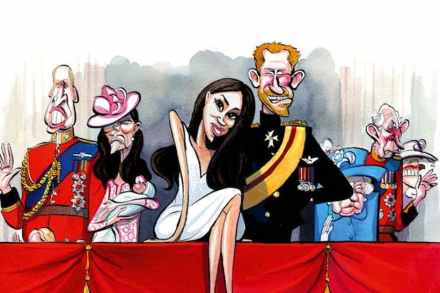
It’s taken just 44 days for a royal pipe dream to well and truly bite the dust. Last month, Harry and Meghan tried to bounce the ancient institution into giving them a ‘progressive new role’ as part-time royals, part-time money makers. Harry’s 93-year-old grandmother doesn’t take kindly to being bounced or indeed being blindsided. With government regulations and royal rules on her side, the Queen has imposed her final restriction on the couple embarking on a self-imposed exile. Sussex Royal can be no more. A freshly branded website will have to be re-branded. Their supporters will argue it’s no great loss. Like Boris and Oprah, Harry and Meghan have global first name recognition.

Dawn Butler: accountants were invented to count prostitutes’ money

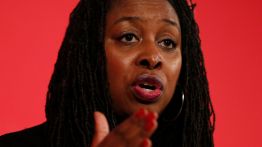
Everyone knows what the oldest profession in the world is supposed to be. But what came afterwards? Labour deputy leadership hopeful Dawn Butler has put forward her suggestion: accountants. In an interview with Pink News, had this to say: ‘Sex work is the oldest profession in the world…It’s older than accountants. Apparently, sex work came first and then accountants came second, probably because they were counting the money from the sex workers’. 'The most vulnerable in the equation of sex work is the sex worker.' pic.twitter.com/mnPRi67Yux — PinkNews (@PinkNews) February 21, 2020 Butler also said in the interview: ‘For some reason, politicians don’t like talking about sex and drugs’.

Leo Varadkar has been hung out to dry by the EU

A year ago, did anyone look like they would come out of Brexit better than Leo Varadkar? Here was a leader of a small country on the fringe of the EU suddenly catapulted to its centre. He was the one pushed forward by Juncker, Barnier, Merkel and Macron, as they sought to leverage advantage from the tricky problem of the Irish border. Not only was Varadkar seen to be standing up for the Republic’s interest, but by driving a wedge between Northern Ireland and the rest of the United Kingdom, he seemed to be setting himself up as the instigator of possible Irish reunification – he was drawing the issue away from the nationalists. Last night, Varadkar resigned as Taoiseach after a humiliating general election defeat two weeks ago.

The Budget will show how the Tories plan to win the next election

It's only a few weeks until Budget day and the papers are filled with reports of the various revenue-raising measures being considered. After plans for a mansion tax were dampened down by government sources, ideas being mooted include cuts to pension tax relief and a fuel duty hike. Who the burden falls on will reveal a lot about which voters the Conservatives believe will win them an unprecedented fifth term in government. Key to this is the level of appetite in No. 10 to please the North at the expense of the South. Some reports of proposed Budget measures – including a recurring property tax – have been a cause of uproar among traditional Tories. The recently departed chancellor Sajid Javid was tied in by his fiscal rules that limit borrowing.