Politics

Read about the latest political news, views and analysis

Labour’s dark secret is safe with Keir Starmer

Keir Starmer knows. He’s not saying anything, not letting one word of criticism of the Corbyn regime escape his lips, but he knows better than the journalists who cover politics, better than you, me or anyone who hasn’t lived in Labour for the past five years, the depth of the disgrace of the British left. Starmer knows because he was in the meetings that excused Putin and failed to tackle anti-Semitism. He knows because he saw Jeremy Corbyn, John McDonnell, Seumas Milne and Andrew Murray close up. And I for one would love to hear his insider account of life with the cranky tankies. More to the point, Starmer knows because he lived through the wars on the left in his own constituency.

Meet the thug who was spared jail for being transgender

In today's episode of 'You Couldn't Make It up', I bring you Leila Le Fey, also known as Layla Le Fey, Adam Hodgson and Marcus Smith. Le Fey had pleaded guilty to common assault and possession of an offensive weapon after trying to steal wine from a Budgens in Brighton. When confronted by the shopkeeper, Le Fey threatened him with a claw hammer. Le Fey, who has previously been convicted of possessing a knife in public, was definitely looking at a spell in clink. Judge Stephen Mooney originally sentenced Le Fey to six months in prison, telling Le Fey at Lewes Crown Court that there was “no excuse” for such behaviour. 'When you took out the claw hammer it must have been terrifying,' he said.

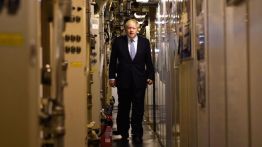
Boris Johnson’s submarine strategy is perfectly sensible

There is chatter in the Westminster village about Boris Johnson’s low-profile. Why isn’t he visiting flooded towns? Why isn’t he fronting efforts to reassure a country worried about pandemic coronavirus? Here, I think it is worth quoting at length a speech given before becoming prime minister: ‘If we win the election we will get our heads down and get on with implementing the big changes I’ve spoken about today. You will not see endless relaunches, initiatives, summits – politics and government as some demented branch of the entertainment industry. You will see a government that understands that there are times it needs to shut up, leave people alone and get on with the job it was elected to do.

Three ways to stop a coronavirus recession

Supply chains are shutting down. Factories and offices are closing. Flights are being cancelled, conferences postponed and football and rugby games rescheduled. It remains to be seen how much of a blow the spread of the coronavirus turns into for the global economy. But one thing is now certain: it is going to lead to a sharp slowdown. And the real question now is this: how should governments and central banks respond? The medical response is already clear. Communities are put into lockdown. The infected are quarantined. Borders are closed where necessary. And treatment centres are braced for a vast increase in the number of patients. How well it works, and how quickly, remains to be seen. But at least a plan has been put in place. The economic response?

How big business failed in its plot to stop Brexit

A little over a year ago, at the nadir of the May administration’s excruciating bungling of Brexit, the Daily Telegraph landed a dynamite exclusive. The Chancellor, Philip Hammond, and Business Secretary Greg Clark had hosted a confidential conference call for corporate bosses in which they said the threat of a no-deal Brexit was effectively off the table. And the Telegraph had obtained a tape recording of the whole thing. Behind the backs of the British people, the well-upholstered felines of big business were being told that a huge Commons defeat for May’s withdrawal agreement (it had just lost by 230 votes) did not mean that Brexit would go ahead on WTO terms at the end of March.

How Keir Starmer could capitalise on the No. 10 media boycott

This week Labour members received their ballots to vote in the leadership contest. They have until 2 April to cast their vote but all the polling suggests it’s a done deal. After a YouGov/Sky News LabourList poll this week predicted Sir Keir Starmer to win in the first round with more than 50 per cent of the vote, a Survation/LabourList survey puts Starmer on 45 per cent – his closest rival Rebecca Long Bailey is on 34 per cent. That survey also found that respondents believe Starmer as leader will position the party ‘further to the centre’. With all the signs so far pointing to a Starmer victory, conversation both in the parliamentary Labour party and the membership has turned to what Starmer will actually do as Labour leader.

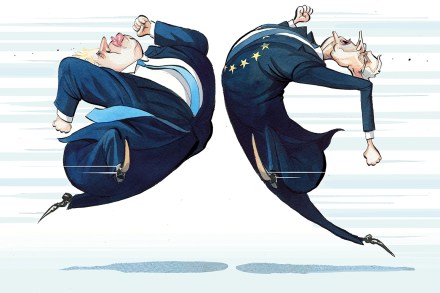
Frost vs Barnier: who will triumph in the Brexit trade talks?

What would Disraeli make of Brexit? His advice to ‘read no history; nothing but biography, for that is life without theory’ is a useful starting point. Brexit has been – and continues to be – a hotch-potch of biographies where human weaknesses, strengths and foibles chafe and collide. The upcoming clash between the EU’s chief negotiator Michel Barnier and his British counterpart David Frost is no exception. On 2 March, Barnier, who is responsible for leading the ‘Task Force for relations with the United Kingdom’ will face Frost, the British head of ‘Taskforce Europe’, across the negotiating table for the first time.

Lord Bell: 1941-2019

A memorial service was held for Lord Tim Bell on Thursday at St Paul's Church in Knightsbridge. Lord Grade delivered the eulogy, which he has kindly allowed us to reproduce below: I’m not sure if Tim were with us today he would see this as a memorial service so much as a golden networking opportunity! Timothy John Leigh Bell, Baron Bell, was born in Southgate, in North London, on 18th October 1941. The postcode, N14, will tell you that he certainly wasn’t born with a silver spoon in his mouth. He was blessed, however, with a silver tongue. He made full use of this gift, as we all know. 'The only talent I have,' he once explained 'is charm.' With this quote, he certainly undersold himself for possibly the only time in his spectacular career.

The Edition: can the UK and EU bridge their Brexit gap?

41 min listen

Next week, the trade negotiations between the EU and the UK begin in earnest. But in the days ahead, the positions set out by both sides are so far apart that the negotiations can only be heading towards an almighty row. James Forsyth writes in this week's issue that it's better if they get this over with quickly, in order to move on to the compromise 'landing zone' that is a deal by the end of the year. On the podcast, I speak to him and Peter Foster, Europe editor of the Telegraph. It gets a little fiery as Peter challenges James on exactly why Britain would want to diverge, anyway. I also speak to Colin Freeman, whose piece in the Spectator this week takes a look at Alpha Condé, the Guinean president who is trying to abolish term limits.

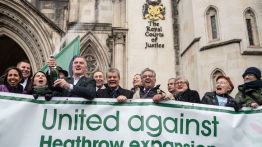
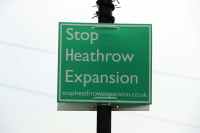
Heathrow’s third runway ruling should worry Boris Johnson

It may well be, as Tom Goodenough argued here earlier, that Boris Johnson is secretly delighted at the Court of Appeal’s ruling that is was illegal for the government to give the go-ahead to a third runway at Heathrow without taking into account their own climate policy. The Prime Minister had, after all, promised his constituents that he would lie down in front of the bulldozers to stop a third runway. He now has the cover of a court decision to shield him from the Conservative party’s pro-runway elements if the project ends up being dropped. But the Prime Minister should be extremely concerned about the wider implications of this judgement. It is yet one more example of power draining away from elected government in Parliament, towards the courts.

Gove threatens to scrap Brexit talks by the summer

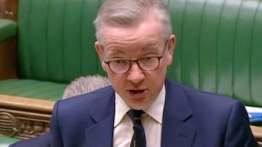
Michael Gove has spent the morning updating MPs on the government’s official Brexit position. Following a series of speeches in recent weeks from senior members of the government, Gove confirmed in the chamber that the UK is seeking ‘regulatory’ freedom from the EU. He said that the UK should not be subject to EU rules under a free trade agreement – but added that he believed the UK government would go further than EU rules on the environment. In a bid to win over the EU to the benefits of agreeing a free trade deal on the UK’s terms, Gove said it would allow the EU to benefit from ‘the dynamism of the UK economy’.

Why those who want a Brexit deal are spoiling for a fight

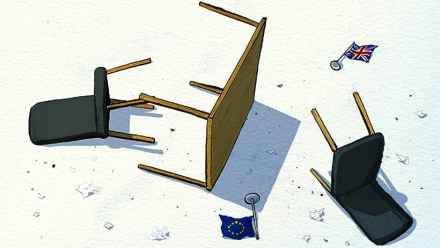
The Brexit talks are heading for a breakdown. Next week’s meeting will be a stand-off between the two sides. As I say in the magazine this week, the EU will make its demands on level playing field provisions and the UK will say they are unacceptable and render the talks pointless. The government’s hope is that by saying it will walk out of the talks in June it can persuade the EU to shift from its current, maximalist position. The EU will offer carrot and stick in these talks. They’ll make clear that if the two sides agree a trade deal, they’ll go for a light touch at the border designed to minimise disruption. But if the talks break down, they’ll take a fingernail approach to border enforcement.

The Liberal Democrats’ costly mistake

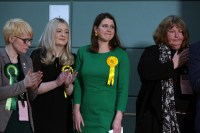
Oh dear. Failure comes in many forms but it usually stings a little more when it also involves large sums of money. That’s the situation the Liberal Democrats are in following their disappointing election result in which they failed to make overall gains – and then party leader Jo Swinson lost her seat. This morning the Electoral Commission has released new figures of donations received by the main parties during the final quarter of 2019. The Conservatives led in donations with a total of £37.7m. When it comes to the other parties, the Liberal Democrats actually overtook Labour – accepting £13.6m in donations to Labour’s £10.6m.

Boris will be relieved Heathrow’s new runway has been blocked

Boris Johnson once promised to lie down in front of the bulldozers to stop Heathrow’s third runway ever being built. Fortunately for the Prime Minister, it now seems that he might not have to. The airport’s expansion plans have been thrown into doubt this morning after opponents won a legal fight against a new runway at Britain’s biggest airport. The Court of Appeal agreed with campaigners that then-transport secretary Chris Grayling ignored air quality and noise pollution concerns when he gave the project the green light in 2018. It now falls to Boris Johnson to appeal the ruling. But, of course, given his previous promises – and his fears about breaking these and losing voters’ trust – this is something he will not do.

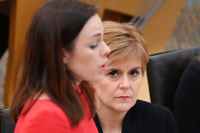
The rise and rise of the SNP’s Kate Forbes

Few ministers are tested as abruptly as Kate Forbes has been. The SNP’s junior finance minister was promoted to the Scottish cabinet ten days ago and three weeks after Derek Mackay’s resignation forced her to deliver the budget with hours’ notice. Nicola Sturgeon’s minority government can typically rely on the dutiful support of the nationalist Scottish Greens but, come budget time, the finance secretary has to crack out the national credit card and buy the swampies off. Given the circumstances of Mackay’s departure and Forbes’ sudden elevation aged just 29, the Scottish government was more vulnerable than ever. Green leader Patrick Harvie could have produced a wish list and come away with his biggest ever budget haul.

Kerslake’s covert Corbyn connection

Lord Kerslake is back. This time he’s been discussing Boris Johnson’s ‘levelling up’ agenda. In an article published in the Financial Times today, he implored the prime minister to spend £1 trillion over then next 20 years on closing the north-south divide. The FT wrote: In a report to be published on Thursday, the UK 2070 Commission led by former civil service chief Bob Kerslake, said the government must match its rhetoric with money and policies. The problem, as your humble reporter Mr S pointed out last month, is that Sir Bob isn’t merely a ‘former civil service chief’. He is also a Corbyn apparatchik, a fact that the FT simply failed to state.