Politics

Read about the latest political news, views and analysis

Could coronavirus change British politics?

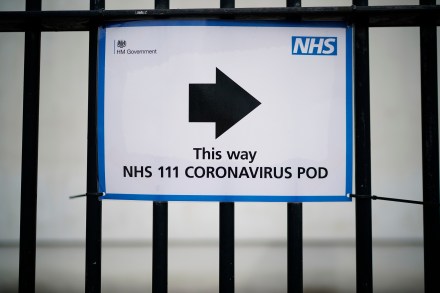
Even if the Covid-19 coronavirus does not become a mass killer on the scale of, say, the Spanish Flu in 1918, the mere possibility of such severity still carries huge weight. Just the potential for a disastrous pandemic demands a response whose seriousness and nature will have political and social implications. Even in this first week of the full UK response, some of those implications are clearly visible. And some of the inferences and lessons that can be drawn from this week are, to my mind, quite positive - small points of light in a dark and threatening sky, if you like. 1.
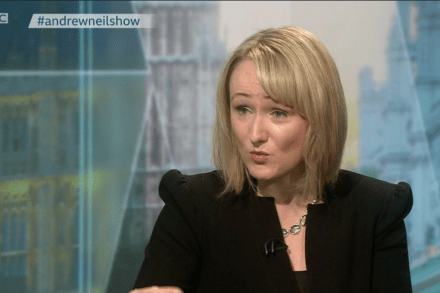
Starmer and Long-Bailey fail to impress on Andrew Neil

At the beginning of the year Lisa Nandy became the first Labour leadership candidate to subject herself to a grilling by Andrew Neil. It took almost two months, but this evening the two other candidates left in the race, Keir Starmer and Rebecca Long-Bailey, finally appeared on the show as well. And while both survived the encounter, neither particularly impressed. Keir Starmer appeared to have trouble defining his political relationship with Jeremy Corbyn. The Holborn and St Pancras MP admitted that Corbyn was a major issue on the doorstep at the last election, but then unconvincingly denied there were any rifts between him and the Labour leader over the party’s Brexit policy last year.

Why were there so many loyal questions at PMQs today?

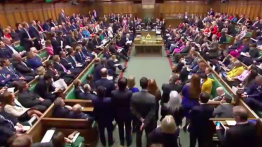
This week's Prime Minister's Questions had Tory MPs bursting out of their seats to ask Boris Johnson some lovely easy questions. There were more than usual whose contribution to the session was merely to ask him to agree with them that he had the right priorities and was doing a great job.  Claire Coutinho, recently-elected as Conservative MP for East Surrey, gave the Prime Minister a chance for a breather right after his stint sparring with Jeremy Corbyn with this question: 'My constituents in East Surrey care enormously about climate change. Does my right hon.

Bye bye Bloomberg

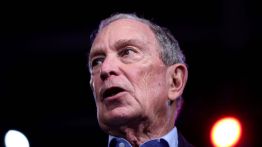
‘I’m a believer in using data to inform decisions,’ Michael Bloomberg said in a statement as he ended his campaign. ‘After yesterday’s results, the delegate math has become virtually impossible – and a viable path to the nomination no longer exists.’ And like that, he’s gone. Perhaps the most extraordinary story of the 2020 campaign so far, Michael Bloomberg’s candidacy, has ended. He seemed to have it all: unlimited funds, vast amounts of data, all the political consultants money could buy. But he’s had to give in and endorse Joe Biden, accepting that the former vice president is a much more attractive candidate to voters.

PMQs: Boris bats off Priti protests

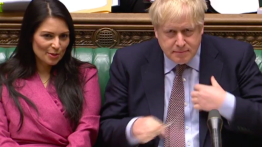
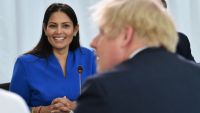
The PM defended his Home Secretary as opposition members tried to force her resignation, live on TV, at PMQs. Priti Patel, in a muted fuchsia dress, sat on the Treasury bench nestled snugly between Jacob Rees-Mogg and the Prime Minister. This casual arrangement cannot have been more deliberate. Here she is, announced the seating-plan, and here she stays. Jeremy Corbyn tried first. He demanded ‘an independent investigation into the home secretary’s conduct led by an external lawyer.’ He also wanted ‘a date when the findings will be made public.’ Boris ducked this blatantly. ‘The home secretary is keeping this country safe. She believes in stopping the early release of offenders... and introducing a points-based immigration system.

Christina Lamb: how rape is used as a weapon of war

38 min listen

In this week’s Book Club podcast, my guest is the veteran foreign correspondent Christina Lamb. Christina’s new book, Our Bodies Their Battlefield: What War Does To Women is a deeply reported survey of rape as a weapon of war, described in our pages by Antony Beevor as the most powerful and disturbing book he has ever read.

Why the Tories won’t give Priti Patel up without a fight

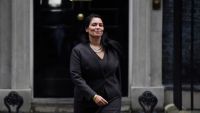
Another day, another set of allegations against Priti Patel. When the Home Secretary's top civil servant Sir Philip Rutnam resigned over the weekend, he used a public statement to accuse Patel of intimidating behaviour towards staff. Since then, more allegations have surfaced over her behaviour dating back to roles in other departments. Today The Sun reports claims of bullying by Patel while at DfID with an unnamed senior official now allegedly planning to testify against her in the upcoming employment tribunal and Cabinet Office inquiry. While Patel denies any wrongdoing, there's now talk in Westminster of whether Patel can stay in her role given that this story looks set to run and run. However, those bracing themselves for her departure look set to be disappointed.

Corbyn snaps a selfie with new Tory MP

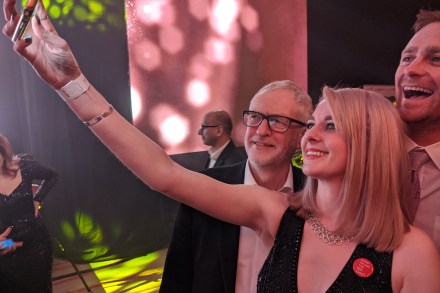
Nothing brings people together quite like a late night kebab. That was certainly the lesson that Mr Steerpike learnt on Tuesday evening when the Westminster Village descended on the British Kebab Awards. The annual meat-based bash saw politicians, hacks and restauranteurs rub shoulders at the Park Plaza hotel in Waterloo.  But Mr S wasn't the only one who felt a sense of gastronomic geniality. Jeremy Corbyn, the outgoing Labour leader, was spotted snapping a selfie with his new Tory colleague Dehenna Davison. Mr Corbyn seemed unaware of the fact that the new MP was one of the so-called 'Red Wall' Tories. Davison managed to deprived the Islington socialist of the traditional North East Labour stronghold of Bishop Auckland at last year's general election.

The government’s political capital is waning

Upon how many fronts can a government fight at any one time? Political capital has a short-enough half-life as it is without the risk of it being diluted through simultaneous multiple battles. Concentration of political firepower matters. At a rough count, Boris Johnson’s ministry is currently fighting the civil service, the media, the European Union and now, of course, a looming public health emergency from a likely coronavirus epidemic. There is also the small matter of a budget and the government’s actual – or, if you prefer, notional – plans for ‘levelling-up’ the United Kingdom. Some of these are more significant problems than others, and some of them required no super-forecasting skills to foresee.

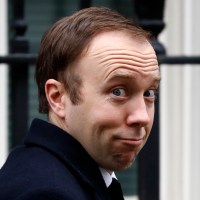
Humdrum Hancock is the perfect face for coronavirus

Readers of a certain vintage may remember that during the Falklands War a hitherto unknown official at the Ministry of Defence became something of a celebrity. Ian McDonald, who passed away last year at the age of 82, was a dry-as-dust Whitehall official from the days when civil servants actively tried to avoid the limelight. And yet his monotone delivery as official spokesman at MoD press conferences turned him into a cult figure and 'the voice' of the war. His calmness and uncanny ability to never offer an accidentally quotable soundbite alongside the factual but minimal information he conveyed was just what was required to keep the nation fixed on the task at hand.

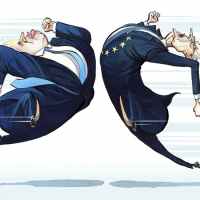
Britain must fight the EU’s nanny state urges

The UK government has given the EU a Brexit deadline of four months. No. 10 is threatening to walk away from the negotiating table if a broad outline for a Canada-style trade agreement cannot be reached by the summer.  But the UK isn’t really being as radical as it might first appear. For a start, the withdrawal agreement already commits the parties to a July deadline by which point the EU must decide whether to extend the transition period.  Some might argue that the UK is ripping up the political declaration by imposing such a deadline.

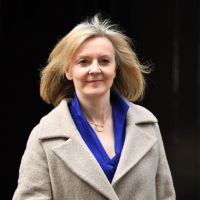
Liz Truss urges the WTO to become a global force for free trade

What does Britain stand for post-Brexit? What is our role in the world? Mr Steerpike often wonders: it’s not as if Johnson’s administration has always been entirely forthcoming. For all the talk about opening up to the world, being a proud beacon of economic liberalism, the government has been opaque as to what that means. Today Liz Truss will try to provide some clarity. Britain, she says, will push the World Trade Organisation to reform its ways.

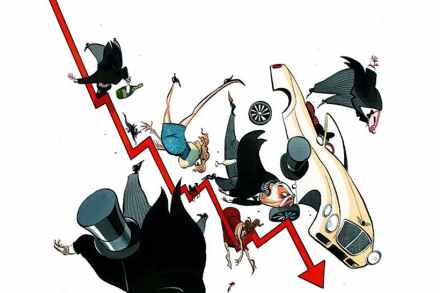
Coronavirus could cost Britain as much as the 2008 crash

UK and Scottish government modelling shows that the economic and fiscal costs of a Covid-19 epidemic could be on a par with the costs of the 2008 banking crisis. According to a senior government source: ‘that is what our modelling shows’. If millions were unable to work and significant numbers of businesses unable to trade – as usual during an epidemic – there would be a huge automatic rise in Universal Credit and other welfare payments to those quarantined. Further costs would be incurred from whatever schemes are put in place to shelter otherwise viable businesses from collapse, coupled with any emergency top ups to health and social care spending.

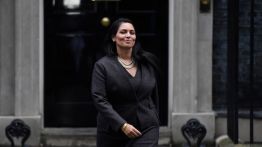
Priti Patel under investigation – as Tory MPs rally to her defence

Since Sir Philip Rutnam resigned as the Home Office permanent secretary, alleging that Priti Patel had created a climate of fear in the department, the Home Secretary has kept a low profile and made no public comment. Today the government were forced to formally respond to the claims thanks to an urgent question from Jeremy Corbyn. The Labour leader asked why the Prime Minister defended Patel over the claims and called her 'fantastic', when if true the allegations would 'constitute a breach of the ministerial code'. Speaking for the government, Michael Gove put in a passionate defence of his colleague. He praised Patel as someone he had always found to be civil and co-operative. He said that the government would 'make no apology of having strong ministers in place'.

What the UK wants from a trade deal with the USA

On Monday, the Department for International Trade released its negotiating objectives for a UK-USA free trade agreement. The 184-page document explains in detail what the UK wants to get out of a trade deal with America. The British government will try to angle the talks, which begin this month, towards securing a comprehensive arrangement - that is, a deal that covers a broad range of areas including digital, finance, tech, manufacturing and agriculture. If secured, it estimates this could translate into a £3.4 billion boost to the UK economy. The government has put its 'leveling up' agenda at front and centre of these trade talks, laying out how each region potentially stands to gain from securing a deal with the USA.