Politics

Read about the latest political news, views and analysis

Why schools haven’t shut yet in response to coronavirus

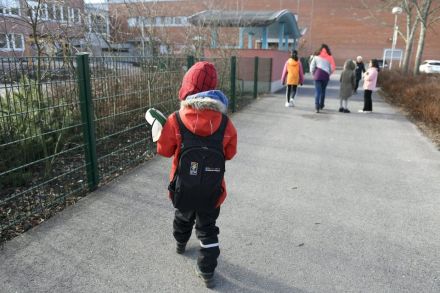
One of the big sources of confusion in the Government’s latest advice on coronavirus is about schools. You don’t have to go far on Twitter or Facebook to find memes like this one, suggesting Boris Johnson is wrong not to order teachers and pupils to follow the rest of the country: Angry pupils and parents are piling in, calling for schools to shut their doors. MPs are being inundated with calls to intervene. There are reports that some children are already being taken out of school by their parents, while other schools are checking kids’ temperatures when they arrive for classes to determine whether they are allowed to stay or not. For some, all this is proof that the Tories aren’t taking things seriously.

The new thinking behind the government’s coronavirus approach

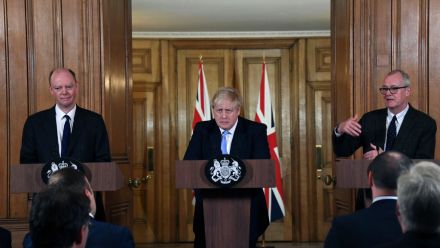
As the British public adjust to new social distancing measures, a common question: how long will this last? At the press conference on Monday, Chief Medical Officer Chris Whitty was keen to stress that the government measures to tackle the coronavirus resemble a 'marathon not a sprint'. While the elderly have been told they could need to self-isolate at least for three months, increasingly the view in government is that the coronavirus response will go on much longer. The government's initial strategy was to mitigate the virus and allow for a controlled peak of the virus in the summer – around June – and in the build up cocoon vulnerable sections of society so as to reduce fatalities.

Boris must borrow from Corbyn’s playbook to prevent a coronavirus crash

A few principles should inform how the Government – any government – responds to what is a devastating act of God that affects all of us. They are: 1) The vulnerable, those who can't look after themselves, need more help than most. 2) If certain behaviours help to keep all of us safe, they should be incentivised. 3) If vital infrastructure and services are at risk of collapse, and the market cannot bear the cost of restoring them, those costs should be socialised, or shared between all of us, with the wealthy shouldering the lion's share.

Brexit won’t stop a coronavirus vaccine reaching the UK

The Brexit culture wars are back. On Saturday, the Guardian published an article entitled: 'Brexit means coronavirus vaccine will be slower to reach the UK.' As usual with such pieces, the words 'if' and 'could' do more heavy lifting than Atlas. The gist of the article's argument is that leaving the European Medicines Agency (EMA) means the UK will no longer be able to benefit from processes that expedite the authorisation of pharmaceuticals for use. This is because manufacturers may decide to meet the approval process for the much larger EU market first before applying to the UK regulator for approval here. That might be true, but only if the UK sets its own regulations in this way.

Youngsters are ill-equipped to cope in this time of coronavirus

We’re all worried about older people right now. But I’m worried about the young too. I fear they lack the social nous and moral muscle to deal with a crisis as profound as the Covid-19 pandemic. I fear that the cult of fragility is so widespread among the youth that some will struggle to rise to the occasion of facing down this wolf at the door of our society. Our first priority must be the elderly, of course. We know Covid-19 is more dangerous for them than it is for other age groups. (Though I wish the media would stop giving the impression that every old person who catches it dies. That isn’t the case. To spread fear among the old is its own kind of disease, causing moral and mental harm to people who often feel isolated enough as it is.

The madness of #ToryGenocide

The hashtag #torygenocide was trending on Twitter all day Sunday. This is because seemingly rational people have got it into their heads that Boris Johnson is using the Covid-19 outbreak to orchestrate a social cull in the UK. There is a debate over the wisdom of the strategy the government has been advised to take by the chief scientific adviser. Robert Peston asks a question about testing that, if I’m honest, makes me wonder about the wisdom of how we’re going about this. Still, I am not a scientist. I don’t know whether Downing Street has taken the right or the wrong approach. I’m happy for others to have that debate. This is not that. This is not a scholarly exchange on the merits of ‘herd immunity’ or social distancing.

Corbyn should be ashamed of his coronavirus point scoring

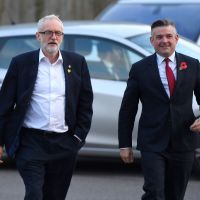
So there I was being non-partisan by praising the Labour party for its generally mature response to the coronavirus crisis when clearly I should have been putting this down to Jeremy Corbyn’s erratic level of engagement with major events rather than a deliberate strategy. Because it turns out that shadow health secretary Jonathan Ashworth’s wise mixture of qualified support for the Government underpinned by the asking of sensible, probing questions was not, after all, sanctioned by the Leader of the Opposition himself. Instead, despite his impending exit stage left, Corbyn has found irresistible the temptation to try and weaponise one of the biggest governmental challenges of our lifetimes against the prime minister of the day.

Is ‘crazy’ Bernie trying to tear the Democrats apart?

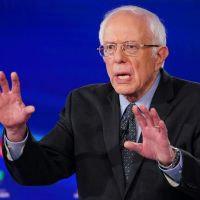
Bernie Sanders needs a wing and a prayer to overtake Joe Biden in the delegate count. Last week’s resounding defeat in Michigan, a state that represents the working-class voter Democrats must pick off from Donald Trump if they hope to reclaim the White House in November, was a bad omen for the Sanders campaign and a metaphorical nail in his coffin. The next month of primaries is going to be absolutely brutal for the Vermont senator, whose approval ratings among African-Americans, Americans over the age of 45, and suburbanites is below sea-level. Sanders knows he’s on borrowed time and already surely realises he has lost the Democratic presidential primary to Joe Biden. So the audience-free debate in Washington, D.C.

Seven extraordinary graphs which show the economic impact of Covid-19

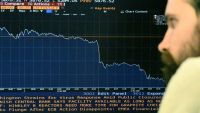
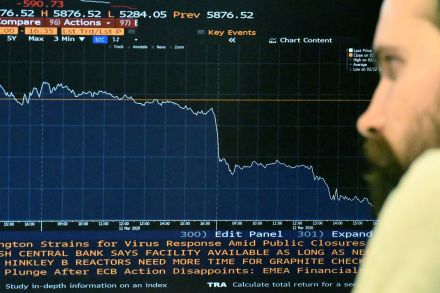
We’ve just seen one of the worst weeks in stock market history, with the FTSE100 ending on Friday 17 per cent down and billions of pounds wiped off British share values. This has been spurred on not by the fear of Covid-19 itself, but by the reaction to the virus: when sentiment switches from confidence to caution, panic can be self-reinforcing. In response to the panic, the Bank of England slashed interest rates to 0.25 per cent; hours later, Chancellor Rishi Sunak used his first Budget to respond with a £30 billion stimulus package - the biggest giveaway of any Budget since 1992. In reality just £12bn of the £30bn is for the virus disruption: the rest is a debt-fuelled stimulus. But Covid eclipses all.

Matt Hancock attempts to set record straight on ‘herd immunity’

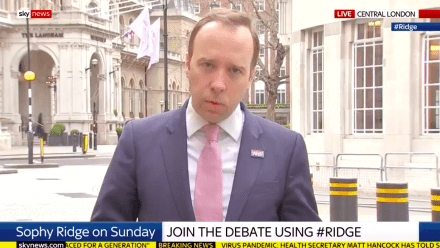
After a weekend of opposition party criticism and anonymous briefings over the government's coronavirus strategy, Matt Hancock appeared on the Andrew Marr show in a bid to set the record straight. With the number of UK fatalities now at 21, the Health Secretary attempted to reassure members of the public that the government was doing everything in its power to protect life. Key to this was an effort to distance the government from reports that they are pursuing herd immunity.

Coronavirus panic buyers should calm down

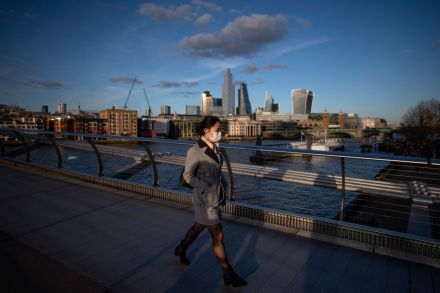
It is a sign of our extraordinary times that the main trade association for shops – the British Retail Consortium – is sending out an urgent message to customers: “buy less”. More specifically, they have urged people not to buy more than they need. The national panic buying and stockpiling has emptied shelves in supermarkets across the country, and has brought out the worst in a few people. One relative said he saw a man clear a supermarket shelf of pasta into his shopping trolley, and an old lady asked if she could just have one packet to eat, and he said no. It makes the blood boil. It has brought out the best in others, with community groups across the country mobilising to help make sure vulnerable people can get food and supplies. They are the heroes.

Boris should build to save the Union

In the past week, the Boris Bridge between Northern Ireland and Scotland has changed into a Tory Tunnel and been ridiculed by a leading think tank. The Prime Minister’s plans for the bridge may have morphed but they have not disappeared, as the Fraser of Allander Institute would like to see. The respected policy shop looked at the tunnel's growth potential, climate impact, connectivity and opportunity costs and concluded: ‘It won’t deliver the economic boost some claim, it isn’t a priority, it would go to the wrong location, it wouldn’t be consistent with climate change objectives, and the money could be better spent on other things. Apart from that, it’s a cracking idea.

Government to quarantine elderly and tell over-70s: stay at home

People over 70 will be instructed by the government to stay in strict isolation at home or in care homes for four months, under a 'wartime-style' mobilisation effort by the government likely to be enforced within the next 20 days. It is part of a series of measures being prepared by the prime minister, health secretary, chief medical officer and chief scientific adviser to prevent the health service from 'falling over' and to save lives as coronavirus, Covid-19, becomes an epidemic in the UK.

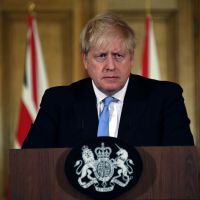
Boris Johnson knows the risk he is taking with his coronavirus strategy

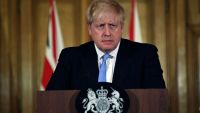
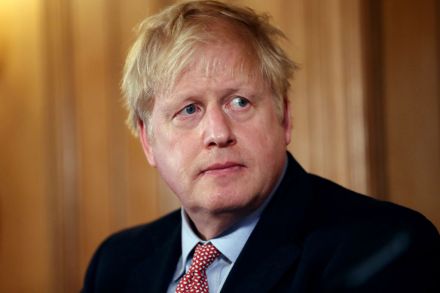
As more and more other countries go into lockdown or opt for mass school closures, there is going to be political controversy over this government’s approach to coronavirus. The political consensus on the handling of the virus is already beginning to fray. But it is worth trying to understand why the UK isn’t doing what so many other countries are doing. I write in the Sun this morning that the government isn't behaving in this manner because it doesn’t think the virus can be stopped. One of those at the heart of the government’s efforts says, ‘A lot of the international response is, how do we stop coronavirus? But that cannot happen: It is a global pandemic.