Politics

Read about the latest political news, views and analysis

Coronavirus means the EU will never be the same again

The European project was built on the idea of rendering future war among European states impossible. The EU is programmed to avoid armed conflict among its member states, a situation that would blatantly undermine its very essence. But who could have predicted that an epidemic would shake its foundations. In the space of a couple of weeks fundamental tenets of the EU project have received a body blow and may not recover from the coronavirus epidemic. The European Stability Pact requires member states to respect a three per cent budget deficit. France was about to breach that anyway and has used Covid-19 as a cover to go much further, as will Italy, Greece and others. The Pact also requires states’ national debt to go no higher than 60 per cent of GDP.
What’s wrong with wanting to escape to the Scottish Highlands?

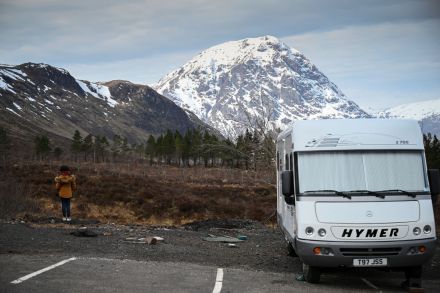
Could I take this opportunity to advise people to self-isolate in the Highlands of Scotland? Not many people around – and good walking country. I mention this because SNP MSP Kate Forbes has urged people from virus stricken areas not to come visit. You are risking lives, she says.  The virus spreads because we are a highly urbanised country and piled too closely to one another. The more we can disperse and self isolate, the less likely the virus is to spread. Public-spirited politicians should be urging us to get the hell out of urban areas. If you decide not to relocate, temporarily, to the Highlands, at least remember that this woman told you that you were not welcome in the first place.

Coronavirus has even kept the sex-strikers at home

When we left this Britain on Thursday last week, life was almost as usual. Shops and restaurants were open. The Battle Observer was reporting that environmentalists, angry that East Sussex County Council’s pension funds are invested in fossil fuels, were organising a one-day protest demanding a ‘sex strike’. No one, they insisted, must have sexual intercourse with any of the county’s 50 elected councillors ‘until they agree to stop funding climate change’. As a campaign, this latter-day reworking of Lysistrata had the merit that most people would probably agree to its conditions, whatever their views on climate change. We returned home on Monday, however, to read that the protest had collapsed.

Sajid Javid: Why can’t my mum buy groceries?

As every Chancellor knows, behind every figure in the Treasury lie thousands of human stories. At times like these, saving lives is the first, unmitigated priority. This means releasing whatever resources the NHS requires. Hospitality, retail, the self-employed: otherwise healthy enterprises of every description are facing an existential threat. Supporting businesses with government-backed loans is a good start, but it won’t be enough. Temporary tax cuts are also needed: ‘No need to pay’ rather than ‘Time to pay’. If we want the economy to surge back once the danger has passed, these measures will need to be rolled out soon and at top speed. The economic package thus far is only the opening salvo in the fightback against coronavirus.

Brexit, Boris and the battle to be Labour leader: Lisa Nandy interviewed

The Labour leadership contest has been going on for so long that two of its candidates, Lisa Nandy and Rebecca Long-Bailey, have taken to counting down the hours they have left. The race to succeed Jeremy Corbyn started in early January, and will finally finish on 4 April. When we meet, Nandy is feeling run-down — not because of coronavirus, but the sheer length of a contest that she had initially thought should run beyond May’s now-cancelled local elections. She regrets calling for that now. A long contest should have helped the Wigan MP. When it started, she was not as well-known as the other candidates, and needed time to establish a reputation with party members.

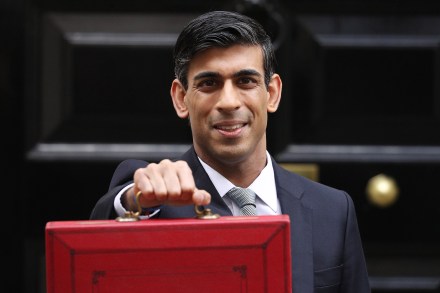
The Sunak supremacy

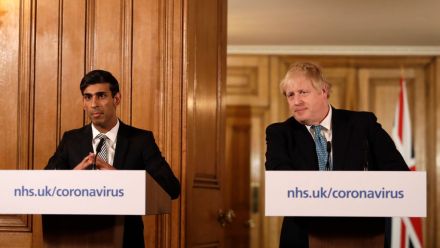
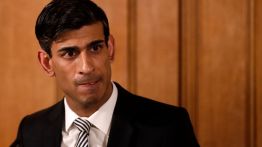
In some ways, it’s easy and even important to keep Rishi Sunak’s performance in announcing his coronavirus job retention scheme in perspective. It should, after all, be pretty easy to be popular in politics when you are offering to spend literally limitless amounts of money protecting people from economic hardship. A cynic would also say that it’s relatively easy to look grave and statesmanlike when you’re standing next to a prime minister who can still look more inclined to play Prince Hal than Henry V. But even taking those things into account, I still consider Sunak’s performance one of the most impressive I’ve seen from a British politician in more than 20 years in and around Westminster.

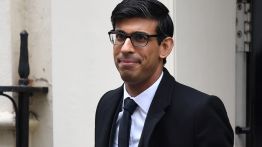
Inside Rishi Sunak’s wage guarantee

In his third Covid bailout in just over a week, Chancellor Riski Sunak has shifted his focus from businesses to employees with an unprecedented three-month commitment to cover the bulk of pay for workers facing redundancy. He'll cover up to 80 per cent of all salaried workers’ wages (up to £2,500 per month, around the UK’s medium income). This is a blanket pledge, an unprecedented intervention on the part of the government that will see the state pay private businesses – big and small – to retain their employees for the foreseeable future.

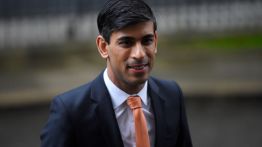
Rishi Sunak’s wartime economy

At least no one can say it isn’t bold. The United States is fiddling around with some possible cuts to payroll taxes. Most of Europe is stuck with some printed money from the ECB. But the UK is embarking on one of the most radical experiments in modern economic theory, and one that will no doubt be studied for decades to come. With his latest announcement today, a whole 48 hours after his last intervention, the Chancellor Rishi Sunak has effectively turned the UK into a wartime economy.

Oxford Economics predicts a quick post-virus recovery – with one big caveat

Britain is midway through a deep recession: of that there is no doubt. But what next? Oxford Economics has today been one of the first to offer an answer, predicting a V-shaped economic recovery (sharp economic downturn and sharp economic revival) and near-complete economic repair. It is, of course, a guess: all forecasts are. But it’s one worth looking into in a bit more detail. All published economic forecasts pre-Covid-19 (including those accompanying the Chancellor’s Budget last week) are defunct, so this is an early test - one that factors in the Government's policy of ‘social distancing’ and the profound impact this has on business as usual. Oxford Economics has replaced its estimate of modest GDP growth of one per cent to a prediction of a fall of 1.

Boris bashers need to cut it out

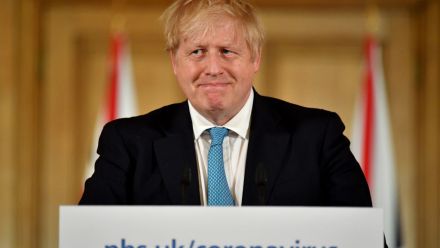
Every weekday afternoon a professional Twitter mob gathers to give a running commentary on the Prime Minister’s daily coronavirus press conference. Its leading lights will critique Boris Johnson’s every utterance to see what might catch on. Perhaps it will be a snarky comment about how modified advice in the light of new data really shows that he was all at sea before. Or not across the detail. Or his failure to be able to guarantee when this will all be over might be deemed disgraceful. Maybe Alastair Campbell will throw in a grenade about allegedly confused messaging. Or Piers Morgan will issue a 'bloody well do something or we are all going to die' war cry. Many of the journalists in the room will then seek a 'gotcha' moment in the way they frame their questions.

Coronavirus panic buying is turning Tories into socialists

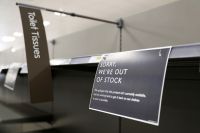
If Brexit did not do it, the panic buying has trampled to death national myths patriots once cherished. We now see that ‘quintessentially English’ does not now mean a reserved character with a stiff upper lip joining an orderly queue. But a demonically possessed shopper lunging towards the last four-pack of loo roll. Conservatives can find one comfort, however: the crisis is upholding their view of human nature – or at least it appears to be. Covid-19 is giving life to Margaret Thatcher's sociological analysis. ‘There's no such thing as society. There are individual men and women and there are families. And no government can do anything except through people, and people must look after themselves first.

The Bank of England’s coronavirus gamble

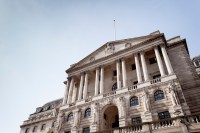
It's very interesting, and important, that the Bank of England is encouraging banks to turn half a blind eye to likely coronavirus losses on loans to businesses and mortgage borrowers – in the hope that banks don’t suddenly stop lending for fear future losses will deplete their capital. After the 2008 banking crisis, this is something I never thought I would see, but it's probably an appropriate measure. Given the sheer number of businesses and mortgage-borrowers in trouble, the damage to the economy would be made much worse if banks stopped or cut lending for prudential reasons. What matters is that the Bank had better be right that the economy and businesses will bounce back when we are through this Covid-19 crisis.

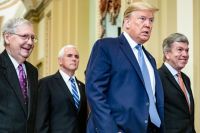
Can America’s divided Congress finally come together to fight coronavirus?

The coronavirus epidemic storming the world is far more frightening than the bank crisis over a decade ago. It not only poses a risk to people's health, but if left to fester could tank economies and cause unbearable financial strains for millions. But in the United States, the country's divided congress could – as it has done before in times of crisis – hinder rather than help the rescue effort. Republican and Democratic lawmakers in Washington are, for now, at least, saying all of the right things to their constituents, some of whom have family members or friends infected by Covid-19 and quarantined from the general public.

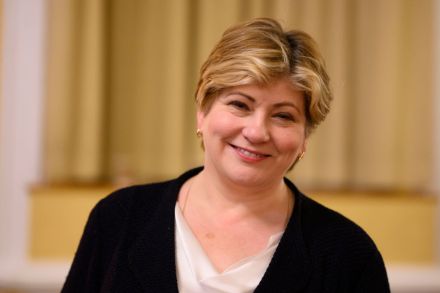
Emily Thornberry

37 min listen

Emily Thornberry is the shadow Foreign Secretary and former contender for the Labour leadership. On the podcast, she talks to Katy about her challenging childhood, what practising law taught her about politics, and her bid to succeed Jeremy Corbyn.

Boris vows to ramp up coronavirus testing

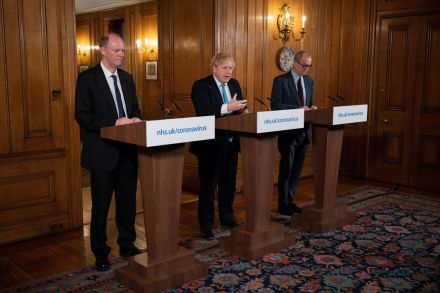
The announcement today by Boris Johnson that we are gearing up Covid-19 testing from 5,000 a day, to 10,000, to 25,000 to 250,000, and the endorsement from the government's chief scientific adviser Sir Patrick Vallance that this could theoretically happen in weeks, was the most important Covid-19 announcement on Thursday. Many in the NHS and in the wider scientific community see this as a shift in policy that should have come earlier. But few doubt its importance in saving lives by making social distancing more effective because it is more accurately targeted. And it creates the possibility of an earlier return to something for all of us that would feel a bit more like normal life.

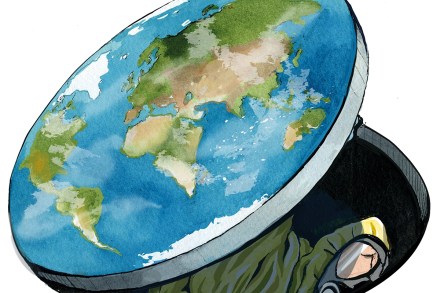
Lockdown, and the hardships ahead

31 min listen

It's the first few days of a national lockdown, so have humans been hubristic in not expecting something like this to happen (1:10)? Over in France, is President Macron dealing with this any better (11:05)? Last, is there any point in being a historical novelist in the age of Hilary Mantel (19:10)?