Politics

Read about the latest political news, views and analysis

Rishi Sunak offers support for self-employed – but there could be a sting in the tail

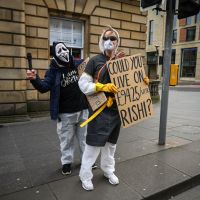
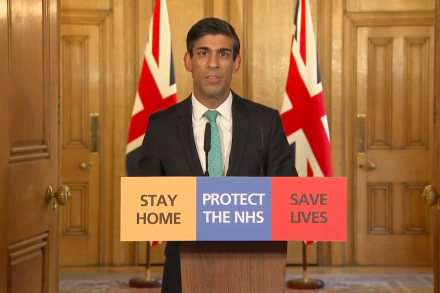
After a week of speculation, the Chancellor used today's coronavirus press conference to unveil the government package to help the self-employed. Announcing the new measures, Rishi Sunak said that the reason for the delay had been the sheer complexity of having to come up with a new payment system that could cover such a diverse workforce and not fall victim to fraud.  The new self-employed income support scheme means the self-employed can receive up to £2,500 per month in grants for three months. Sunak said the package covers 95 per cent people who receive the majority of their income from self-employment.
Surge in US welfare claims shows the devastating impact of Covid-19

No one has modelled an economic lockdown before: no one knows what to expect. But the daily data is shocking, and points to a huge economic effect. In Britain, nearly 500,000 people applied for welfare (Universal Credit) over the last nine days. In America, the number of people applying for unemployment benefits surged to an unprecedented three million last week.  What has yet to be calculated (but urgently needs to be) is the human cost of all this We simply have not seen anything like this before, not even during the financial crash: the Covid crash has led to 3,283,000 claims - quadruple the previous record-high of around 700,000 in 1982.

‘Germany will pay!’ is Macron’s coronavirus mantra

In his broadcast to the nation ten days ago, president Macron tub-thumped his war campaign on coronavirus. Six times he repeated the word ‘war’. Yesterday, he visited the front: Mulhouse in Alsace, on the Franco-German border, where France’s largest virus cluster is overwhelming the region’s hospitals. Live TV saw him, masked up, in an army field hospital, surrounded by soldiers in combat gear. From there he spoke again to the nation. France, he intoned, was at war in this region, a region scarred by past wars. By remaining united France would defeat the coronavirus enemy. And he launched military ‘Operation Résilience’ to take the combat further. Macron’s advisors have allegedly been briefing that he is the new Clemenceau.

What does coronavirus mean for the climate ‘crisis’?

A strange thing happened as coronavirus reached Europe’s shores. Concepts like 'net zero' and 'climate crisis' which had previously dominated the agenda vanished overnight.  While the vast majority of people have accepted this change of tack in the fight against the virus, there have been some environmentalists who seem to be put out at seeing their cause shunted down the list of political priorities. Only this week, photos surfaced on Twitter of posters attributed to Extinction Rebellion (which denies any connection to what it calls a 'fake account') claiming that Covid-19 was an effective tool in reducing the size of the human race. 'Corona is the cure, humans are the disease', the placard said.

Why is coronavirus being used to try to change abortion laws?

Never let a good crisis go to waste, seems to be the approach of the British Pregnancy Advisory Service to the coronavirus pandemic. It has been promoting a couple of amendments to the Coronavirus Bill - two out of 14 - to allow women to take abortifacient pills at home rather than travel to a clinic to obtain the approval of two doctors, as required by law. At present, a pregnant woman in the first three months of pregnancy would take one of the pair of pills triggering the abortion in a clinic. The amendments, proposed by Liz Barker and Natalie Bennett in the Lords would have had the effect, if enacted, of drastically liberalising the abortion law and crucially, it would have allowed any health care worker – a midwife or nurse, say – to approve an abortion.

The good news that emerged from Boris’s coronavirus press conference

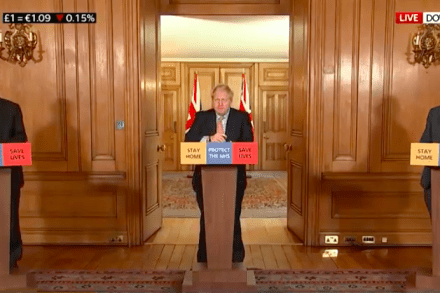
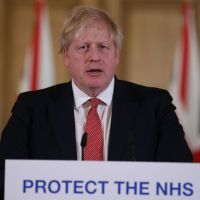
Today was Boris Johnson’s first press conference since announcing that people would only be allowed to leave their homes for a small number of state-sanctioned activities. But in a sign of how fast this crisis is moving, there were few questions on this. Instead, the focus was on testing and why the UK hasn’t managed to ramp it up yet. The government is most excited about the idea of an antibody test that would show who has had the virus. This would transform the situation: it would mean that NHS staff who had had coronavirus could carry on working even if they had symptoms, it would mean we would know who could volunteer without taking any risk with their own health and it would enable those who have had it to resume something approaching normal life.

How reliable are the coronavirus figures?

The statistics – all of them – have become utterly meaningless, regardless of how dramatically they are presented in our newspapers. We have not been testing with anything like enough numbers to give a true picture of the spread. And so the death rate – not the actual numbers – is also meaningless and ranges from a ludicrous rate to next to nothing. Complicating the picture still further is the growing suspicion that many of us have already had the virus, in late January, and perhaps did not realise it.  These known unknowns, and unknown unknowns, suggest to me that this crisis will diminish rather quicker than many are suggesting. I am no epidemiologist, of course, and I could be completely wrong. But it’s just a suspicion.

Jeremy Corbyn has one last go at overthrowing capitalism

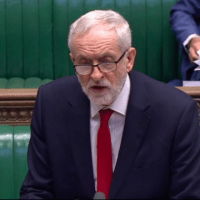
Double bubble at PMQs. With MPs leaving Westminster a week early, the Speaker ruled that two sessions of PMQs should rub up against each other. It was a full one-hour grilling. Boris adopted his ‘Britain in wartime’ pose. He heaped every questioner with praise and gave his answers with theatrical solemnity. Asked about testing-rates, he offered good news on their increasing frequency. ‘From 5,000 to 10,000 to 25,000.’ Trouble is, he said that last week.  Jeremy Corbyn complained that the healthcare supply association is so short of bio-hazard suits that it has to beg for donations on Twitter. Luckily Boris had just come from a meeting with someone in a uniform. ‘The army is now distributing the supplies to all the hospitals that need them, and 7.

Watch: Jacob Rees-Mogg’s unlikely tribute to Jeremy Corbyn

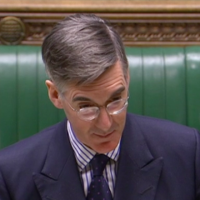
As the House of Commons rises for a premature Easter recess, coronavirus continues to dominate all parliamentary business. However, today also marks Jeremy Corbyn's final day in parliament as Labour leader – he put in his last Prime Minister's Questions opposition performance this lunchtime. While many in Corbyn's own party won't be sad to see him go, Jacob Rees-Mogg appears to take a different view. The Leader of the House gave an unlikely tribute to the departing Labour leader: 'I perhaps have a particular admiration for him which may surprise him.

Self-employed workers richly deserve a coronavirus bail-out

It will be impossible to calculate. There will be widespread fraud. And there is no mechanism for sending out the money. As the Chancellor Rishi Sunak scratches around for ways to bail out the UK’s five million self-employed in the same way he has done for employees he faces plenty of obstacles. No doubt his Treasury officials have come up with a list of reasons why any scheme he comes up with won’t work in practise, will prove too expensive, will break the IT system, or can’t be implemented until 2029 at the earliest. But hold on. That's crazy. In fact, the self-employed deserve their bail-out more than anyone. Sure, it is difficult. The self-employed don't have regular salaries in the way employees do.

Why MPs are talking about a government of national unity again

The idea of a government of national unity appeared to have died when Boris Johnson won a decisive majority of 80 in the December snap election. Prior to that, it was a topic that frequently dominated Theresa May's premiership and the beginning of Johnson's. Proponents argued that a government formed of senior figures from each party (sometimes sharing similar views) would be best placed to solve the Brexit conundrum. With Brexit wars now a distant memory thanks to the coronavirus pandemic, the idea has re-entered public debate over the government's handling of the virus outbreak. A number of commentators have called in recent days for Johnson to be replaced by a team of experienced politicians from across the divide.

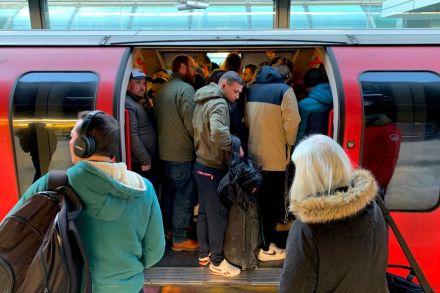
The government blames Sadiq Khan for tube overcrowding

With social distancing now the order of the day, Matt Hancock used today's government press conference to update the nation on NHS preparedness – and call for the country to come together to tackle the pandemic. The latest government figures put the number of coronavirus fatalities at 422 and this is expected to rise. In order to prepare the NHS for an increase in cases, the Health Secretary announced that a new temporary hospital is to open in London's ExCel Centre – and said that so far 11,788 retired NHS staff had responded to the government's call for volunteers to return to work. Hancock said the government is now hoping to recruit 250,000 healthy individuals to form an NHS volunteer responders army, to help with deliveries to the vulnerable.

The lethal ambiguities in the ‘stay at home’ coronavirus advice

There are still potentially lethal ambiguities in the government's coronavirus advice about who should go to work; such is the judgement of leading employers, to whom I've spoken. The fundamental question is whether businesses that are not doing work considered of national importance, but which involve employees working cheek by jowl in sweaty conditions, should cease operating. The head of one of the UK's largest companies is absolutely clear to me that the government has given a signal that such operations should send staff home and switch off the machines.

What happens if the economy truly tanks?

The government has taken steps to shore up most businesses. But it is becoming clear that the current plans may not be ambitious enough. Governments across the globe may need to be more radical if the commercial world is going to be able to handle the coronavirus crisis, while also ensuring tolerable income conditions for all workers, employees and the self-employed. If things get much worse, they may have to break out of their orthodoxies and start engaging with new, contrarian possibilities, such as more extensive public ownership and considerably higher taxes. These ideas will not, at first sight, be popular but maybe now is the time to debate and discuss these new solutions.

Labour’s coronavirus conundrum

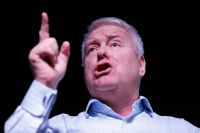
Labour chairman Ian Lavery has expressed hope that the coronavirus crisis could provide his party with a ‘great opportunity’. Lavery’s comments have been attacked for being in desperately poor taste. For on one reading, here was a leading Labour figure sounding upbeat over how his party could take political advantage of a global pandemic. The reality is however slightly different. Lavery undoubtedly expressed himself in a crass way but he was actually hoping the crisis would see Labour members help bring people together and organise community activities to alleviate the crisis. But Lavery’s comments – and the reaction to them – establish, as if we did not know, that politics never goes away.

It’s unlikely that this lockdown will be lifted any time soon

It is hard to think of a prime minister doing something that so goes against their political instincts as Boris Johnson declaring that people can only leave their homes for a list of state-approved activities. One of the constants of his political and journalistic career has been his opposition to the state infringing on people’s liberties. But the coronavirus and the public health challenges posed by a pandemic have forced him to shift. The fact that the authorities will be able to enforce these new rules is a big shift from Sunday’s press conference when Boris Johnson seemed taken aback by the idea that the police could be asked to enforce the rules on social distancing.