Politics

Read about the latest political news, views and analysis

Has Boris Johnson acted fast enough for the NHS to cope?

My jaw slightly dropped on Friday when Michael Gove announced that the number of Covid-19 cases in the UK was now doubling every three to four days. This is significantly faster than the five days that was initially built into the government's forecasts for the rate of increase in sufferers, and the 4.3 days that epidemiologist Neil Ferguson told me on 17 March was the new estimated ‘baseline’ doubling time. On the one hand, this accelerated rate of infection explains why the government moved to enforce much more severe measures to restrict social interaction just over a week ago, because presumably its scientific advisers had more than an inkling that the virus was spreading significantly faster than would allow hospitals to cope.

Why Boris Johnson’s popularity ratings remain so high

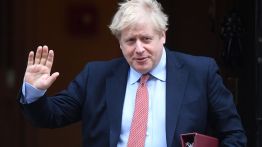
One of the reasons Jeremy Corbyn’s Labour was so shocked by the scale of its defeat at the last election is because they just don’t understand Boris Johnson’s appeal. All of their pre-programmed, politically correct left-wing instincts told them that he is anathema to Labour voters. How could a womanising, right-wing Etonian appeal to decent working men and women? Unfortunately for Labour it was decent working men and women who won Johnson two remarkable, against the odds, victories: the EU referendum and an election landslide. Nor was it only the Labour Party that misjudged Johnson. Tory grandees like John Major and Michael Heseltine paraded their haughty disdain and urged the Conservative faithful to reject him.

Why the coronavirus crisis could peak sooner than expected

The government is adjusting to the reality of dealing with the coronavirus crisis, while three of its most important figures – the PM, the Health Secretary and the Chief Medical Officer – are in isolation. All have mild symptoms so far and modern technology means that this is not the devastating blow it would have been even a decade ago. The government now think that this crisis is going to come to a head quicker than expected. The week beginning 12 April, not mid-May, is expected to be the peak of the virus. One of those leading the government’s response to the crisis tells me that after that is ‘when we’d expect to see things level off’.

The government must be as ready to remove restrictions as it was to impose them

For days, the Prime Minister had been resisting the kind of measures which have placed many other countries into lockdown, confining their citizens largely to their homes. Civil servants had pointed to studies saying that many ‘social distancing’ strategies might do more harm than good. In the end, the trajectory of the virus — and the global response — meant the restrictions now in place were inevitable. But at every stage, the Prime Minister has made it clear he was acting with reluctance. While he has been criticised by those seeking a heavier-handed approach, opinion polls suggest most of the country is with him. Yet public opinion can be fickle.

How will the ‘war’ on coronavirus change Britain?

In the past ten days we have seen the greatest expansion of state power in British history. The state has shut down huge swaths of the economy, taken on paying the bulk of the wages of millions of private sector workers, and told citizens that they can leave their homes only for a very limited number of approved activities. Boris Johnson likes to say that Britain is ‘at war’ with Covid-19. The parallel is hardly exact, but this expansion in state power is what you would expect in a war of national survival. It is worth remembering, as A.J.P Taylor wrote, that before ‘August 1914 a sensible, law-abiding Englishman could pass through life and hardly notice the existence of the state, beyond the Post Office and the policeman’.

Boris’s coronavirus pragmatism is confounding his critics

If ever Britain has undergone a period of authoritarian socialism, then this is surely it. Massive state intervention in the economy is taking place alongside state direction of the activities of private citizens that is both intensive and extensive in nature. Yet there are few private sector tycoons to be found arguing not to receive state support or, for that matter, free enterprise economists claiming that the market will, left to its own devices, come up with an optimal solution to coronavirus. Meanwhile more than 90 per cent of us approve of the draconian limits placed on our individual freedom in pursuit of the collective good. And I say that as someone who has recently returned home from his single state-sanctioned piece of exercise for the day.

William Hague: ‘We are heading for increased nationalism and socialism in the world’

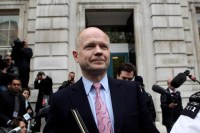
What will the lasting impact of the coronavirus be in the UK? It's a question William Hague attempts to help answer on this week's The Edition podcast from The Spectator. The former foreign secretary joins James Forsyth to discuss the politics column in this week's magazine. He says that any such forecast has to come with a very big caveat:  'It's very hard to predict the longer term effects of a big change in world affairs – if we think of the end of the Cold War and the universal assumption that liberal democracy was going to triumph everywhere for the long term – well it didn't work out that way'.

The coronavirus crisis reveals the misery of ‘degrowth’

This is an economic horror show. According to YouGov, UK unemployment may have jumped five per cent in a matter of weeks. The consultancy CEBR estimates that global GDP may shrink by twice the rate seen in the Great Recession. This may be the worst hit to British people’s livelihoods since the Great Depression of the 1930s. Except one thing is different: this is a deliberate economic shutdown, made necessary to avoid a deeper, more human one. It isn’t that the economy is failing to work because the credit system has seized up as in 2008. We are actively contracting productive work in order to limit a tragedy. A recession it will be, but it is our choice in a time of acute crisis, demanding Herculean lifting and leadership by the state.

Boris can learn from Churchill as he battles coronavirus

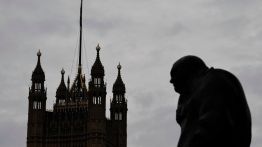
As Boris Johnson self-isolates for seven days after testing positive for coronavirus, he must follow the example of his hero, Winston Churchill, in heeding the advice of his doctors. It was on the counsel of his chief medical officer, Chris Whitty, that the Prime Minister subjected himself to a test, which augurs well for the days ahead as he, in his own words 'continues to lead the government's response' to coronavirus. In December 1943, Churchill's physician, Sir Charles Wilson (Lord Moran), was quick to spot the signs that his friend of many years was not well. They had arrived in Cairo on December after an exhausting fortnight in which the PM had discussed allied strategy in conferences in Cairo and Tehran.

Health Secretary Matt Hancock tests positive for coronavirus

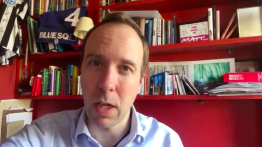
The Secretary of State for Health and Social Care has just announced that he has also tested positive for coronavirus. Matt Hancock has tweeted out a video in which he says he has been suffering from mild symptoms of the disease and is now self-isolating at home.  https://twitter.com/MattHancock/status/1243522325397622784?ref_src=twsrc%5Etfw His announcement follows the revelation by Boris Johnson that he has also contracted the disease. And, like his boss, Hancock will continue working from home to coordinate the government's response.  The question now, though, is how many people in government also have coronavirus. Michael Gove's wife Sarah Vine has said that her husband has not yet been tested because he' is not displaying any of the symptoms.

What Boris Johnson’s coronavirus diagnosis means for the government

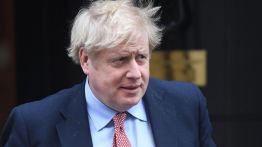
Boris Johnson has tested positive for coronavirus. The Prime Minister took a test for the virus on Thursday at the advice of Chief Medical Officer Professor Chris Whitty after experiencing mild symptoms. As a result Johnson is now self-isolating in 10 Downing Street, a spokesman said: 'After experiencing mild symptoms yesterday, the Prime Minister was tested for coronavirus on the personal advice of England’s Chief Medical Officer, Professor Chris Whitty.The test was carried out in No 10 by NHS staff and the result of the test was positive. In keeping with the guidance, the Prime Minister is self-isolating in Downing Street. He is continuing to lead the government’s response to coronavirus.' So, what happens now?

The Lisa Nandy Edition

30 min listen

Lisa Nandy is the Labour MP for Wigan and former shadow energy secretary. She is one of the remaining three contenders for Labour leader. On the podcast, she talks to Katy about her childhood ambitions, cross-party friendships, and the worst advice she's ever been given.

Corbyn is wrong to say coronavirus proves the need for socialism

Jeremy Corbyn’s claim that the Conservative government’s economic response to the coronavirus package shows that his policies were right proves what an astonishingly poor grasp of economics he has. The economic rescue package has involved a massive increase in spending and borrowing, and also a temporary part nationalisation of people’s wages – both things he has argued for. But the circumstances are totally different and what helps in an unprecedented crisis can be massively damaging if carried out in normal times. In medicine, some life-saving treatments can be life-threatening if inflicted on a healthy patient. If someone’s heart has stopped, it can be right to put electric pads on their chest to give them an electric shock to restart the heart.

The Chancellor’s warning about the state of Britain’s finances

The Chancellor’s emergency package for the self-employed is one of the most generous schemes to be offered worldwide so far, covering up to 95 per cent of the UK's self-employed workforce. The details of the scheme, explained here, include a taxable grant worth up to 80 per cent of one’s profits over the past three years, capped at £2,500pm – notably on par with salaried workers who earn, on average, £340 more each month than self-employed workers. There were plenty of potential pitfalls and unnecessary giveaways the Treasury managed to dodge: wary of dishing out cash to super-wealthy contractors and consultants, the Chancellor has only opened the scheme to workers trading with profits up to £50,000.

The front line: how the NHS is preparing for battle

39 min listen

How prepared is the NHS for the coming battle with coronavirus (1:20)? Plus, what will Britain look like after the epidemic (12:20)? And last, just how are children so good at make-believe (29:25)?With Dr Max Pemberton, Dr Kieran Mullan, James Forsyth, William Hague, Mary Wakefield and Piers Torday.Presented by Cindy Yu and Katy Balls.Produced by Cindy Yu and Gus Carter.