Politics

Read about the latest political news, views and analysis

A million coronavirus tests are coming to Britain, but do they work?

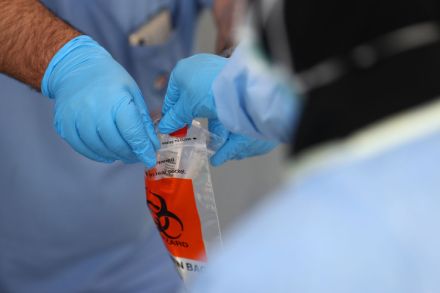
I have uncovered another troubling potential roadblock to increasing the volume of tests for Covid-19. It is all quite complicated, so please bear with me. What I have learned is that just under two weeks ago, the Government paid several million pounds to purchase two million 'rapid lateral flow diagnostic test' kits from China, with one million coming from a company called Wondfo and one million from AllTest. Both of these tests have EU approval for use by medical practitioners. They can be deployed and used in hospitals in the UK right now. Of these tests kits, one million – the ones made by Wondfo, which also have Chinese FDA approval – are scheduled to arrive in the UK in the coming week.
The SNP may have overreached by planning to suspend jury trials

The Scottish Government may have overreached for the first time in its response to Covid-19. Today MSPs will vote on the Coronavirus (Scotland) Bill, which grants Scottish Ministers emergency powers to tackle the outbreak and suspends or amends the legal status quo in some important areas. Physical attendance in court will no longer be required unless a judge specifically instructs it; instead, appearances will be made ‘by electronic means’. Ministers will be able to permit the release of prison inmates in the event of custodial transmission (lifers and those convicted of sex crimes will not be eligible).

Coronavirus comparisons with Germany are premature, deputy chief medical officer warns

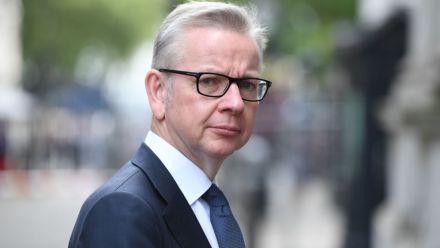
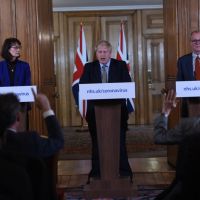
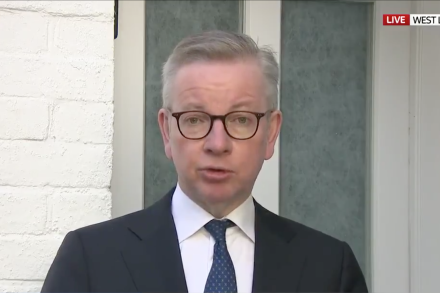
The daily government press conference had a familiar theme today: politicians and advisers struggling to answer questions on the scale of coronavirus testing in the UK. Michael Gove and deputy chief medical officer Jenny Harries both spoke of the importance of testing, but struggled to explain what they plan to do to stop the UK lagging behind countries in Asia, as well as Germany, when it comes to testing. Gove suggested there was a shortage of the relevant 'chemical reagents' while Harries said the focus – given current capacity – was rightly on testing of NHS staff. There was good news in terms of the number of ventilators with Gove promising that thousands of new ventilators are to be delivered to the NHS in the next week.

Cabinet goes full Zoomer

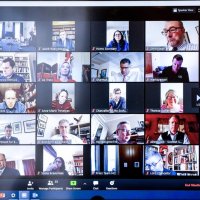
Over the last few weeks, we've all been getting used to the realities of working from home. So Mr S was pleased to see the Cabinet getting stuck in with remote working earlier this morning. Yes, secretaries of state and government ministers dialled in from their London pads and constituency piles to coordinate the response to coronavirus.  https://twitter.com/BorisJohnson/status/1244985949534199808?ref_src=twsrc%5Etfw Downing Street mandarins opted for the popular video conferencing app Zoom (The Spectator favourite, if you're interested, is Houseparty). Some have questioned whether it was sensible for the PM to post a pic of his assembled team alongside the digital code for the Cabinet's online meeting.

Jeremy Corbyn’s toxic legacy

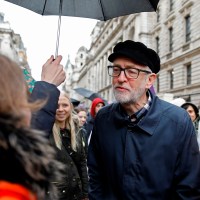
What will we do without Jeremy Corbyn? We may never find out given how long it’s taking him to leave the stage. Even Sinatra’s farewell tour didn’t last this long. The problem is that Corbyn wants to be useful. While that would certainly be a change of pace, it places the onus on others to find a use for him. His disciples propose that he be kept on the front bench, perhaps as shadow foreign secretary, marking their progression through all six stages of grief: denial, anger, bargaining, depression, acceptance and Richard Burgon. There is a cruelty to all this. No one who has watched the video of Corbyn ambling around in the street encouraging his neighbours to applaud the NHS will have failed to feel some pang of pity for the man.

Yes, we need experts. But let’s not politicise expertise

For some people, it isn’t enough that we have locked down our daily lives. They want us to lock down our brains, too. Raise so much as a peep of criticism about the shutdown of society in response to Covid-19 and you will be raged against. And the cry is always the same: ‘Are you an expert? No. So shut the hell up.’ Only experts are allowed to speak at the moment, apparently. The rest of us — us lowly, non-expert plebs — must simply sit at home and await our instructions from on high. Those daily coronavirus news briefings feel, at times, like sermons from the mount. It is there, often from the mouths of people none of us ever voted for, that we discover how we must conduct our everyday lives and how long we will remain under house arrest.

Andrew Bailey is the right man to lead Britain through the corona crunch

Coronavirus is the ‘black swan’ event of our times, casting a long shadow over global economies. It poses many economic threats: to consumers’ direct spending, the liquidity of businesses and to confidence. And it's likely to take years to recover from. A wartime mindset, and unprecedented fiscal action are essential tools for limiting the damage. But while the Bank of England is experienced in responding to such disruptive scenarios, its new governor, Andrew Bailey, is just days into the job and under enormous strain. Is he up to the task? Bailey is no stranger to a credit crunch, having worked on the Northern Rock bailout and been RBS chief cashier when they ran out of money.

Keir Starmer should pull his punches against Boris Johnson

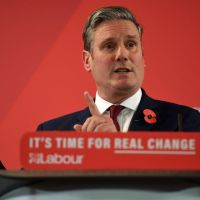
The luxuriantly coiffured soft left Labourite Keir Starmer may, at first glance, appear to have almost nothing in common with the balding Thatcherite Tory Iain Duncan Smith. In fact, when he wins the Labour leadership contest this weekend, as he surely will, he faces a political challenge that is similar to the one IDS accepted when he became Leader of the Opposition on September 13, 2001. IDS arrived at the summit of his party at a moment of profound international crisis, just as an incumbent premier with a prodigious gift for communication was judged by the British public to be rising magnificently to the occasion.

Four graphs that show the effect of social distancing in the UK

Those who tuned into the government's daily press conference were given a glimpse of what will come to pass if Boris Johnson has to take a break from his duties as a result of his coronavirus diagnosis. The government's 'designated survivor' Dominic Raab led the conference – providing an update on Foreign Office efforts to bring Brits stranded abroad back home. A £75 million fund has been set up with the aim of bringing tens of thousands home.  However, the main update came from Chief Scientific Officer Patrick Vallance who gave a presentation on the effect social distancing has had in the UK so far through four graphs. Vallance said there had been promising signs when it comes to slowing transmission of the virus.

Overzealous police are taking the lockdown too far

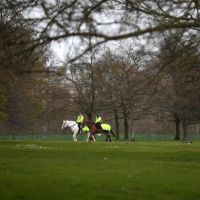
This is an exceptionally difficult time for those working in the emergency services. They are having to respond to situations they never expected to be involved with, often risking being infected with coronavirus themselves. That much is true. What is also true is that this crisis has brought out an interfering tendency in some people which goes along the lines of neighbours calling the police to demand they arrest someone who appears to be going out for a 'second run', or sitting on Twitter waiting to pounce on someone who appears to have flouted the rules by buying chocolate bars.

Former Supreme Court Justice: ‘This is what a police state is like’

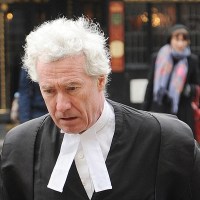
The former Supreme Court Justice Jonathan Sumption, QC, has denounced the police response to the coronavirus, saying the country is suffering 'collective hysteria'. This is an edited transcript of his interview with BBC Radio 4's World at One programme earlier today.  Derbyshire police have shamed our policing traditions BBC interviewer Jonny Dymond 'A hysterical slide into a police state. A shameful police force intruding with scant regard to common sense or tradition. An irrational overreaction driven by fear.' These are not the accusations of wild-eyed campaigners, they come from the lips of one our most eminent jurists Lord Sumption, former Justice of the Supreme Court. I spoke to him just before we came on air.

Whatever happened to parliamentary democracy?

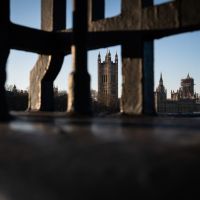
In the middle of a national crisis, Britain has become a parliamentary democracy without a parliament. The police now have extraordinary powers to fine and arrest those who break the lockdown. Do I hear you say that these are necessary powers for a time of pandemic? Maybe they are. But we have no parliament to raise the alarm if those powers are abused or hysteria and the urge to punish replace the calm implementation of the law. Meanwhile everyone is asking questions about how ministers, the NHS and Public Health England failed to provide enough protective kit for doctors and nurses and wondering why Britain is lagging so far behind Germany in its ability to test the population. Everyone, that is, except the House of Commons and the House of Lords.

British farms desperately need workers – yet we’re paying people to stay at home

Is there anything more ridiculous, when we have hundreds of thousands of workers sat idly at home to avoid spreading coronavirus, to be flying in fruit and vegetable-pickers from Eastern Europe? Yet that is exactly what is about to happen. Concordia, which supplies seasonal labour to UK farms from overseas, says it is looking to charter planes to bring in 10,000 workers from Bulgaria. Without them, it says, fruit and vegetables will have to be left to rot in the fields. Sure, there is nothing wrong with using migrant labour on British farms in normal times. Until a few weeks ago we had pretty well full employment; there were few Britons prepared to work in the field.

UK coronavirus growth slowing, key adviser reveals

There are now signs of the growth in UK Covid cases slowing, according to Professor Neil Ferguson, who is emerging as the de facto chief strategist of the government response to the crisis. No government data has been issued to confirm this trend but Ferguson has access to other real-time data through SAGE, the medical emergency committee. He was on BBC Radio 4's Today programme and said:- 'In the UK we can see some early signs of slowing in some indicators. Less so deaths, because deaths are lagged by a long time from when measures come in force. But if we look at the numbers of new hospital admissions, that does appear to be slowing down a little bit now.

How to understand – and report – figures for ‘Covid deaths’

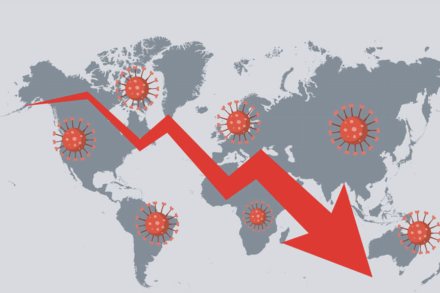
Every day, now, we are seeing figures for ‘Covid deaths’. These numbers are often expressed on graphs showing an exponential rise. But care must be taken when reading (and reporting) these figures. Given the extraordinary response to the emergence of this virus, it’s vital to have a clear-eyed view of its progress and what the figures mean. The world of disease reporting has its own dynamics, ones that are worth understanding. How accurate, or comparable, are these figures comparing Covid-19 deaths in various countries? We often see a ratio expressed: deaths, as a proportion of cases. The figure is taken as a sign of how lethal Covid-19 is, but the ratios vary wildly. In the US, 1.8 per cent (2,191 deaths in 124,686 confirmed cases), Italy 10.8 per cent, Spain 8.

Sunday shows round-up: Coronavirus testing has reached 10,000 per day

Michael Gove: Coronavirus crisis has ‘a range of potential outcomes’ The UK has now been in lockdown for almost a week as the nation tries to grapple with fighting the coronavirus. The government has said that it will look again at whether to renew the current restrictions after three weeks have elapsed. Sophy Ridge asked the Chancellor of the Duchy of Lancaster Michael Gove about how long the lockdown period could last. Gove replied that it was not ‘absolutely fixed’ and that a lot would depend on people following the official guidelines: https://twitter.com/RidgeOnSunday/status/1244170064577925120?ref_src=twsrc%5Etfw MG: There is a range... of potential outcomes, but those outcomes are not pre-determined. Our behaviour can influence those outcomes...

Has Boris Johnson acted fast enough for the NHS to cope?

My jaw slightly dropped on Friday when Michael Gove announced that the number of Covid-19 cases in the UK was now doubling every three to four days. This is significantly faster than the five days that was initially built into the government's forecasts for the rate of increase in sufferers, and the 4.3 days that epidemiologist Neil Ferguson told me on 17 March was the new estimated ‘baseline’ doubling time. On the one hand, this accelerated rate of infection explains why the government moved to enforce much more severe measures to restrict social interaction just over a week ago, because presumably its scientific advisers had more than an inkling that the virus was spreading significantly faster than would allow hospitals to cope.