Politics

Read about the latest political news, views and analysis

Is Keir Starmer’s shadow cabinet really a rejection of Corbynism?

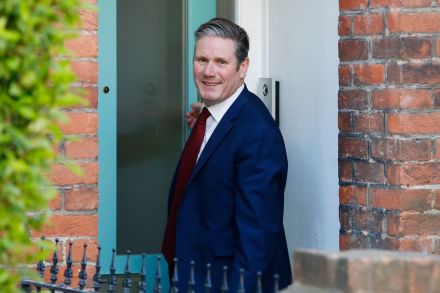
On the surface, Keir Starmer's new shadow cabinet looks like a rejection of Corbynism. Over the past 24 hours, the new Labour leader has sacked most of his predecessor's allies such as Ian Lavery, Richard Burgon, Shami Chakrabarti and Dawn Butler. But if you run through the list of appointments, and the names of those who remain, this is still a reshuffle designed not to upset Jeremy Corbyn's allies. There hasn't been a full clear out, but the faces remaining are largely figures who were never really associated with Corbynism to begin with. Emily Thornberry is still in, but despite being very loyal to the leader, she was never a true Corbynite. She had taken care to stay quiet during the 2019 election campaign before vocally criticising Corbyn's leadership after the result.
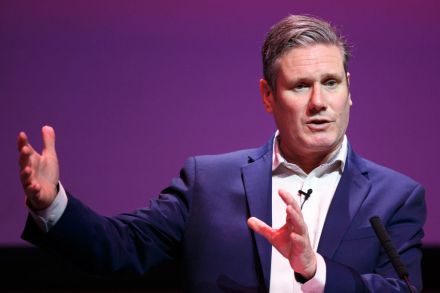
Full list: Keir Starmer’s new Shadow Cabinet

Keir Starmer, the newly elected leader of the Labour party, has taken no prisoners with his cabinet reshuffle. Corbyn allies like Richard Burgon are out, and Ed Miliband is back. Here is the full make-up of Starmer's top team: Shadow Chancellor of the Exchequer: Anneliese DoddsFormerly: John McDonnellAn Oxford PPE graduate, Dodds is a long time supporter of Starmer's leadership campaign. She has served as a shadow Treasury minister since July 2017. She had even been tipped for promotion by the former Shadow Chancellor John McDonnell in early March, as he said he was ‘hoping she gets a significant role in the new administration’. Dodds is the first woman to be appointed Shadow Chancellor (and potentially Chancellor, if elected to office).

How Dominic Raab ended up as de facto deputy

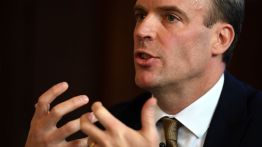
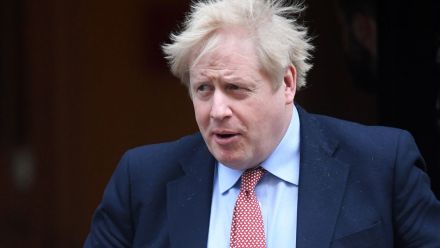
Following the Prime Minister's admission to hospital on Sunday, Boris Johnson remains in St Thomas’s hospital 'for observation'. While a No. 10 spokesman insists that he remains in 'good spirits' and continues to be in touch with colleagues, questions remain when it comes to whether he will be forced to take a few days out for his recovery. Downing Street has been at pains to say that Johnson remains in charge but in truth his de facto deputy Dominic Raab is already taking on an increased role behind the scenes. The Foreign Secretary chaired the morning coronavirus meeting with the heads of each sub-committee.

Can Boris really run the country from his hospital bed?

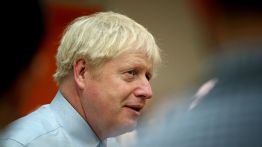
Despite many of his colleagues urging him to take a step back and rest now that he is in hospital, Boris Johnson is continuing to receive his red box of papers while being treated for the persistent symptoms of coronavirus. The Prime Minister’s official spokesman told journalists this lunchtime that the PM ‘remains in charge of the government’, that he has been in touch with No. 10 colleagues, and that he ‘had a comfortable night and he is in good spirits’. Given how sick patients tend to be by the time they are admitted to hospital, it sounds rather odd that the Prime Minister is really attempting to work while receiving treatment. No.

The man who defined Labour’s forgotten past

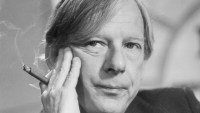
To read this long-overdue and welcome biography of Peter Shore is to undergo a journey from Labour’s eurosceptic heights in the 1960s to its demise as a party of the nation state in the 1990s. Titled Labour’s Forgotten Patriot, patriotism is a theme which constantly recurs and, to a considerable extent, defined Shore’s political life. Peter Shore has been a rather neglected figure. This is odd since he had considerable influence over Labour politics for two decades and was probably the staunchest defender of Britain’s independence.

Anneliese Dodds isn’t the woman to steer Labour back to economic sanity

In some ways we will miss John McDonnell. His reheated 1970s student union Trotskyism was always an easy target for a column. From free broadband, to nationalising great swathes of industry, to raising taxes to punitive levels, and banning just abut anything he disapproved of, he managed to come up with a constant stream of terrible ideas. But, hey, never mind. Now there is Anneliese Dodds. The new shadow chancellor may be painted in some places as representing a shift back towards the moderate centre. And yet while she may have endeared herself to working parents on lockdown everywhere with her daughter’s impromptu appearance on Sky News this morning, we should also get real about her very limited abilities.

Government adviser: mass antibody test ‘at least a month’ away

With pressure growing on the government to forge an exit plan out of the current lockdown, antibody tests have been regularly cited by ministers and officials as a means to return to some form of normality. Boris Johnson says a home testing kit which would identify whether an individual has suffered from the disease – and therefore has some form of immunity – would be 'a game changer'. The government has ordered millions of such tests on the condition that they work.  However, news today from an academic advising the government on antibody testing makes clear that those hoping for a quick resolution are to be left disappointed. Professor Sir John Bell, of Oxford University, advises the government on life sciences.

Watch: New Shadow Chancellor’s daughter gate-crashes her interview

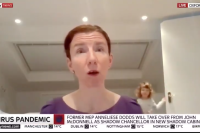
Labour MP Anneliese Dodds was thrown in at the deep-end yesterday, after it was announced that she had been appointed Shadow Chancellor by the new Labour leader, Keir Starmer. Dodds has never held a top Shadow Cabinet position before, and has only been an MP since 2017. But in the end it was working from home with children in the house, that presented Dodds with her first challenge to navigate. In her first broadcast round as Shadow Chancellor this morning, Dodds was being interviewed on Sky News, when an unannounced visitor strolled into the background of her video to see what was going on. Happily the situation was deftly handled by Sky’s Kay Burley, who said that Dodds’ daughter was welcome on the programme any time. Watch here: https://twitter.

Boris admitted to hospital

12 min listen

Tonight, the Prime Minister is admitted to hospital for tests; the Queen gives a statement to the nation; and Catherine Calderwood steps down as Scotland's Chief Medical Officer after having been found to flout her own social distancing rules.

Sunday shows round-up: Outdoor exercise could be banned, says Health Secretary

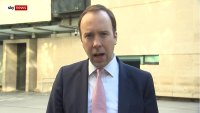
Matt Hancock - 100,000 tests a day target is achievable Once again, the Health Secretary Matt Hancock was tasked with doing the rounds of television studios, updating the public on the government's coronavirus strategy. Concerns have been mounting that the government has not made enough provisions to test people for the virus, especially NHS staff. The government has since announced a target of 100,000 tests a day by the end of April. Sophy Ridge challenged him on these figures, but Hancock insisted the goal was realistic: https://twitter.com/RidgeOnSunday/status/1246709425802526720?ref_src=twsrc%5Etfw SR: The numbers sound great... but on [your] record, is it actually achievable? MH: Yes.

How Keir Starmer’s message was pitch perfect

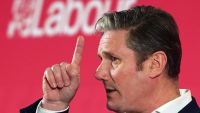
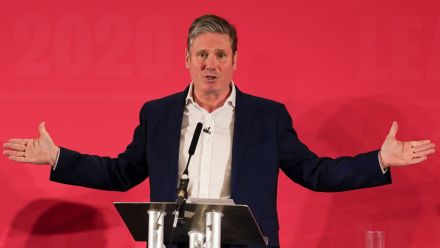
It was not the acceptance speech he could have anticipated making when the campaign for the Labour leadership began many months ago, but it was one Keir Starmer used to define the type of leader he would be during the pandemic, and beyond. Recorded before he was confirmed as Jeremy Corbyn’s successor, Starmer spent most of his speech addressing, not Labour’s electoral crisis, but the national emergency provoked by Covid-19. Significantly, he talked to the country first, rather than his party’s members – 56.2 per cent of whom had just made him leader. Starmer positioned his Labour party as the solution to the country’s current ills Elected promising to reunite Labour, Starmer in his speech highlighted the ties that bind all Britons.

Does Matt Hancock really think banning all exercise is a good idea?

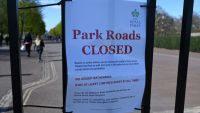
Matt Hancock has threatened that the government will ban all forms of outdoor exercise if a ‘minority’ of people continue to ignore social distancing rules. Ministers had been worrying that this weekend, which is sunny and warm, would see people trying to get around the lockdown by congregating in parks. Yesterday there were reports – not all of them hugely reliable or conclusive – of large numbers of people turning up to their local parks, with police forces dispersing groups and stopping people from sunbathing. Lambeth Council has announced Brockwell Park in London will be closed today after too many people converged on it.

Keir Starmer’s first challenge as Labour leader

As expected, Sir Keir Starmer has been announced as the new leader of the Labour party. The former shadow Brexit secretary won on first preference votes with 56 per cent of the vote to Rebecca Long Bailey on 27 per cent and Nandy on 16 per cent. Angela Rayner has been elected as deputy leader on third preference votes. Starmer quickly emerged as the favourite in the contest after the preferred Corbyn candidate Long-Bailey failed to make an impression. The margin by which Starmer has won means that he has a strong mandate when it comes to his leadership. Privately Starmer's allies have suggested that the clearer his win, the more drastic the change he will try to bring about.

Labour’s website woes

Some in the Labour party were hoping that the end of Jeremy Corbyn’s shambolic tenure as leader today, would usher in a new era of competence for the party, as Keir Starmer takes over. It appears though that some of Labour’s issues might run deeper. Today, the party was set to announce to the world which lucky candidate had won the Labour leadership contest on its website. But it doesn’t exactly bode well that just as Keir Starmer’s victory was set to be announced, the party’s website crashed, leaving anyone hoping to use the Labour party as a source of information in limbo.

Keir Starmer may have a better chance of taking Labour to power than anyone expected

First impressions matter in politics. Once the public have made their mind up about a politician, they rarely change it. This is why the first 100 days in charge are so important for any new leader. Get off to a good start, and everything is possible. Stumble out of the gate and your race is run. Keir Starmer is widely expected to be announced as the new Labour leader on Saturday, but he faces the prospect of having to keep his distance from the electorate for the bulk of his first 100 days. The pandemic means that he won’t have the choices that normally come to the winner. There can be no victory rally, no tour of the country designed to show that there aren’t any ‘no-go areas’ for him — the whole country is a no-go area for anyone who isn’t local.