Politics

Read about the latest political news, views and analysis

The Bank of England’s big coronavirus gamble

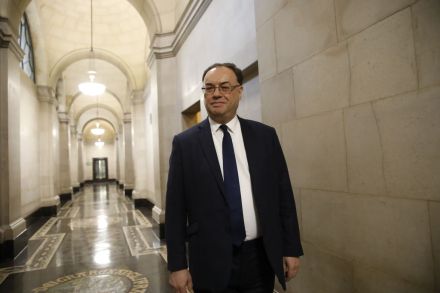
Ten billion here. Twenty billion there. At least we now know where Rishi Sunak is getting all the money from. As of today, the Bank of England has quietly started directly financing the government. Instead of selling gilts to fund the difference between what it raises in taxes and what it spends the Bank is simply going to increase the government's account, normally a relatively trivial £370 million, to what it discreetly describes as an 'unlimited amount'. How much might that be? No one knows, but the final number could easily have ten zeros at the end of it. What is known in the economics textbooks by the rather dramatic name of 'helicopter money' – where the government simply prints lots of cash and chucks it out of helicopters onto grateful citizens – has begun.
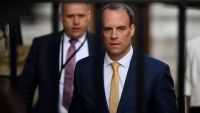
Dominic Raab is the constitutional choice, but a complicated one

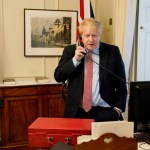
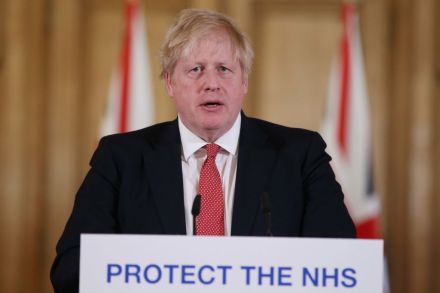
We have never had a moment like this before in our history: a time when the Prime Minister is, in the most personal way possible, fighting the very problem his government is trying to tackle. After Boris Johnson tested positive for coronavirus, he insisted that he would keep leading the government from self-isolation in Downing Street. His determination was influenced by the fact that No. 10 believed that parts of government needed pushing to make sure they delivered; there is frustration in Downing Street about the speed of progress in testing, for instance. But those in virtual meetings with him did worry that he was often coughing, and his performance was not up to his usual standard. When he was admitted to hospital on Sunday, some thought this would allow him to get some rest.

The problems of a sick prime minister

It is good of President Trump to offer Boris Johnson his best wishes and the best American pharmaceuticals (though no doubt Jeremy Corbyn would see this as a prelude to American takeover of the National Health Service). During the second world war, on Boxing Day 1941, Churchill had a minor heart attack after trying too hard to force open a window while staying at the White House. He had addressed the joint Houses of Congress earlier that day. Churchill’s doctor, Moran, did not inform President Roosevelt. In February 1943, however, when he knew Churchill had pneumonia, Roosevelt wrote to him: ‘Please, please, for the sake of the world, don’t overdo these days. You must remember that it takes about a month of occasional let-ups to get back your full strength.

Sunak bails out charities – but are his measures actually working?

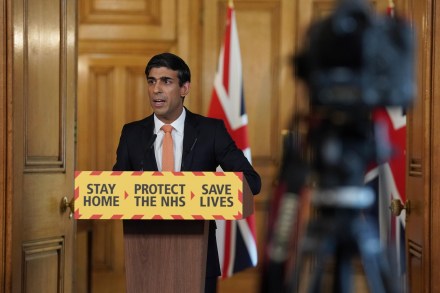
At Wednesday's coronavirus briefing, Chancellor Rishi Sunak turned his attention (and the Treasury’s coffers) to the charity sector, which will receive £750 million to support vital services for the community. The money will be divided between small, local charities working with vulnerable people and charities that provide ‘essential services,’ with Sunak citing St John Ambulance and the Citizens Advice bureau as two examples of potential beneficiaries. The support comes as organisations like Cancer Research announced in recent days that they would have to scale back their medical research due to a projected drop in donations on which they rely to keep their services going.

Will coronavirus usher in a new Conservatism?

15 min listen

The Chancellor ended today's press briefing with the words: 'Our economic plan and the plan for charities we announced today are built on one simple idea: that we depend on each other.' On the podcast, James explains why he thinks coronavirus is the dawn of a new kind of Conservatism.

The unforeseen costs of Covid-19

Assumptions made about the UK’s Covid-19 support packages are starting to unravel. When the Chancellor announced unprecedented spending to tackle the virus, he aimed to keep people in their jobs and mitigate an inevitable economic crash. But unemployment is soaring and the economy is contracting at a rapid pace, with growth figures set to plummet further than they did during the financial crash, and possibly even below that of the Great Depression. Despite the government's measures, the economic effects are being acutely felt – and the Treasury’s coronavirus policies may have spurred on some unwanted activity of another sort.

There is nothing ‘tough’ about beating coronavirus

'Boris is a very tough, very resilient person. … I’m sure he’ll come through this.' That was David Cameron on the Prime Minister. 'I'm confident that he'll pull through because if theres one thing I know, he's a fighter.' That was Dominic Raab. I’m quoting those two simply because they’re the most prominent examples, but there are lots of other people who have spoken of Boris Johnson in similar terms in the last day or so. Those words are well-meant. Both men sincerely wish Johnson the very best, and are speaking as a sign of support and in Cameron’s case, real personal affection. Likewise all the others who have talked about Johnson as 'tough', 'strong', a 'fighter', the sort of person whose personal character will help him 'beat' coronavirus.

The decision Dominic Raab can’t make

12 min listen

One of the biggest decisions in the government's approach to tackling coronavirus is when and how to lift the lockdown. But this is also one of the most divisive issues within Cabinet. With the Prime Minister not yet out of hospital, this will be one of the things that Dominic Raab can't decide in his stead.

Raab stands in for Boris – but he can’t take the biggest decision of all

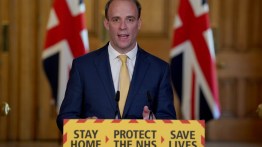
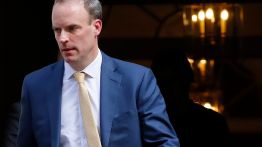
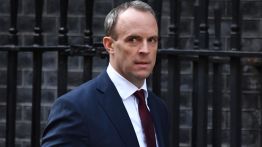
Dominic Raab is a lawyer, not a doctor, by temperament as well as training. He is not a politician who talks about his feelings much. This made it all the more striking to hear him talking about Boris Johnson as a ‘friend’, and his hopes for his recovery. The reassuring news is that Boris Johnson’s condition is stable and he hasn’t required a ventilator. Raab faced a barrage of questions about how him deputising for Boris Johnson will actually work Understandably, Raab faced a barrage of questions about how him deputising for Boris Johnson will actually work. Raab emphasised Cabinet collective responsibility and how they were implementing the plans that Boris Johnson had already set out.

Can the Tories really come together in Boris’s absence?

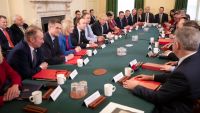
Sympathy for Conservative politicians rarely overwhelms their political opponents. But everyone with the interests of the country at heart (not to mention a modicum of human decency) should try to put themselves in their place. Imagine being a government minister. You are in a crisis like nothing you have encountered before. Unlike every political storm you’ve trudged through, the pandemic has no foreseeable end. A temporary emergency is one thing. Most people are capable of handling short-term privation, and can repeat dozens of clichés about the need to grit our teeth, tighten our belts and keep calm and carry on. But no government in the world has a viable coronavirus ‘exit strategy’.

No. 10’s Trump snub

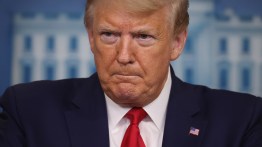
Donald Trump was one of the first world leaders to voice his support for poorly PM, wishing him a speedy recovery and calling Johnson 'a great gentleman'. At last night's White House press briefing, the US President went a step further, telling reporters that he had personally instructed private medical staff to assist Boris Johnson. Trump said: I’ve asked two of the leading companies... They’ve come with the solutions and just have done incredible jobs – and I’ve asked him to contact London immediately. They’ve really advanced therapeutics… and they have arrived in London already. The London office has whatever they need. We’ll see if we can be of help.

The nerve-wracking task of governing without the PM

I had been puzzling about why for most of the past 12 days, until last night, the PM and his advisers had been insisting - in tweets, short videos and statements - that he was still running the show, in spite of the evidence that he was seriously and worryingly under the weather. The answer, which is conspicuous this morning, is that although Dominic Raab has been asked by the PM to deputise for him when chairing important committees, including Cabinet, he is not 'in charge', in the way that a PM appointed by HM the Queen (and a Tory leader elected by Tory MPs and party members) would always be. It is not his fault, but he has no proper mandate. This absence of a conventional leader of the nation is complicated and concerning for two reasons.

Full list: senior government figures affected by coronavirus

Boris Johnson, who has tested positive for coronavirus, was admitted to the Intensive Care Unit of St Thomas' Hospital in London on Monday night, after his symptoms worsened. According to Number 10 officials on Monday, Boris remains conscious and was moved to the ward as a precaution in case he requires ventilation. The Times reports today that he has not been intubated and only needed four litres of oxygen – the normal threshold for intensive care is 15 litres.

The coronavirus crunch leaves Europe facing terrible choices

On February 28, I wrote a piece with a premonition: 'Italy: the crisis that could go viral.' On March 10, I did a follow-up with a more urgent message: 'Italy will need a precautionary bailout—a financial firewall—as the coronavirus pushes it to the brink.' A lifetime has passed since then and the incoming data for Europe and, especially, Italy, is grimmer than anyone could have anticipated. But the framework that guided the economic and financial analysis of my two earlier pieces remains a useful way of tracking this unfolding crisis.

Prime Minister taken into intensive care

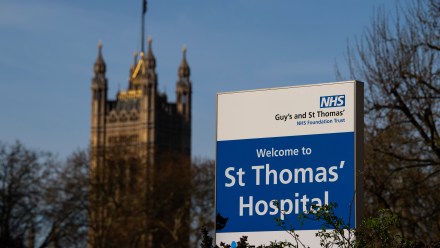
Last night, Downing Street announced that Boris Johnson is now in intensive care at St Thomas’ Hospital after his condition deteriorated. He is not on a ventilator currently but has been moved there in case he needs one.  This is the statement from No. 10: Since Sunday evening, the Prime Minister has been under the care of doctors at St Thomas’ Hospital, in London, after being admitted with persistent symptoms of coronavirus. Over the course of this afternoon, the condition of the Prime Minister has worsened and, on the advice of his medical team, he has been moved to the Intensive Care Unit at the hospital. The PM has asked Foreign Secretary Dominic Raab, who is the First Secretary of State, to deputise for him where necessary.

Dominic Raab kicks coronavirus exit strategy into the long grass

After Boris Johnson's admission to hospital, Dominic Raab tried to use Monday's daily press conference to reassure the public that the Prime Minister was still firmly in charge: 'I can tell you that the PM had a comfortable night in hospital, and he’s in good spirits. He’s still in hospital under observation. He is being given regular updates on developments, and he continues to lead the government. I can reassure the British people that the Government remains united in a single overriding priority, which is to defeat the coronavirus and see this nation through the challenge ahead.' However, the message was complicated by the Q and A.

Who is running the government?

16 min listen

With Boris Johnson currently hospitalised with no sign of release any time soon, Foreign Secretary Dominic Raab is the 'designated survivor'. But at today's press conference, he admitted he hadn't spoken to Boris Johnson since Saturday. So who is running the government?

What will a coronavirus ‘exit strategy’ look like?

At the daily press briefings of senior ministers, the medical and the scientific advisers, there is a reluctance to talk about a timescale for an 'exit strategy' from these unprecedentedly severe restrictions on our freedom to move around and see people - and even to discuss what that strategy might look like. The understandable priority is to get us to commit wholeheartedly to the surrender of these basic rights so that the incidence of the virus can be slashed and many lives can be saved. Among the senior medical and scientific advisers, who seem to be steering pretty much everything right now, any initiatives that aren't about immediate virus suppression are deemed a potentially harmful luxury.