Politics

Read about the latest political news, views and analysis

It’s time to talk about life after lockdown

The government is reluctant to start talking about life after the lockdown for fear of diluting its social distancing message, but just as post-war planning started during world war two, long before the fighting was over, we too should start planning for the post-coronavirus world. The Beveridge report on our social insurance system came out in November 1942, when it was by no means certain we would win. And the Bretton Woods conference, which established the post-war financial system based on the International Monetary Fund and the modified gold standard linked to the US dollar, took place in July 1944. It may seem far-fetched to compare the coronavirus crisis with the second world war, but we can now see that the economic dislocation is potentially on the same scale.
Domestic abuse support needs more than tick-box politics

One of the problems with the political news cycle, whether in normal times or now, is that politicians believe that making an announcement about a policy problem is all they need to do to tick it off their to-do list. The more complex the problem, the more tempting it is to make an announcement that sounds as though you are taking it seriously, but which doesn't do anything to address even one aspect of what's really going on. One of the classic long-term examples of this is social care, which no political party in the past two decades has done enough to address, beyond making announcements about what they might do. Another is 'skills', which few politicians really understand, but which they know is in some vague sense important to those who haven't been to university.

Ursula von der Leyen’s ‘Marshall Plan’ is doomed

Solidarity will be strengthened. Countries will find new ways to co-operate. And Brussels will support the economy, making sure the strong support the weak. European Commission president Ursula von der Leyen is set to unveil the EU's response to the coronavirus crisis, promising a ‘new Marshall Plan’ to prevent the continent plunging into deep recession. It is a nice idea. The financial help offered by Harry Truman’s secretary of state George C. Marshall to rebuild Europe after World War II is rightly credited with salvaging its shattered economy and laying the foundations for half-a-century of peace and prosperity. The trouble is, the reality is nothing close to the rhetoric.

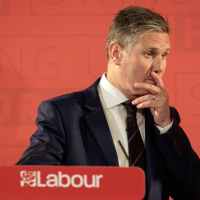
Keir Starmer’s coronavirus gamble

13 min listen

Keir Starmer has written to the government to demand that they publish detailed criteria on what would be enough to lift this lockdown. It's his first offensive as the leader of the Opposition in the current crisis, but it's not a move that has been welcomed by all on the left. So how shrewd is his gamble?

The UK will not request an extension to the Brexit transition period

David Frost, the Prime Minister’s chief Brexit negotiator, has held discussions with the First Secretary of State Dominic Raab and other senior ministers in the last few days. As I say in tomorrow’s Spectator, the conclusion of these discussions has been that the UK will not request an extension to the transition period. Interestingly, I understand that no one in these discussions backed asking for an extension. The thinking is that a delay would not solve the fundamental policy problems and that a deal is either possible or not. Another factor, I understand, is that the government worries about the cost of any extension.

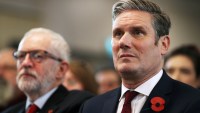
Keir Starmer is the conservative we need in this time of crisis

These are discombobulating times. A deadly pandemic; the United States at sea, China belligerent and the EU at war with itself. British politics was in flux before the virus hit. Now it is vertiginous. The Tory party, long seen as the guardian of the status quo, has been forced to change tack as it deals with the fallout. Keir Starmer, recently elected as Labour leader, will play a vital role in this realignment – but not one we would once have envisaged. Starmer’s election as Labour leader in the midst of coronavirus is a good thing. He is the anti-Corbyn for a Labour party looking for calm and stability after almost five turbulent years. He is the definition of the establishment technocrat in an age of populists.

Keir Starmer’s coronavirus gamble

After promising to work constructively with the government to tackle coronavirus, Keir Starmer has this morning gone on the offensive. The Labour leader has written to the de facto deputy Dominic Raab calling on him to publish the outline of the government's exit strategy. Ministers have repeatedly refused to discuss any easing of the lockdown publicly on the grounds that it is counter-productive to do so until the death rate has begun to fall. Starmer disagrees – and says the public deserves to know the 'principles and approach' driving the work going on behind the scenes on the exit strategy while also citing the long term effect of school closures on inequality in the UK.  Starmer has so far succeeded in winning criticism from all sides for his intervention.

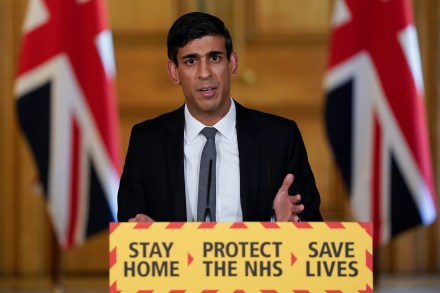
Rishi Sunak tries to calm coronavirus crunch fears

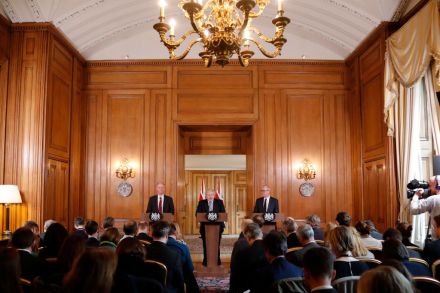
Following Tuesday's bleak headlines over the effect the coronavirus lockdown could have on the economy, the Chancellor attempted to strike an optimistic note in the daily government press conference. With the OBR projection suggesting three months of lockdown followed by a partial easing could lead to the UK economy shrinking by 35 per cent, Sunak said that while the prediction was worrying the figures were in some ways unsurprising as these are unprecedented times. However, the Chancellor stressed that it was simply 'a possible scenario' and it 'may not even be the most likely'.  Sunak said the important takeaway is that the economy would likely 'bounce back quickly' once measures are lifted.

Austerity may be back – whether Boris Johnson likes it or not

It just keeps on getting worse. Like the death toll from Covid-19 itself, forecasts for the economy in the wake of the crisis keep on creeping upwards. Today, the Office for Budget Responsibility (OBR) forecasts that UK GDP could contract by 35 per cent by June if the lockdown continues until then, before 'bouncing back quickly'. Unemployment could rise, it says, by two million, with the unemployment rate climbing to 10 per cent. That is quite a shock given that on the eve of this crisis we were celebrating the highest employment ever and the lowest unemployment in 45 years. The 35 per cent contraction is making all the headlines today – as well it might.

Labour’s leaked report has forced Starmer’s hand

It was all going so well for Sir Keir Starmer. He won the Labour leadership handsomely, appointed a fresh shadow cabinet, and was riding a wave of blessed non-scrutiny thanks to Covid-19. He had begun to make amends to the Jewish community for his party’s racist vendetta against them and there was a solid chance that political correspondents would learn how to spell his name. Then, it leaked. An 860-page dossier prepared in the final months of Corbyn’s tenure which, going by the reports of those who have seen it, essentially exculpates the party of mishandling anti-Semitism charges. It says these complaints were not treated differently, a central allegation made by whistleblowers who spoke to Panorama.

OBR analysis reveals staggering impact of Covid-19 on UK economy

Just days after the Office for Budget Responsibility announced its economic forecasts in March, the reality of Covid-19’s impact on the UK economy sunk in, and its projection was rendered completely obsolete. A month later, with a clearer picture of the toll the virus and lockdown have taken, the OBR today released its new coronavirus analysis, showing a staggering 35 per fall in real GDP in the second quarter, and an unemployment spike of up to 10 per cent – that is, 2 million additional people out of work.

What pandemic? Labour finds a way to keep talking about itself

There's nothing like a national crisis to get your priorities in order. With the coronavirus death toll in the UK passing 10,000 this weekend, one government adviser has said Britain could be on course to be the worst performing country in Europe when it comes to overall fatalities. So, surely this is the issue on which the Labour party has spent the bank holiday Monday campaigning? Actually, no. Instead, Labour bods – and new Labour leader Keir Starmer –  have busied themselves with their favourite topic of old: internal party politics. A seemingly leaked internal report alleges that anti-Jeremy Corbyn sentiment within Labour thwarted the party's effort to tackle anti-Semitism.

Is the UK on track to be Europe’s worst hit country?

18 min listen

On the Andrew Marr Show today, Sir Jeremy Farrar, a senior scientific advisor on the government's scientific advisory group Sage, warned that the UK is on track to become one of the worst hit countries in Europe by coronavirus. So has the British government been too slow in its response?

Where is the vigorous debate about our response to Covid?

After a career as a scientist and clinical academic, I have been struck by how often they (we!) have very complicated and exceedingly well-reasoned ways of getting things quite wrong. That’s why I have always thought it best for the recommendations of experts to have ‘advisory’ status only. Experts’ roles are to examine the minutiae of a small subject area – with a view to gaining or advancing understanding. It is the job of our politicians and civil servants to develop appropriate policies.  Experts can be guilty of being monomaniacs, interested only in the thing they are studying. That’s understandable, of course, because many of these things are hard to comprehend.

Boris Johnson leaves hospital – and heads to Chequers to recover

Boris Johnson has been discharged from hospital. After being moved out of intensive care on Thursday, the Prime Minister is now well enough to leave hospital to begin his recovery at Chequers. A No. 10 spokesman said: The PM has been discharged from hospital to continue his recovery, at Chequers. On the advice of his medical team, the PM will not be immediately returning to work. He wishes to thank everybody at St Thomas’ for the brilliant care he has received. All of his thoughts are with those affected by this illness. On the release of the news, Johnson's fiance Carrie Symonds took to social media to thank NHS staff. She said 'there were times last week that were very dark indeed'.

Easter Sunday puts the trade-offs of the lockdown into perspective

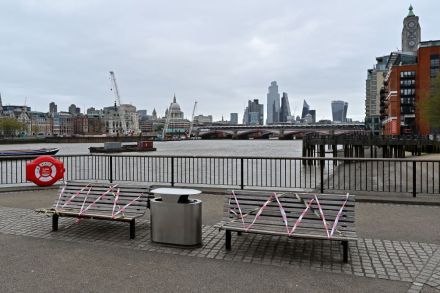
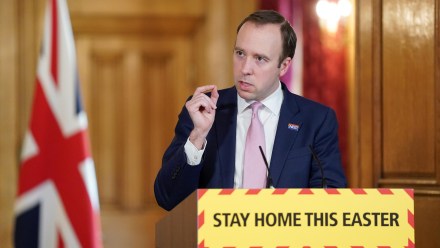
Perhaps today, more so than any day before it, we understand the trade-offs of this lockdown. An Easter Sunday that would normally be spent with loved ones will be spent by many people alone. Churches are a no-go zone. Friends who live down the street feel miles away. Family traditions and big meals are, at best, shared together on video apps – for others, they’re on hold until next year. These are the harsh realities of the lockdown, designed to slow the spread of a deadly pandemic. But the vast majority of us understand why it’s so important to stay inside right now – and are willing to keep doing so.