Politics

Read about the latest political news, views and analysis

Keir Starmer’s PMQs performance was painfully wooden

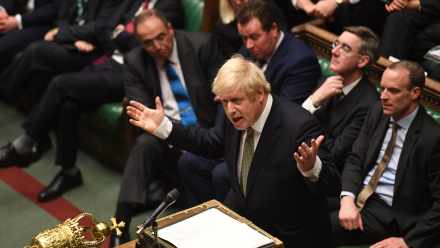
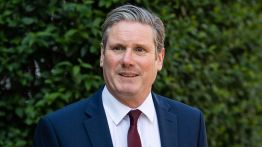
‘Such happy news amid such uncertainty’. The Speaker began PMQs with this tribute to Carrie and Boris’s baby. But his talk of ‘happy news amid such uncertainty’ might have referred to MPs tuning in via webcam whose living areas have been denuded of clutter. Last week, viewers got an eyeful of their MPs’ soft furnishings which proved a major distraction from politics. Honourable members have now realised that their utterances are much less interesting than their wallpaper. Today most of them appeared in plain white surroundings. Cheryl Gillan, a rare exception, had set up her camera in what looked like a magical grotto decorated with turquoise box-files. The first secretary, Dominic Raab, was quizzed by Sir Keir Starmer.

The SNP is using Covid to bury bad news

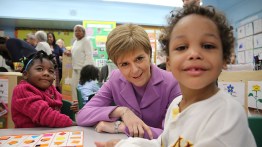
This, everyone agrees, is no time for politics as normal. We are – all of us – engaged in a great national struggle. Partisanship is for yesterday and tomorrow; these are different times and the ordinary rules of politics have been suspended. Even so, the occasional green shoot of normality can still be seen and for some of us this is a joyous thing indeed. So yesterday I was delighted to see the Scottish government announce that an inconvenient and controversial review of Scottish education, due to be led by officials from the OECD, will not report its findings until June 2021 at the earliest.

It’s no bad thing that the airline industry will never be the same again

British Airways is laying off 12,000 staff. Virgin Atlantic is desperately looking for a buyer. Air France-KLM is being bailed out by the French and Dutch governments, Lufthansa is getting rid of planes, and Airbus is furloughing workers. The once mighty airline industry is in terminal trouble, with massive state support now required to keep it alive. Rishi Sunak hasn’t stepped in with his chequebook yet, but, heck, it is only Wednesday and it is probably somewhere on his ‘to-do’ list for the week. But hold on. Sure, we want to rescue most industries and bring them back to life as soon as practically possible.

The complicated question of Boris’s paternity leave

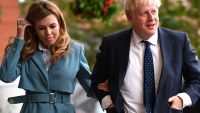
Earlier this month Boris Johnson was in hospital fighting for his life, this morning he was there for the arrival of new life: his partner Carrie Symonds gave birth to a healthy baby boy this morning. David Cameron took paternity leave when his daughter Florence was born in 2010 and Tony Blair took a ‘paternity holiday’ when his son Leo arrived in 2000. But the timing of this birth, in the middle of a national crisis, undoubtedly complicates the question of Prime Ministerial paternity leave. This is particularly the case given that Boris Johnson’s rapid return to Downing Street post-hospitalisation was driven, in part, by frustration that things weren’t happening at what he thought was the necessary pace in his absence.

Why the furlough scheme needs to be redesigned

The road to that unmentionable destination, the lockdown 'exit', is long and will take at least nine months. Which means economic recovery will be longer still. And that requires the Chancellor to plan now to make the decline and recovery as benign as possible. Probably the most important economic therapy (and certainly the most expensive) has been the Coronavirus Job Retention Scheme, which has persuaded hundreds of thousands of businesses to retain millions of employees on their books, rather than sacking them - but which urgently needs a redesign for the next phase. That is what business leaders and some ministers tell me. And they have a point. There are three issues of concern.

Now who’s cherry picking, Michel Barnier?

Donald Tusk just couldn’t resist. It was September 2018, and an informal European Council summit was taking place in Salzburg. As the leaders relaxed after lunch, someone snapped a photo of Tusk offering a tray of small cakes to the then British prime minister, Theresa May. Tusk posted the picture to his Instagram with the caption: ‘A piece of cake, perhaps? Sorry, no cherries.’ The joke/dig (depending on your point of view) worked because everyone knew what was being referred to. Ever since Article 50 had been triggered in March 2017, the British side had been attempting to ‘cherry pick’ – to try and gain the advantages of EU membership (in particular frictionless access to the single market) without the obligations or constraints of membership.

The Commons speech that deserves to be heard

Every now and then, the House of Commons sees one of those speeches, a moment when an MP, generally a backbencher, speaks with power and clarity and honesty. Speeches that deserve to be heard far beyond parliament, partly because of what they say and partly because of how it’s said. Speeches that give politics a good name. Often these speeches are from relatively new MPs, people who have not yet established their name or reputation beyond the narrow confines of Westminster. A few years ago, Johnny Mercer, then a new member, made one of those speeches when he spoke about his combat experience in Afghanistan. More recently, Rosie Duffield last year brought the Commons to a standstill speaking about her experience of domestic abuse.

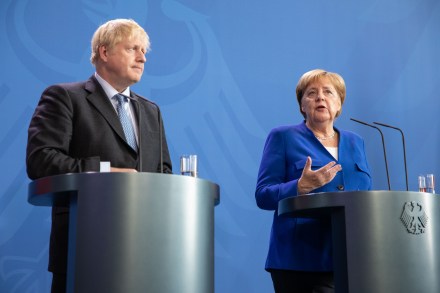
A warning from Germany on lockdown easing

Those ministers hoping Boris Johnson's return to work will herald an imminent easing of lockdown measures face an uphill struggle. With the Prime Minister meeting colleagues this week to solicit advice before deciding which restrictions can be eased, news from Germany is likely to bolster those arguing for a more cautious approach. Only a week after its easing began with the reopening of shops and schools, Germany may have to re-tighten its lockdown because the virus is spreading too fast. The country’s virus reproduction rate – measuring how many the average person with Covid-19 infects – has increased to 1.0. Any value above 1.0 is seen as leading to an exponential increase in infections. Angela Merkel has said a rise to 1.

Will coronavirus make politicians fix social care?

14 min listen

Social care has always been a difficult issue for incumbent governments in recent years. The coronavirus pandemic brings this to the fore. As ONS figures show that more than 5,000 deaths have happened in UK care homes in April, Cindy, James, and Katy discuss what this means for future social care policy on the podcast.

In defence of political journalists

It is open season on the Lobby. Social media is full of condemnation for political correspondents over the questions they ask at the daily coronavirus briefing. Polling, private and public, shows that UK trust in media reporting has suffered badly in this crisis. Ministers and officials privately rage about the quality of reporting on much of the coronavirus story. Downing Street has decided to surf that wave of irritation by asking members of the public to submit questions too. That’s a smart move, but one that will come at further cost to the standing of the Lobby in particular. I held a Lobby pass between 2001 and 2017, though I stopped being a regular reporter based in the Palace of Westminster in 2014. The Lobby drove me mad, possibly, for a few months, literally.

Is Britain’s coronavirus response bogged down in bureaucracy?

The NHS has rightly been praised for its response to coronavirus. But it still isn't quite the model of efficiency it could be. And there remains a problem with how British medical bureaucracy is handling the treatment of hospitalised Covid patients.  Hard-pressed consultants are reportedly being forced to swap news in WhatsApp groups about possible cutting-edge treatments. These doctors are desperate for information which may help their Covid patients in hospital either stay out of intensive care or, if unlucky enough to be in ICU, improve the 50/50 odds of life or death once on ventilation. Why? It seems likely that doctors are forced to innovate off the record because of the bureaucracies we're all too often lumbered with in the medical world.

The Lib Dems’ Ramadan stunt is spectacularly bad politics

For those of you not following the minutiae of the Liberal Democrat party at the moment, which I imagine is almost all of you, Ed Davey is leading many members of his brigade, MPs and councillors, to fast for Ramadan. Your first question here should be: why exactly? Has Ed Davey and many other Lib Dems converted to Islam? Well, no. They appear to be doing it as some sort of solidarity gesture with British Muslims. In the tweets and videos on the subject, they keep referring to 'showing Muslims they aren’t alone' in what they are doing. This is a bad idea for a lot of reasons and instructive of how, months after running the most disastrous political campaign in history, the Lib Dems are bad at politics fought anywhere other than the local level. https://twitter.

Boris is right to talk about the coronavirus as a mugger

Is the SARS-CoV-2 virus comparable to a man who accosts you in the street and tries to steal your phone and wallet? Boris Johnson used the image of virus-as-mugger in his Downing Street statement today: If this virus were a physical assailant, an unexpected and invisible mugger, which I can tell you from personal experience it is, then this is the moment when we have begun together to wrestle it to the floor.And so it follows that this is the moment of opportunity. This is the moment when we can press home our advantage.It is also the moment of maximum risk because I know there will be many people looking now at our apparent success and beginning to wonder whether now is the time to go easy on those social distancing measures.

Rishi Sunak to give 100 per cent guarantees on business loans

There's a confident expectation among those in government and banks that Chancellor Rishi Sunak will offer 100 per cent guarantees on emergency loans to small businesses. But last week the chancellor stated categorically that the 80 per cent government guarantee for the Coronavirus Business Interruption Loan Scheme (CBILS) would not be changed (which the Prime Minister's official spokesman also confirmed last week). The squaring of the circle, to be at least hinted at later today, is that the Treasury will launch a new loan scheme for smaller businesses, with 100 per cent government guarantees, rather than modifying the existing scheme. The economic impact of this new scheme would be the same as modifying CBILS. Though the politics may be easier for Sunak.

Boris Johnson’s new approach to lockdown easing

The Prime Minister is back at his desk in No. 10 today and kicked off his first full working day since his coronavirus hospitalisation with a statement to the nation. Addressing cameras outside 10 Downing Street, the Prime Minister paid tribute to First Secretary of State Dominic Raab for leading the government in his absence and the general public for adhering to social distancing. He said here were clear signs to suggest the country is 'passing through the peak' and heralded the achievement of the NHS not becoming overwhelmed in this period. But going forward, Johnson urged caution. He confirmed reports over the weekend that the UK is nearing the end of the first phase of its response to the virus. Despite this, people ought not to expect a sudden lockdown easing.