Politics

Read about the latest political news, views and analysis

New polling: Public braced for higher unemployment and no Christmas parties

One of the great Cameron legacies has been an era of very low unemployment. In his biography, the former PM cited two defining moments of his teenage years; the first was getting caught smoking weed at Eton and the second was reading the 1982 IEA pamphlet ‘What cost unemployment?’. While Cameron avoided many of the radical policies that emanated from the free market think tank, he did adopt one of the central tenets of the paper: that those in work should be better off than the unemployed. By the time he left office in the wake of the 2016 referendum, UK unemployment sat at just 5 per cent. When Boris Johnson took over in July last year, the number of people out of work was half what it was at the height of the financial crisis.


Diane Abbott’s platform sharing paradox

How do you share a platform without sharing a platform? Step forward Diane Abbott, Schrödinger’s anti-racist, to explain this feat of quantum Corbynism. On Wednesday, the former shadow home secretary and colleague Bell Ribeiro-Addy participated in a virtual meeting of the continuity Corbyn group 'Don’t Leave, Organise'. Also taking part were expelled Labour members Tony Greenstein and Jackie Walker as well as prominent anti-Zionist activists and others who have sought to minimise the extent of Labour’s anti-Semitism problem. The Jewish Chronicle reports that one participant said Ken Livingstone, who claimed Hitler ‘was supporting Zionism’, had been ‘expelled from the party for saying in truth a historical statement’.

Could ‘Boris Bonds’ be the answer to Britain’s coronavirus recession?

Do Alan Clark's diaries have a lesson for us about Boris Johnson's ability to continually defy the odds? In his entry of 7 April, 1982, Clark wrote about the whiff of mutiny in the air among Tory grandees towards Margaret Thatcher at the time of the Falklands War: 'It is monstrous that senior Tories should be behaving in this way. It is only on occasions such as this that the implacable hatred in which certain established figures hold the Prime Minister can be detected…If by some miracle the expedition succeeds they know, and dread, that she will be established for ever as a national hero…The greater the humiliation…the greater the likelihood of a lash-up coalition, without a general election, to fudge things'.

How did Matt Hancock hit his 100,000 test target?

Matt Hancock has announced that the government has managed to meet its 100,000 coronavirus tests a day target. The Health Secretary confirmed at a Downing Street press conference that on 30 April, Public Health England carried out 122,347 tests – suggesting the government not only reached its target in time, but also over-delivered. But look at the small print and there were barely 73,191 people tested yesterday. There is another mysterious second category, now introduced, that takes the figure over 100,000. Here's the graph: So what's the trick?

The fall of Margaret Thatcher: a Whodunnit

46 min listen

Charles Moore recently published Herself Alone, the final volume of an authorised biography of Margaret Thatcher. When writing, he realised that the story is half-tragedy, half-Whodunnit. Many of those involved in her fall had a motive. This podcast is a narrative of the events leading up to Mrs Thatcher's fall, voiced by Charles Moore and Kate Ehrman, who assisted with all three volumes of the biography.

Why Covid cuts are off the cards

How will the UK recover after lockdown? Although social distancing is expected to continue for months, talk has turned to how the government will deal with its coronavirus debts. The Treasury is seeking to raise £180 billion over the next three months to meet its pledges – putting the UK on course to see its budget deficit rise to a level never seen before in peacetime. Some estimates put borrowing this financial year at over £300 billion, far outpacing the years following the financial crash. This has led a number of public figures to predict a return to the Cameron and Osborne era with mass cuts in the years ahead.

How the lockdown could be relaxed

We'll get a fairly detailed plan from the PM next week encouraging businesses to start operating again, public transport to increase its shrunken capacity, and children to return to school. But there'll be no firm date for any of that to happen – only a condition that even such modest returns to normal life must not risk a dangerous resumption of rapid viral spread. The transport and schools stuff is hardest, because social distancing on a train or on the London Underground is not going to be easy to organise, and keeping young children far enough apart to prevent infection will also be tricky.

The way out: what is the Prime Minister’s exit strategy?

37 min listen

James Forsyth writes in this week's cover piece that the government 'is going to go South Korean on the virus'. In other words, test, track, and trace. But as James points out, this raises the obvious question of why we weren't doing this already. On the podcast, Cindy Yu talks to James and the Economist's Adrian Wooldridge. Adrian argues that the West is too slow at learning the lessons of elsewhere in the world, a costly mistake as Asian states like Singapore offer instructive lessons in governance. As this global pandemic lays bare the differences of national approaches, it's a timely discussion.

Boris Johnson sets the bar for any lockdown easing

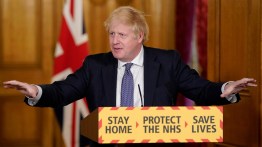
The Prime Minister used his appearance at the daily government press conference to confirm that the UK is past the peak of coronavirus infections. However, those hoping for a rapid easing of the lockdown are to be left disappointed. Johnson spoke of the need to avoid a second peak and promised a menu of options to be unveiled next week. He said that this would still not include specific dates as any easing will depend on infection data. As James says in this week's Spectator cover piece, data will be crucial to informing these decisions. The underlying principle that will guide these decisions: the rate of infection – also known as the 'R' rate.

Lockdown sceptics might be wrong, but let’s still listen to them

Does Laura Perrins want me dead? The conservative commentator is coruscating about the government’s Covid-19 response. She abhors the lockdown and demands it be lifted immediately. 'This lockdown and the extension on the 7th is the biggest error in British politics since WW1,' she says. I am in the ‘at high risk’ group three times over and would quite like to go on living, if you don’t mind.  I follow Perrins on Twitter because, although we agree on almost nothing, I like to hear what the co-editor of the Conservative Woman thinks about the affairs of the day. In recent weeks, however, my finger has hovered indignantly over the ‘unfollow’ button as she has inveighed against the policy intended to keep people like me alive.

We crave certainty over Covid-19. There isn’t any

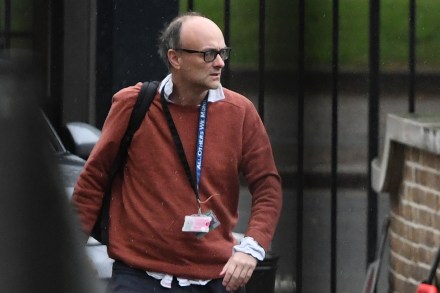
One of the strangest developments to have occurred during this very strange time is that the Prime Minister’s special adviser, Dominic Cummings, may have attended a meeting of some people. Worse, various politicians are suggesting that he may have actually said something at this meeting. Very senior people are insisting that if Mr Cummings did say something at this meeting, even if we have no idea as to what it was he said (‘Can you fetch the Gummy Bears please, Mary, I think this going to be a long one’ or ‘Sorry, Zoom is on the blink again’), then he shouldn’t have done so. The Prime Minister’s special adviser attending a meeting! I think of all the various calumnies which have occurred during this crisis, this is by far the gravest.

China’s coronavirus cover-up shows it can’t be trusted

'Hide your capacities, bide your time', China’s former leader, Deng Xiaoping, famously once said. Few in the West understood what he meant then. But they understand it today. The coronavirus outbreak has brought home the reality that China does not play by global rules. It’s time for countries committed to open, liberal democracy, free trade and free markets to accept the reality that China is not a partner but a strategic competitor. The coronavirus cover-up of the emergence of the disease might even have included lax standards in laboratories as the US Embassy had complained of.

Boris Johnson’s cautious path out of lockdown

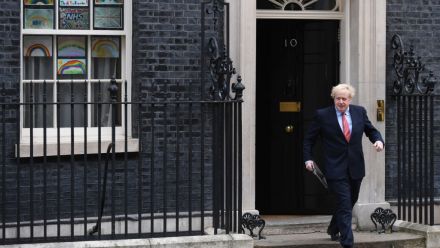
Ever since Boris Johnson was admitted to hospital on 5 April, the government has been in a holding pattern. No big decision could be taken without the Prime Minister, but he was in no position to make one. He is now back at work, though, and has a plan for what to do next. Put simply, it is to drive the coronavirus transmission rate — the reproduction number, or ‘R’, which shows the expected number of infections directly generated by one case — down as low as possible and then stay on top of it through a ‘track, trace and test’ approach. In other words, the government is going to go South Korean on the virus. This raises the question: why wasn’t this the strategy all along?

Rishi Sunak must stick to his guns

Was the Chancellor wrong to guarantee only 80 per cent, rather than 100, of ‘coronavirus business interruption loans’ to keep small- to medium-sized companies afloat? Rishi Sunak’s announcement this week of fully guaranteed micro-loans for the smallest companies seeking to borrow up to £50,000 was reported as a partial climbdown in the face of pressure from the CBI and many of his own MPs to do away with the on-risk slice of the larger scheme, which provides loans of up to £5 million through 40 accredited banks — but which many would-be borrowers have claimed is a bureaucratic nightmare. Readers certainly confirm that picture.

Could Remdesivir eliminate the need for a coronavirus vaccine?

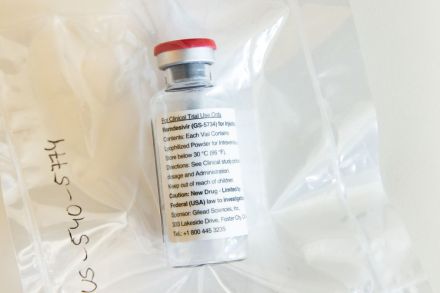
Over the past few weeks the government’s scientific advisers have indicated that the only real way out of the coronavirus crisis is a vaccine – until then a high degree of social distancing will have to remain. Given that no-one expects a vaccine to be ready for deployment for another year at the very earliest, this would have very serious implications for the economy, and for society at large. But there is another possible route out of social distancing – not so good, but possibly available a lot more quickly. This is for an effective therapeutic drug to emerge. It would not stop anyone contracting the virus but could improve the prospects for those who do catch it.

Why shouldn’t Cummings attend SAGE?

One of the key committees advising the government is SAGE — the Scientific Advisory Group on Emergencies. At the weekend, there was a rumpus after the Guardian reported that Dominic Cummings had been present for some of its meetings; though given the enormity of what was being discussed there would have been problems if no one from Downing Street was at these meetings. Last night, Bloomberg reported on the SAGE meeting of 18 March. Alex Morales and Suzi Ring wrote that Dominic Cummings had at that meeting raised questions, including asking ‘why a lockdown was not being imposed sooner’.