Politics

Read about the latest political news, views and analysis

Keir Starmer made life difficult for Boris Johnson at PMQs

17 min listen

It's the first head to head between Boris Johnson and the new Leader of the Opposition. Unlike more normal times, Boris couldn't rely on a large parliamentary presence of Tory MPs to booster him from the green benches. Instead, as James Forsyth explains on the podcast with Katy Balls and John Connolly, Keir Starmer actually made life a little difficult for Boris Johnson.
Keir Starmer’s big weakness is his kindness

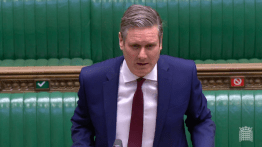
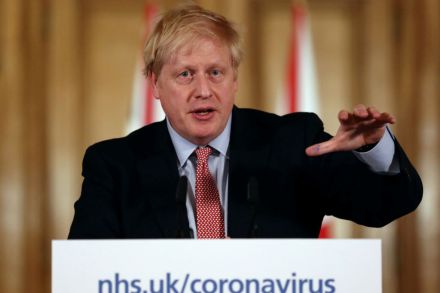
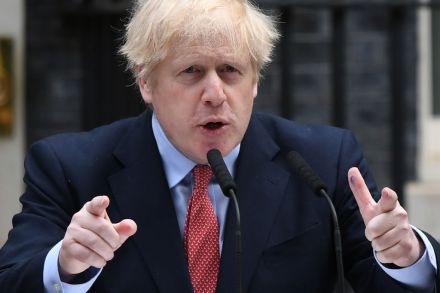
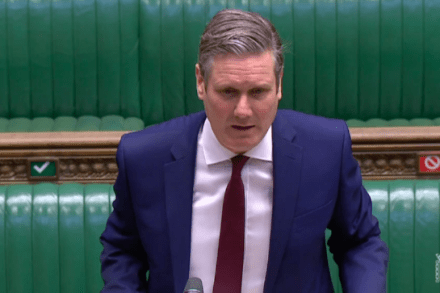
PMQs began with a tribute from Speaker Hoyle who seemed thrilled to see Boris back at work and in Bunterish good health. ‘The whole country is delighted at his recovery,’ he added. A quick trawl thorough Twitter would disprove that optimistic claim. Sir Keir Starmer, in his debut against Boris, asked how the government could claim ‘success’ against Covid-19 when Britain is filling more coffins than any country in Europe. Boris wriggled a bit and said international comparisons were unreliable. Sir Keir held up a coloured graph showing a range of mortality-rates across the continent. ‘The government has been using slides like this,’ he said. Then he asked about the numbers dying in care-homes.

How will Rishi Sunak roll back the furlough scheme?

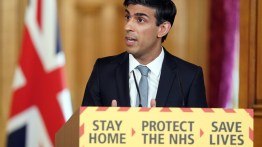
Just weeks ago, Chancellor Rishi Sunak claimed that widespread use of the furloughing scheme was proof of its success. But it appears the government has over-achieved. The Treasury’s original prediction was that 10 per cent of businesses would use the salary safety net; the figure has turned out to be closer to 70 per cent. The cost for just one month of the scheme is estimated to be £8 billion, only £3 billion less than the NHS’s monthly budget. ‘We’re not talking about a cliff-edge but we have to get people back to work.’ says Matt Hancock, the health secretary. ‘We’ve got to wean off it.’ After telling ITV early this week that the scheme was ‘unsustainable’ for the long-haul, Sunak is changing tack.

Keir Starmer made life difficult for Boris Johnson at PMQs

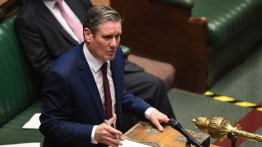
Keir Starmer got his first chance to take on Boris Johnson at PMQs today. There was no moment that will lead the evening news, but the new Labour leader did make Boris Johnson uncomfortable at times. When Starmer asked why the UK had moved away from contract tracing and testing in mid-March, Boris Johnson gave a long, rather rambling answer. But it is increasingly clear that this happened because the UK simply did not have the capacity to do this at the required level. Given that this is the case, the government would do well to be explicit about it In a further sign of how lacking the UK’s testing capacity was before this crisis hit, Boris Johnson announced a new target of 200,000 tests a day by the end of the month.

Is it ‘speculation’ to say the UK has the most deaths in Europe?

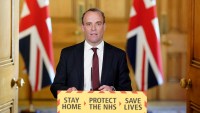
It's a grim news week for the government with Dominic Raab announcing in Tuesday's press conference that the UK coronavirus death toll is now at 29,427 (ONS figures suggest the number of deaths is as high as 32,313). This means that according to official figures from each country, the UK has overtaken Italy in fatalities and currently has the highest death toll in Europe.

The tragic case of Damian Holland

Damian Holland, the former district Crown prosecutor for Luton and Bedfordshire, died in his bed at home in Chorley, Lancashire of Covid-19, just over a week ago. He was 56. His sister, Caroline Heaton, brother, Gregory Holland, and cousin, Chris Hughes, told me about the events leading up to his death. They believe he was let down by the NHS he revered, and in particular the NHS 111 gateway service to hospital. The story they tell of Damian’s final two weeks is upsetting and troubling. This is what happened: On 14 April, Damian went into isolation, having displayed Covid-19 symptoms, along with his partner Shirley Harwood, who works at a care home and also had symptoms.

Why Neil Ferguson’s position was untenable

16 min listen

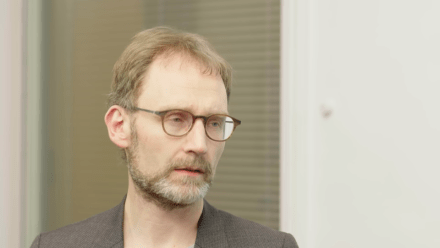
The leading epidemiologist from Imperial College London, who has been influential in the government's decision to impose a lockdown, has resigned. The Telegraph broke the story on Tuesday evening that Neil Ferguson had been visited at least twice by his lover. On the podcast, Cindy Yu discusses with James Forsyth and Katy Balls whether he had to go.

Do antibodies deliver immunity to coronavirus?

Assume an alert flashes on your NHSX Covid-19 tracking app that you've been in contact with someone who has the virus. This means that you and those you live with are supposed to self-quarantine for 14 days (not seven). Now if you have symptoms, you would be allowed to have a test to ascertain whether you do in fact have the virus. But you would not be allowed a test if you don't have the symptoms; you just have to sit at home and see if you develop symptoms. So if you are unlucky enough to constantly be bumping into people with symptoms, you could find yourself in a new steady state of repeated 14-day household lockdowns.

Boris needs to start treating Brits like adults again

It turns out that the biggest problem associated with lockdown hasn’t been the ‘covidiots’ – that tiny minority of people who ignored social distancing measures – but the ‘hunker in the bunker’ brigade who, after six weeks of house arrest, can barely envisage ever returning to normal life. Opinion polling shows the UK has one of the most risk averse populations in the world when it comes to the notion of restrictions being lifted. Nearly three quarters of us say we will be ‘very nervous’ about leaving home when limitations on our movement are removed, according to Ipsos Mori.

The perverse world of immunity passports

Usually, if a government is reported to be working on a new policy reliant on sweeping new – largely untested – surveillance technology, we’re in the world of sci-fi or dystopias. At a minimum, we would expect the rollout of state surveillance to be the central issue at play, the focus of debate and objections, at the heart of a major national conversation. It says a lot, then, that even for many of us concerned about civil liberties, that when it comes to so-called 'immunity passports' these concerns – though serious – are largely secondary. That’s how significant an issue such a document could become.

How the government plans to respond to ‘vaccine nationalism’

Is the only route back to normality through a coronavirus vaccine? That's what the Prime Minister will suggest today when he addresses the virtual Coronavirus Global Response International Pledging Conference. With the conference aimed at driving forward a collective global effort for a vaccine, Boris Johnson will say only a mass-produced vaccine will truly defeat the virus:  'To win this battle, we must work together to build an impregnable shield around all our people and that can only be achieved by developing and mass producing a vaccine.' A vaccine is viewed as the simplest route out of the pandemic. As a result, every country is interested in finding one – with larger, richer countries throwing resources at their own national effort.

The problem with immunity passports

Could we see 'immunity passports' in Britain? Ministers are reportedly discussing them as a route out of lockdown. According to today’s Guardian, the UK tech firm Onfido is in discussion with ministers about creating a ‘digital certificate’ that would be issued to those who have already been infected with coronavirus – who are presumably more immune – so they could return to some resemblance of normal life, including heading back into work.

Is the PM an example of why those with Covid-19 should be hospitalised earlier?

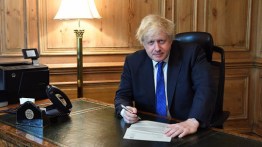
There is so much to ponder in the prime minister's interview about how Covid-19 almost killed him. But, in respect of the effort to protect us all, what stood out for me was how and when he was persuaded to move from Downing Street to St Thomas's Hospital. ‘I wasn't struggling to breathe but I just wasn't in good shape and it wasn't getting better,’ he told the Sun on Sunday. ‘Then the doctors got anxious because they thought that my readings were not where they wanted them to be. ‘Then I was told I had to go into St Thomas's. I said I really didn't want to go into hospital...

Sunday shows round-up: Work times may be staggered, says Transport Secretary

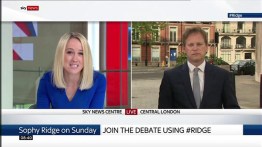
Grant Shapps - Raw mortality figures don't tell the whole story Sophy Ridge's first guest this morning was the Transport Secretary Grant Shapps. There have been over 28,000 deaths attributed to Covid-19, now that the government is including figures from care homes and the wider community. Ridge confronted Shapps with comparisons of known mortality figures in other countries, pointing out that the UK was poised to become second only to the United States in the total number of deaths. Shapps argued that there is not enough data available at this stage to say whether the UK is faring objectively worse than other countries: https://twitter.com/RidgeOnSunday/status/1256878786236370944?ref_src=twsrc%5Etfw SR: The objective of this government is to save lives... Haven't you failed?

In defence of the Isle of Wight’s suitability for tracking and tracing

A reply by the Isle of Wight's MP to Freddy Gray’s: Is the Isle of Wight really the best place to launch a tracing app?Dear Freddy, You have written disparagingly about the Isle of Wight, its tech and a little bit about its identity. You said the internet was 'rubbish' and that we live in the 1980s. I would like to challenge that. The internet really does work here. I am aware there’s black hole of sorts in Seaview, where you sometimes stay. However, that is atypical of the Island. I have had Sky’s Adam Boulton, no less, congratulate me on the quality of my connection and I live six fields from the sea, behind a down, in the remote southwest of the Island known as ‘the Back of the Wight’.

The poetry of ‘Ambulances’

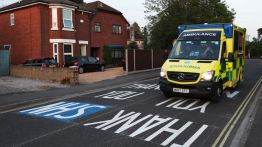
The visible face of this virus, for most of us, is the ambulances. All else that we see – empty streets, spaced out queues, face masks, rainbows in windows – is secondary. Only the ambulances tell of the disease itself. They are the eerily siren-less blue flashing tips of the iceberg. So I am surprised that Philip Larkin’s poem ‘Ambulances’ has not, as far as I know, been identified as the text of the moment. I suppose it’s bleaker than one might like – uplifting poems are generally preferred at such a time. In fact I saw that another Larkin poem, ‘The Mower’ has been placed on a list of poems to help us through the crisis, due to its concluding exhortation to be kind to each other ’while there is still time’.