Politics

Read about the latest political news, views and analysis

Sunday shows round-up: Stay at home message is still ‘very important’, says Robert Jenrick

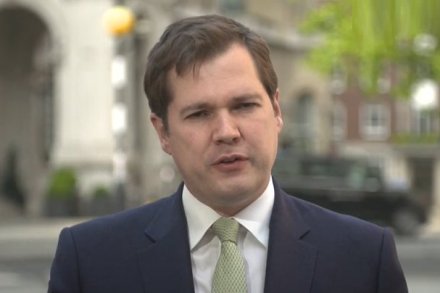
Robert Jenrick - Staying at home still 'very important' Sophy Ridge began this morning interviewing Communities Secretary Robert Jenrick. The Prime Minister will address the nation at 7pm tonight, updating the government's Covid-19 strategy, and it is anticipated that he will outline a vision for the end of the lockdown. The official message will change from 'stay at home' to the more open-ended 'stay alert'. Jenrick said that this did not mean the public should expect to see enormous changes in the near future: https://twitter.com/RidgeOnSunday/status/1259388108153458688?ref_src=twsrc%5Etfw RJ: Staying at home will still be a very important part of our message to the public. But people will also need to go to work, they'll need to go and do essentials...
Tory nerves ahead of the Prime Minister’s lockdown address

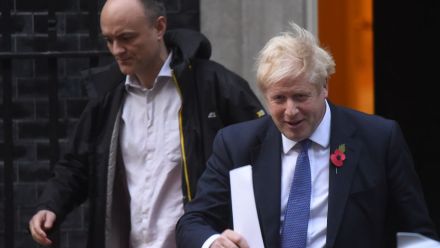
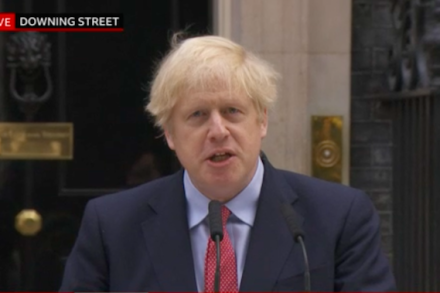
When Boris Johnson addresses the nation on Sunday night to unveil his roadmap for easing lockdown in the coming weeks and months, it isn't just the public he needs to bring with him – he also needs to convince his parliamentary party. Over the past week there has been a shift in mood in the Tory Party with a rising number of MPs growing anxious over what they perceive as the slow pace of lockdown easing. As one MP puts it: 'People have started to get skittish.

A remainer’s despair at the #FBPE brigade

As a remainer, I always found it far too harsh when eurosceptic pundits occasionally compared some of my fellow voters to Japanese soldiers who refused to surrender. Now I'm less convinced that this comparison is always as unfair as I once thought.  Last week, I offered some thoughts on 'Why the #FBPE hashtag failed – and the general lessons from that failure.' It was intended as a discussion of the ways in which the Follow Back Pro Europe meme on Twitter backfired. It was a somewhat nerdy, technical discussion, focusing on how FBPE accounts actually just ended up talking to each other – and, in the process, failed to convince the other side to change their minds.

Ten reasons to end the lockdown now

Writing in this magazine a month ago, I applauded the government’s stated aim of trying to follow the science in dealing with Covid. Such promises are easier made than kept. Following science means understanding science. It means engaging with rival interpretations of the limited data in order to tease out what is most important in what we don’t know. Instead, the government in the UK (and many other places) seems uninterested in alternative viewpoints. The chosen narrative – that lockdown has saved countless lives – has been doggedly followed by all spokespeople. No doubt is allowed. We have been seeing the groupthink response to a perceived external threat that Jonathan Haidt describes so lucidly in his excellent book on human moral thinking, The Righteous Mind.

Can we trust Neil Ferguson’s computer code?

Newspapers aren’t the place to debate expert advice on a crisis. Advisors advise, ministers decide. We should keep politics out of science. These three cries – and numerous variations upon them – have become common refrains as the UK’s increasingly fractious debate on the lockdown, the science behind it, and the best way to lift its various restrictions rolls on. At first, they sound completely reasonable and unarguable: people are stepping up to the plate to help the government make life-or-death decisions in a time of crisis. That’s an admirable thing to do. What’s more, they’re doing it with years of expertise in their field behind them. Of course we should leave them to their work, and let them help guide our course.

Starmer’s Telegraph splash is a perfect piece of politics

The Daily Telegraph is considered the voice of the Conservative grassroots - so today’s splash will have driven a sliver of ice into minister’ veins. Here is the new leader of the opposition, a knight of the realm no less, urging the government to get a grip of the Covid-19 outbreak in care homes. ‘We owe so much to the generation of VE Day,’ he says. ‘We must do everything we can to care for and support them through the current crisis.’ On the day we remember the end of hostilities in Europe, Sir Keir Starmer has planted his tanks boldly on the Tories’ lawn.

Boris Johnson should be wary of comparisons with Churchill

Despite his carefully-crafted bumbling image, Boris Johnson is anything but daft. When vying to replace the apparently rootless Tory moderniser David Cameron as Conservative party leader he knew what to do: write a book praising Winston Churchill. 95 per cent of Conservative members regard the wartime Prime Minster favourably. Johnson lost out to Theresa May in 2016 thanks to Michael Gove’s treachery. But during the Brexit referendum campaign he returned to familiar territory by drawing lurid parallels between the European Union and Nazi Germany, if only to imply that by leading the Leave campaign he was our modern-day Churchill. And when the Conservative leadership become vacant again last year he assiduously if subtly associated himself with the wartime leader.

Covid-19 is not under control in care homes and hospitals

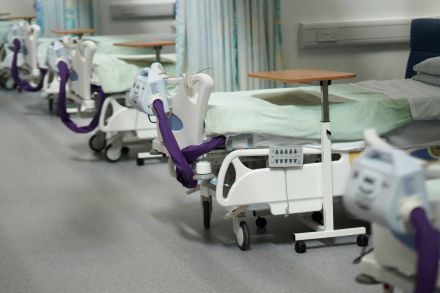
What worried cabinet ministers today was the disclosure to them that the rate of transmission of Covid-19 is not properly under control in either hospitals or care homes. In the community, R – the rate of transmission – is probably as low as 0.5/0.6, which means its savage progress through the population has been arrested. But in the very places where the frail and sick are supposed to be shielded, too many people are still being newly infected. Ministers were especially shocked to learn that some hospitals are really struggling to manage the rate of spread of illness. That is why Dominic Raab announced today that for the UK as a whole, R has deteriorated a bit and is in the range of 0.5 to 0.9. And 0.

Why is the ‘R’ number going back up?

11 min listen

In his evidence given to MPs today, Professor John Edmonds, one of the government's scientists on Sage, said he thought that the 'R' number had gone up in recent days. So why has this happened, despite the last three weeks of lockdown?

Can we rely on a V-shaped recovery?

Can the UK expect a V-shape recovery? The Bank of England has this morning published data revealing very deep V, suggesting a complete economic recovery in a matter of months: a 25 per cent plunge in growth in Q2, followed by a 14 per cent and 11 per cent boom in Q3 and Q4. That would be the sharpest collapse in 200 years followed by the sharpest recovery in 300 years: more of a bungee jump than a V. That’s the good news. The bad news is that it’s an ‘illustrative scenario’ rather than a forecast. Source: Bank of England Monetary Policy Report May 2020 It’s not just lockdown: living with the virus takes a big economic toll The Bank’s decision to hold interest rates at (an ultra-historic low) 0.

How do we know which lockdown measures should be lifted first?

Today, the cabinet has to decide where to go next with the lockdown – although the decision will not be announced until Sunday. Boris Johnson has talked of a ‘menu of options’ for relaxing some of the measures, but we have been warned not to expect too much. The government has also distanced itself from speculation that rules on outdoor exercise will be loosened, as well as garden centres and a few other businesses allowed to reopen. How does anyone know which lockdown measures have been effective and which haven’t? A team of epidemiologists led by Paul Hunter have attempted to do that, and their pre-published paper may well feed into the government’s decision-making today.

Sweden and Britain are not the same

Mathias Döpfner is that still rare thing — an outspoken German. I have known him slightly for many years and admire his brain and boldness: a long time ago he even came close to buying the Telegraph Group. The 6ft 7in CEO of Axel Springer has just issued a challenge to Europe and particularly to his own country. In an article published on Sunday, he told Germany that it must stop dithering and choose. The coronavirus, he says, has brought out the great danger the Chinese Communist party presents to the West.

This pandemic has put politics on fast-forward

‘The normal grease of politics is not there,’ bemoans one sociable cabinet minister. Certainly, the whispered conversations in corridors that make up so much of Westminster life are in abeyance during this period of social distancing. The fact that the backbenches and the cabinet have deep reservations about the government’s approach matters far less than it would in normal times. In the Zoom parliament, there is no such thing as the mood of the House. One Tory grandee pushing for a significant easing of the lockdown complains that the current arrangements ‘make it easier for No. 10 to ignore parliament and cabinet’. But contrary to appearances, politics has actually sped up, rather than stopped, during the pandemic.

The politics of book shelves

I pulled a Canadian girl in a nightclub, back when I was in my very early twenties. She seemed very nice, if somewhat quiet. We went back to her place, where I spent an agreeable night. I sneaked out just after dawn while she was still sleeping and, upon looking under the bed for my socks (I always used to take them off back then), saw every book Ayn Rand had ever written neatly stacked up, in alphabetical order. Not just The Fountainhead and Atlas Shrugged, but Anthem and Ideal and The Virtue of Selfishness and all the rest, the ones even Rand cultists have forgotten. I scarpered for the Tube double quick. A narrow escape. I don’t remember much else about the lass apart from the fact that she had inverted nipples. But they didn’t scare me as much as those Ayn Rand books.

Why Iran meddled in Scotland’s independence referendum

The news that Iran interfered in the Scottish independence referendum is not terribly surprising. The Islamic Republic, along with Russia and China, was an early entrant into the fake news market, weaponising social media to spread misinformation. The object is to destabilise Western democracies domestically and thus weaken their ability to act on the international front. Iran’s Press TV and Russia’s RT function on the same basis — and both were noticeably enthusiastic about the possibility of Scotland voting Yes. A report commissioned by Facebook confirms Iran set up proxy accounts on social media to push nationalist messages to Scottish users in 2014, including cartoons depicting David Cameron as ‘the embodiment of English oppression’.