Politics

Read about the latest political news, views and analysis

Boris’s Whitehall overhaul has just become even more ambitious

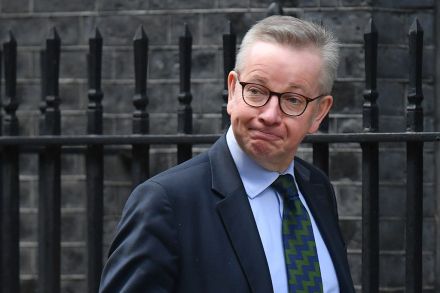
When this crisis is over, reform of Whitehall is going to become a major issue again – as the government’s command paper yesterday acknowledged. Any government reform is going to have to be driven by the Cabinet Office which has today announced an intriguing set of new non-executive directors. The four new appointments are Bernard Hogan-Howe, the former Metropolitan Police commissioner; Henry De Zoete, who worked with Michael Gove and Dominic Cummings at the Department for Education before winning Dragon’s Den and setting up an energy switching service; Gisela Stuart, the former Labour MP and co-chair of Vote Leave; and Simone Finn, a Tory peer who was the coalition’s adviser on trade union matters.
Labour is stirring up Sikh identity politics

It's good news that next year's census will not include a separate Sikh ‘ethnic’ tick box. A no brainer, you may say, because Sikhism is a religion (already recorded in the census), which like any other includes people from various ethnic groups. But don't be fooled: this issue has been highly contentious – and Labour has only made matters worse with its meddling. Campaigners from a group called the Sikh Federation UK (SFUK) point out that Sikhs are recognised as an ethnic group under law (a point I addressed here).

Extending the furlough scheme comes at colossal cost

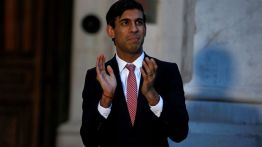
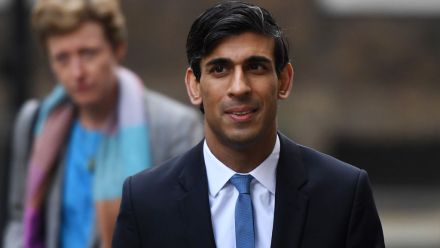
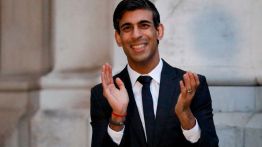
One of the most generous Covid-19 emergency measures in Europe has been extended until the end of October – with some caveats. Chancellor Rishi Sunak has just told the House of Commons that the furlough scheme – which covers up to 80 per cent of an employees’ wages, with a cap of £2,500 per month – will continue to operate unchanged between now and the end of July. From August, furloughing will become more flexible, allowing for part-time work. The scheme remains extended to all sectors, avoiding the optics of industry favouritism, which could easily extend to regional favouritism, given the dependence on certain sectors in different parts of the UK. At first, the scheme was intended for lockdown.

Are we seeing 2000 excess deaths a week from non-coronavirus causes?

Cambridge professor of the public understanding of risk David Spiegelhalter recently made the point that, given the uncertainties over exactly what constitutes a death from coronavirus, the number we should we watching is the ONS’s figure for deaths from all causes. That, he argued, will give us the surest indication as to the progress of the epidemic. For anyone minded to take his advice, the ONS’s figure for deaths from all causes fell again in the week ending 1 May for the second week running. In England and Wales, 17,953 deaths were registered, down from 21,997 in the week ending 24 April and 22,351 in the week ending 17 April.

Parents deserve answers on schools and coronavirus

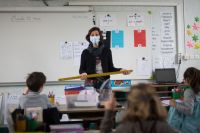
Boris Johnson had barely finished announcing the phased reopening of primary schools on Sunday night when my phone started buzzing with messages from concerned parents in our Year 1 WhatsApp group. The consensus was clear: to send your child back in June would be irresponsible parenting. Several said they refused to let their child be used as a 'guinea pig' for the virus and many emailed the headteacher to say so. There were, however, a few lone dissenters – parents for whom the decision could not have come soon enough.

Why Wales and Westminster don’t agree on the lockdown

Nicola Sturgeon is a familiar figure to many even south of the border. But while Scotland's nationalists are frequently seen and heard on the airwaves in England, the same isn't true of Wales's politicians. If you ask a Brit to name the first minister of Wales, you wouldn't be surprised if they struggled to answer. But coronavirus has given Wales a new prominence – not least in the country choosing to go it alone in its response to tweaking lockdown rules. It seems all it took was a pandemic to prove that the Welsh, not just the Scots, have a competent parliament and leader to make decisions. Over the last couple of weeks, the Welsh government has ramped up efforts to communicate how its policies differ to those made in Westminster.

Scotland’s chilling new blasphemy law

The new Hate Crime Bill proposed by the Scottish Government is a sweeping threat to freedom of speech and conscience. The draft law radically expands the power of the state to punish expression and expression-adjacent behaviour, such as possession of ‘inflammatory material’. It provides for the prosecution of ill-defined ‘organisations’ (and individuals within them) and could even see actors and directors prosecuted if a play they perform is considered to contain a hate crime.

The Lib Dem leadership race is descending into farce

In the midst of the coronavirus crisis, the finer details of the contest to choose who will be the next leader of the Liberal Democrats might have understandably passed you by. It was supposed to be taking place, well, right about now, with all Lib Dem members getting to vote for who ultimately is to replace Jo Swinson. Ed Davey and party president Mark Pack are currently interim co-leaders of the party, a strange situation that was meant to be only temporary and that you’d think they would want to change as quickly as possible. Instead, in the wake of the pandemic, the Lib Dems have pushed the leadership election back: to May 2021. Or at least, that’s what has been pencilled in.

Boris Johnson says businesses need to become ‘Covid-secure’

After Boris Johnson was accused by opposition leaders of providing mixed messages over his roadmap for easing lockdown, the Prime Minister attempted for the third time in 24 hours to explain what the new government guidelines mean in practice. Johnson used the daily press conference – alongside chief medical officer Chris Whitty and chief scientific officer Patrick Vallance – to take questions from members of the public. After confusion this morning over how many people from a different household an individual can meet outside, Johnson confirmed that it could only be one member of another household at any one time.

Boris Johnson’s confusing lockdown rule change

The miracle achieved by Boris Johnson's 50-page 'Plan to rebuild" strategy for 'Covid-19 recovery' is that somehow the PM succeeded in alienating the leaders of Wales and Scotland and create an apparent rift between the nations, when the liberation from lockdown he is offering the people of England is so slight as to be barely perceptible. There is a tonal shift in respect of work, namely that the PM would like to see businesses that are not on the proscribed list, such as factories and building sites, operating again. But that's a wish, not an order. And the overarching message is unchanged, namely that it is far better to work from home where that is possible. In other words, the PM would much prefer Nissan motorcars to be handcrafted in workers' front rooms.

Why Britain isn’t opting for an Apple or Google ‘test and trace’ app

The government’s decision to try and develop its own ‘test and trace’ app seems bizarre at first glance. Who is going to be better at developing an app, the UK government or Apple and Google? Even inside government, there are those who regard the decision to try and go it alone as technological hubris. But the reason that the government is so keen to determine its own app is that the decentralised Apple and Google one doesn’t allow you to easily identify where infections are spiking. The government really wants this information as it is key to its plan for easing social distancing restrictions and keeping on top of the virus.

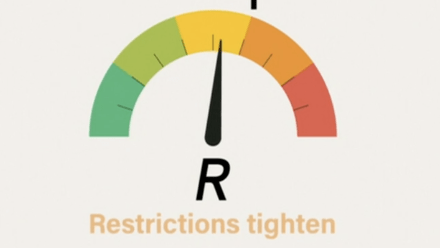
How Number 10 should illustrate its Covid alert formula

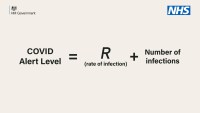
Following the Prime Minister’s address last night, Twitter was ablaze with mockery of the equation the government will use to determine our route out of lockdown. https://twitter.com/BorisJohnson/status/1259572964447653892?ref_src=twsrc%5Etfw In particular, people were keen to show their mastery of primary school-level maths, by observing that ‘if the number of infections is 183,000 and R is 0.7, our threat level is 183,000.7 – how does changing R change the threat level?’ Others were quick to point out that: ‘R is a ratio and the number of infections is an integer so it’s meaningless to add them.

Two big gaps in Boris Johnson’s lockdown statement

There were three messages in Boris Johnson's address to the nation, and quite a lot of important gaps. The messages were: Because the Covid-19 epidemic has been tempered but not eliminated, lockdown continues – though will be modified very gradually;It would be a jolly good thing if a few more of us could return to work, especially on construction sites and in factories, so long as that can be done in a way that does not imperil health;The pace at which lockdown is modified, and whether it is modified at all, is in the collective hands of the British people, and will be wholly determined by whether we continue to obey social-distancing rules. So what were the gaps?

Boris sets out the shape of an exit strategy

18 min listen

It's been six weeks since the Prime Minister first sat down to give the statement to the British public that began lockdown. Today, as James Forsyth first reported in The Spectator two weeks ago, Boris Johnson announced that the lockdown isn't over yet. From Wednesday onwards, the one form of exercise a day rule will be removed so that, social distancing provided, people will be able to spend time outside even when they are not exercising or shopping. But not much else has changed, and in his statement, Boris Johnson sets out why. The 'R' number simply isn't sufficiently low enough. A new metric for judging the risk to the population with five levels has been devised, and we are somewhere between levels 3 and 4 (with 5 being the risk at its peak).

Boris Johnson sets out coronavirus roadmap for easing lockdown

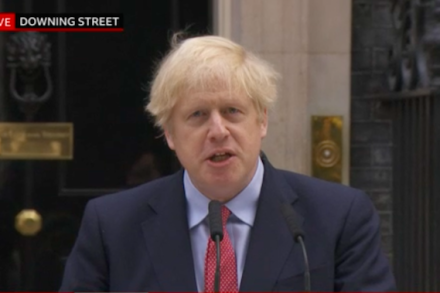
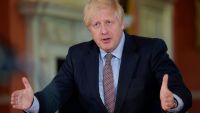
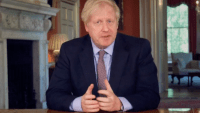
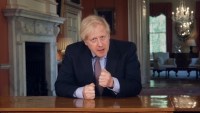
Boris Johnson used his address to the nation on Sunday night to confirm that there will be no immediate end to lockdown. The Prime Minister described coronavirus as the 'most vicious threat this country has faced' in his lifetime and praised the public for adhering to social distancing – describing such measures as the only way to defeat the virus. However, he said there was still a long way to go and that a significant relaxation of lockdown was not yet possible as it would risk a second peak of infections. Instead, Johnson presented a roadmap to an eventual return of some form of normality. He reiterated his government's five tests for easing lockdown and suggested that on the fourth point of sufficient supply of PPE there was some way to go.

Full Text: Prime Minister’s ‘roadmap’ to ease lockdown

Here is the full transcript of the Prime Minister's address to the nation: 'It is now almost two months since the people of this country began to put up with restrictions on their freedom – your freedom – of a kind that we have never seen before in peace or war. And you have shown the good sense to support those rules overwhelmingly. You have put up with all the hardships of that programme of social distancing. Because you understand that as things stand, and as the experience of every other country has shown, it’s the only way to defeat the coronavirus – the most vicious threat this country has faced in my lifetime. And though the death toll has been tragic, and the suffering immense. And though we grieve for all those we have lost.