Politics

Read about the latest political news, views and analysis

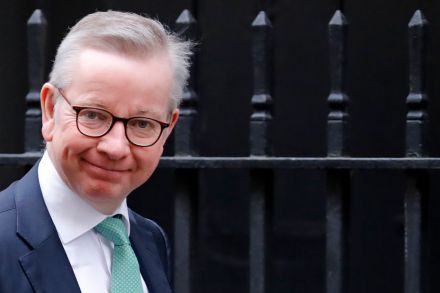
If only Michael Gove was still education secretary

Children of richer families are studying six hours a day compared with four-and-a-half hours for children from poorer families. Which translates, says the IFS, which conducted a survey of 4,000 parents, to a gap of seven days advantage for the haves over the have nots by next month. Surprise! I don’t, myself, think they’ve quite got a grip of the thing yet, although they do point out that over half of parents of all backgrounds find it hard to support their children’s learning at home. Which I’d say is getting a bit closer to the truth. Because if quite a few of the richer children surveyed are educated privately, the difference between the fee paying secondary schools and the state ones is a matter of kind as well as degree.
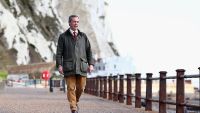
Tories should listen to Farage’s warnings about Channel migrants

The idea of a flotilla of little ships crossing the English Channel from France to deposit their beleaguered human cargo safely on our shores was born in this country’s darkest hour during the second world war. To say that the method behind the success of the Dunkirk evacuation 80 years ago has been repurposed for the modern age is something of an understatement. These days the little ships are usually inflatable dinghies packed with desperate young men from Asia and Africa who seek to evade this country’s immigration laws. They land at various points between Dover and Hastings and – if undetected – many head for rendezvous points pre-arranged with people traffickers for onward transit to London and other major cities.

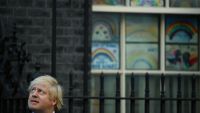
Why didn’t Boris act sooner against coronavirus?

It is too easy to become obsessive in whole or partial lockdown. And my obsession for weeks now is why ministers and Whitehall failed to learn the big lesson of the 2007/8 banking crisis – namely that high impact, low probability risks wreak maximum damage, and if they have the potential to destroy your way of life, money and resource should be no object in warding them off. To start on a more positive note, Boris Johnson seems belatedly to have found the appropriate gauge of risk versus reward. Because although the PM on Sunday conceded that a vaccine may never come to 'fruition', he has nonetheless committed £93 million of our money to helping AstraZeneca create a vaccine manufacturing plant that could make 30 million doses as soon as this September.

Is Labour’s stance on reopening schools worsening the education gap?

17 min listen

The government is aiming to reopen schools on June 1, but with teachers' unions putting up opposition to the move, this timeline is unlikely to be met. Latest research shows that, meanwhile, the education gap between the poorest children and the wealthier is widening all the time. So in its support for the teachers unions, is Labour doing enough to bear in mind the lifelong impact on the worst off kids during this pandemic?

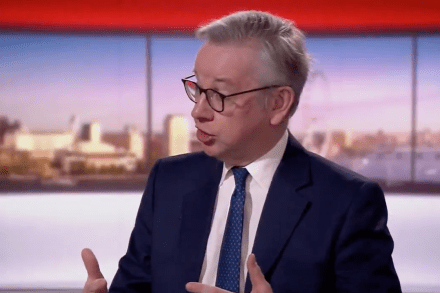
Sunday shows round-up: Gove confident that schools will be safe

Michael Gove – We're confident children and teachers will be safe Michael Gove was in charge of the government's media rounds this morning. Andrew Marr was keen to ask him about the provisions being made for children returning to school. The government wants primary school children in reception, Years 1 and 6 to return to the classroom from 1st June. The Cabinet Office Minister told Marr that he had been reassured that it would be safe to do so without significant fear of the coronavirus causing significant new outbreaks: https://twitter.com/BBCPolitics/status/1261950305664548864?ref_src=twsrc%5Etfw MG: I talked to the [government's] chief scientific advisor yesterday... and we're confident that children and teachers will be safe...

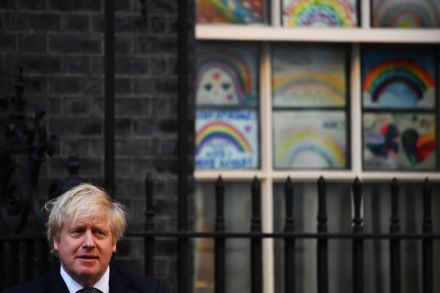
Boris Johnson needs to admit his coronavirus mistakes

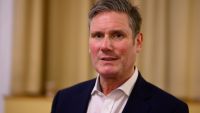
Be careful what you wish for. Over the past few years, a fair number of thoughtful Tories have included a strange item in their letters to Santa Claus. They wanted an effective Leader of the Opposition, who could keep ministers under pressure and force them to raise their game, which would lead to better government. Well, after nearly a decade-long pursuit of unelectability, Labour has granted the Tories their wish. The Tories are not enjoying it. One suspects that Keir Starmer was always a pretty forensic character, even before he sharpened his cross-examining technique at the Bar. Moreover, a virtual House of Commons plays to his skills, but not the PM's. In a full House, Boris would stride to the wicket, swinging his bat to excite the crowd rather like Ian Botham in his pomp.

Do the experts believe in the R number?

The R-number has been declared the most important metric in monitoring Covid in Britain. For young children to return to school in June, or for pubs to open in July, it is always linked to the rate of Covid transmissions - the R-number - staying below one. Above one is the danger zone: it means each infected person is infecting, on average, more than one other. So plans to liberalise are put on hold and we possibly enter a more severe lockdown once again. When explaining his strategy last weekend, the Prime Minister even showed a picture of an R-Number speedometer. But it gave no reading. We're instead told a range: is that it hovers somewhere between 0.7 and 1. But we have never been told exactly what the R-number is.

Covid’s knock-on effect on child deaths

The daily death toll has been a constant backdrop to the Covid-19 crisis. Would we ever have entered lockdown, would so many people have been driven to panic, were it not for the publication, every afternoon, of the number of deaths in the past 24 hours? It has helped set in the minds of the public the idea that this is a lethal disease, on a scale completely removed from other common diseases. How much differently would we see Covid-19, though, if we were also fed with a slightly different statistic: the number of indirect deaths, caused not by the disease itself but by other factors associated with lockdowns: closure of medical facilities, fear of going to a hospital and so on.

Audio Reads: Fredrik Erixon, James Forsyth, and Leaf Arbuthnot

25 min listen

On this week's Audio Reads, Swedish economist Fredrik Erixon reads his cover piece explaining how European nations are all flying blind in the pandemic. James Forsyth advocates a complete rewiring of the British state. And Leaf Arbuthnot, whose novel Looking For Eliza is released this week, extolls the joys of Zoom raves.

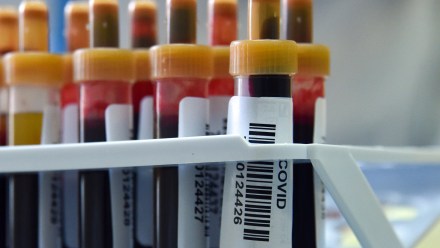
Why are some people being repeatedly tested for coronavirus?

Testing, the government keeps telling us, is the way out of the coronavirus lockdown. Soon, the Prime Minister assured us in his address to the nation last Sunday, we will be testing 'literally hundreds of thousands of people every day'. Given that Matt Hancock seems finally to have achieved his ambition of testing 100,000 people day – as he promised to achieve by the end of April – who could doubt that the PM will realise his promise? True, there was some controversy over the way that the health secretary reached his 100,000 tests on the very last day of April, by counting tests which had been put in the post. The numbers of tests performed then fell back in subsequent days.

Seven mistakes politicians make when following ‘the science’

For anyone who watches the daily Covid-19 briefings, it is quite clear that too many of our politicians and journalists have little to no understanding of science and mathematics. Out of the 26 ministers attending cabinet, only three have higher-level STEM (science, technology, engineering and mathematics) backgrounds. In parliament, only around 100 MPs have science backgrounds.  Why does this matter? Training in science gives people a different perspective on the world. It makes them more sceptical, more rigorous in their approach and, most importantly, teaches them what science can and cannot answer. Unfortunately, too many of our politicians don't benefit from this approach – and coronavirus has exposed this problem at the heart of government.

Inside Boris Johnson’s video call with Tory MPs

One of the consequences of the virtual parliament is fewer opportunities for MPs to lobby No. 10. However, this afternoon MPs were given a rare audience with the Prime Minister as Boris Johnson appeared via video link for a meeting of the 1922 committee of Tory backbenchers. With a growing number of MPs anxious over what they view to be the slow pace of lockdown easing, the meeting was intended as an opportunity to raise concerns. Instead, it was dominated by technology difficulties – with around 140 Tory MPs battling background noise – ranging from young children to noisy pets – as they tried to hold a conversation with the Prime Minister. The committee chair Sir Graham Brady spent much of the call asking MPs to put themselves on mute when they weren't speaking.

Boris’s war on obesity is a mistake

In less enlightened times, an outbreak of a deadly virus was taken as a sign of God’s displeasure and would be accompanied by the persecution of an unpopular minority. It was less than a coincidence that the scapegoats tended to be those of whom the Church took a dim view: heretics, ‘witches’ (i.e. unmarried women) and, above all, Jews. How neatly it all fitted into an existing narrative. The desire to fit the Covid-19 pandemic into a moral fable of what sinfulness means in a secular society has been palpable. One of the most puzzling features of the virus is the way in which it severely incapacitates certain people while leaving others virtually unscathed. It is unsettling to think that our fate could depend on the roll of a dice.

Don’t blame Boris for lockdown rule confusion

There has been much chatter about people being puzzled by the lockdown rules. Critics of Boris Johnson are partly right: the law is confusing. But this isn't necessarily the Prime Minister's fault. And nor should it come as a surprise. Why? Because the law can never give absolute clarity about what you should do. Only a totalitarian dictatorship could even try – and even then it would almost certainly fail. Lockdown is not martial law. It is made up of many factors, only one of which is the law. The law spelling out what we can and can't do under lockdown is The Health Protection (Coronavirus, Restrictions) (England) Regulations 2020.

Plumber trolled for defending Boris’s lockdown plan

Remember the no-nonsense plumber who criticised those who claimed to be baffled by Boris Johnson's lockdown announcement? Ryan Price defended the Prime Minister, telling Channel 4 'It's not really hard to understand' when asked to comment on the next steps in the lockdown plan. Price – who has been giving free call-outs to NHS workers – was hailed a hero by some, but it seems not everyone was best pleased with Price's remarks. He told LBC this morning: 'I didn't sleep for a couple of days, couldn't eat...anxiety because of the messages and things like that, and I've never had anxiety before. I wasn't making a political view...people just need to stop moaning. We live in the best country in the world.' https://twitter.com/darrengrimes_/status/1261279389343535104?