Politics

Read about the latest political news, views and analysis

Keir Starmer is an excellent Labour leader, which is why he’ll never be PM

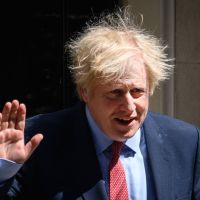
We’ve all been very impressed, haven’t we, by Sir Keir Starmer’s performances at Prime Minister’s Questions? His calm, precise and forensic dismantling of Boris Johnson has drawn praise from all quarters. Quite right too. An effective Leader of the Opposition is vital to any democracy and at last, we seem to have one. An eminent QC with the courage to ask the tough questions and put our blustering PM on the rack. There are, inevitably, some petty quibblers who aren’t quite so Starmerstruck. They feel that the hindsight-fuelled bullying of a man still recovering from a near-death experience, and the castigating of a government forced to face horrendous economic and societal problems, weren't particularly courageous.
Should the UK create a post-Covid Sovereign Wealth Fund?

Soon, the short-term credit being lent abundantly to Britain’s small and medium firms to stave off bankruptcy during the shutdown will be due to be repaid. The prospect of this forcing many businesses to shed jobs by the thousands is rightly ringing alarm bells. The can could be kicked down the road for a few months by postponing repayment. But the people who kicked the can would still have to confront the problem. They would find that firms saddled with accumulated short-term debt, and revenues that remain reduced, will want to shed workers.

Britain’s post-Brexit trade plan could be a missed opportunity

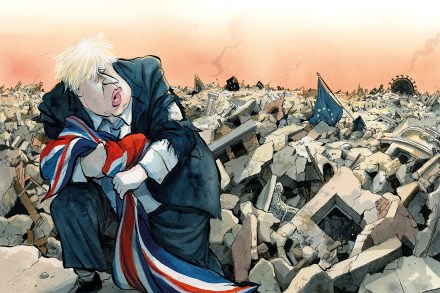
The economic argument for free trade is politically more important than ever. A drift towards the use of tariffs and other protectionist measures has increased in G20 countries since the global financial crisis and there are signs that the protectionist trend could accelerate in the wake of Covid-19. This at a time when a global economic recovery will urgently need the boost that trade offers. One of the great opportunities of Brexit is that the UK can lead the world, with countries like Australia, in championing free trade. The UK has made clear that signing free trade agreements is a top priority as it leaves the EU’s customs union. Negotiations with the United States are now under way, and Japan, Australia and New Zealand are earmarked as the next targets.

Boris is convinced he’ll still get a Brexit deal

When coronavirus first struck, the assumption was that it would lead to an extension to the Brexit transition. After all, negotiating rounds had to be cancelled as it wasn’t feasible to have large numbers of people travelling back and forth between London and Brussels and crowding into meeting rooms. But the negotiations are now taking place by video conference and the UK government is determined not to extend the transition period beyond the end of the year. The UK’s view is that the differences between the two sides are so high level that they won’t just be solved by putting more time on the clock.

Angela Rayner’s SAGE fake news

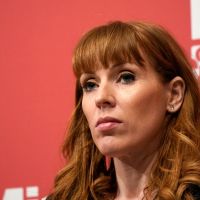
As a former shadow education minister, you would expect Angela Rayner to be keeping a close eye on the scientific advice about when schools should begin to reopen. The government currently plans to reopen schools for some pupils on 1 June – a decision which has provoked the ire of several teaching unions, who say it is not yet safe for staff members or children. Which perhaps explains why this morning the deputy leader of the Labour party went on the attack, and tweeted out an article by the Times Educational Supplement, pointing out that: ‘SAGE concludes June 1st “too soon” to open schools. Teacher unions have been absolutely correct in asking for safety measures to be in place before re-opening.

The Kate Forbes Edition

37 min listen

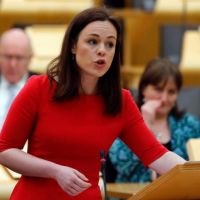
Kate Forbes is an SNP MP and the Scottish Finance Secretary. She stepped in at the last minute when her predecessor, Derek MacKay, was suspended from the party on the day of the Budget. On the podcast, she talks about her international upbringing and how that relates to her nationalism, what it was like to step in for the Budget on that day, and how she squares her Christian faith with politics.

Back to Brexit: will the transition be extended?

36 min listen

Brexit is back on the agenda, but this time, talks are even more difficult than the last phase (00:45). Plus, what do we understand about immunity, and how should that inform the lockdown policy (16:45)? And for a nation that bangs on about fish, do we eat enough of it (28:00)?

Boris’s NHS immigrant surcharge shake-up doesn’t go far enough

The Prime Minister has asked the Home Office to remove NHS workers and social care workers from the immigration health surcharge as soon as possible. As Katy Balls reported earlier today, frustrations were growing within the Tory party that healthcare workers could be clobbered with this fee as they work tirelessly to help British patients get through the Covid crisis. It seems Boris Johnson has listened to his backbenchers and u-turned. The fee will be waived for a range of health staff, from doctors and nurses to technicians and cleaners. This exemption is good news for workers in the healthcare sector, but it shouldn’t be the end of the policy review. This update for health workers creates an opportunity to assess the fairness of the surcharge overall.

No. 10’s surcharge U-turn is a victory for Tory backbenchers

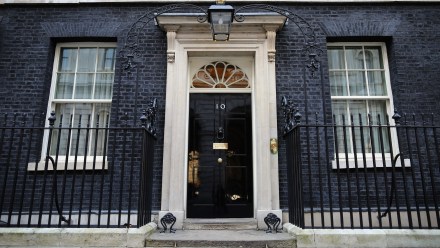
A little over 24 hours after Boris Johnson stood in the Commons Chamber and defended the NHS surcharge remaining in place for overseas NHS and social care workers, the Prime Minister performed a U-turn. A No. 10 spokesperson has confirmed this afternoon that Johnson has asked the Home Office and Department for Health to exempt healthcare workers from the NHS surcharge, which is a fee for migrants to use the health service. This is being chalked up as a win for Sir Keir Starmer – given that it was the Labour leader who challenged Johnson on the issue at Prime Minister's Questions. While it's a coup for the opposition, this is in many ways a victory for the power of the Conservative parliamentary party.

Liberate London from lockdown now

I know good news is not allowed in coronavirus Britain. Instead we're all meant to cower before the death stats, fume at photos of people on beaches, and nod along as Piers Morgan bursts yet another blood vessel over what a calamitous PM Boris is. Pessimism is your highest duty in this strange, fearful nation we have become. Optimism is tantamount to thoughtcrime. How else to explain YouTube's disgraceful decision to take down a video interview with Karol Sikora, the perky professor of medicine whose reason and hopefulness on the Covid crisis has helped to keep me, and many others I'm sure, sane over these past three weeks. Confidence in humanity must not be tolerated! Well, sod it. Here's some good news. Look away now, Piers. The virus is disappearing from London.

Boris Johnson bows to Tory pressure and waives NHS migrant surcharge

At PMQs this week, Keir Starmer went on the attack over the NHS surcharge which means workers coming to the UK from outside the European Economic Area have to pay a fee to use the health service. The current fee, of £400 a year, is due to rise to £624 from October. The Labour leader called on the Prime Minister to waive the charge for overseas NHS and social care workers.

Scottish government’s website collapse

Nicola Sturgeon today released her ‘roadmap’ for easing the lockdown in Scotland, after the first minister decided to pursue a separate strategy to Boris Johnson when it comes to lifting restrictions on freedom of association and movement. In an announcement, the first minister said that Scotland would pursue a ‘four-phase’ route out of lockdown, with some restrictions lifted next week, such as allowing people to meet others from another household outside. But, rather unfortunately, the majority of the guidance was unavailable to read, as the Scottish government’s website helpfully crashed soon after Sturgeon’s announcement, with thousands of users unable to access the new guidance.

Coronavirus’s forgotten victims

I am hearing stories about people with disabilities that make me feel ill. Visitors to care homes (parents and siblings, usually) tell me they cannot go inside. Fair enough, given the risks of coronavirus spreading you might say. But some homes are not allowing parents to wave at their children through the window or meet them at a safe social distance when they are released from lockdowns lasting 23 hours a day for a brief walk, assuming they are allowed a walk at all. Severely autistic people, who understand little, think their parents are dead or have abandoned them. They are injuring themselves and falling into deep depressions. My sources won’t go on the record.

Hancock’s day in court

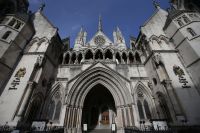
As if Matt Hancock didn't have enough on his plate. In a bid to declare the lockdown unlawful, lawyers for the multi-millionaire Simon Dolan have lodged a formal challenge at the High Court in London, with Hancock and education secretary Gavin Williamson both named as respondents. In a statement released this morning, Dolan said:  The claim argues that the lockdown measures are unlawful because they breach the European Convention on Human Rights, that the five tests for terminating lockdown are too narrow, and the measures taken by Government are disproportionate. At the heart of this historic case is the protection of freedom and liberty for 66 million people. We are challenging a catastrophic set of decisions.

Should we be using GPs to track and trace?

A simple and compelling point was made on Peston by former WHO director Anthony Costello last night: the UK already has a potentially world class network for track and trace in its GP surgeries. But these are being sidelined as outsourcing giants Serco and Sitel have been hired to organise clinical and non clinical people to sit at the end of a phone to have conversations with symptom sufferers to get them tested, trace who they’ve been with and (presumably) monitor their progress. According to Costello, GPs are not even allowed to order a Covid-19 test for patients (those patients have to do it for themselves). https://twitter.com/itvpeston/status/1263236458451738624?

In defence of free markets in the time of coronavirus

One of the dominant political themes of the moment is that the big state, alongside either a high tax and spend economic model or massive borrowing, is here to stay. Those who advocate for even slightly more of a market economy and less state largesse apparently belong to a bygone age. This narrative is being advanced by both left and right, Labour and the Conservatives. The Labour Party have obvious reasons to argue for a bigger state given this is one of the main reasons they exist, but the Conservative Party have begun to talk the economic language of Labour as well. This began under Theresa May’s leadership and continues through to the present.